Costco faces class-action lawsuit over rotisserie chicken
As the battle for transparent ingredient lists continues to rage on, a new lawsuit has placed a beloved Costco staple – its US$5 rotisserie chicken – squarely in its crosshairs.
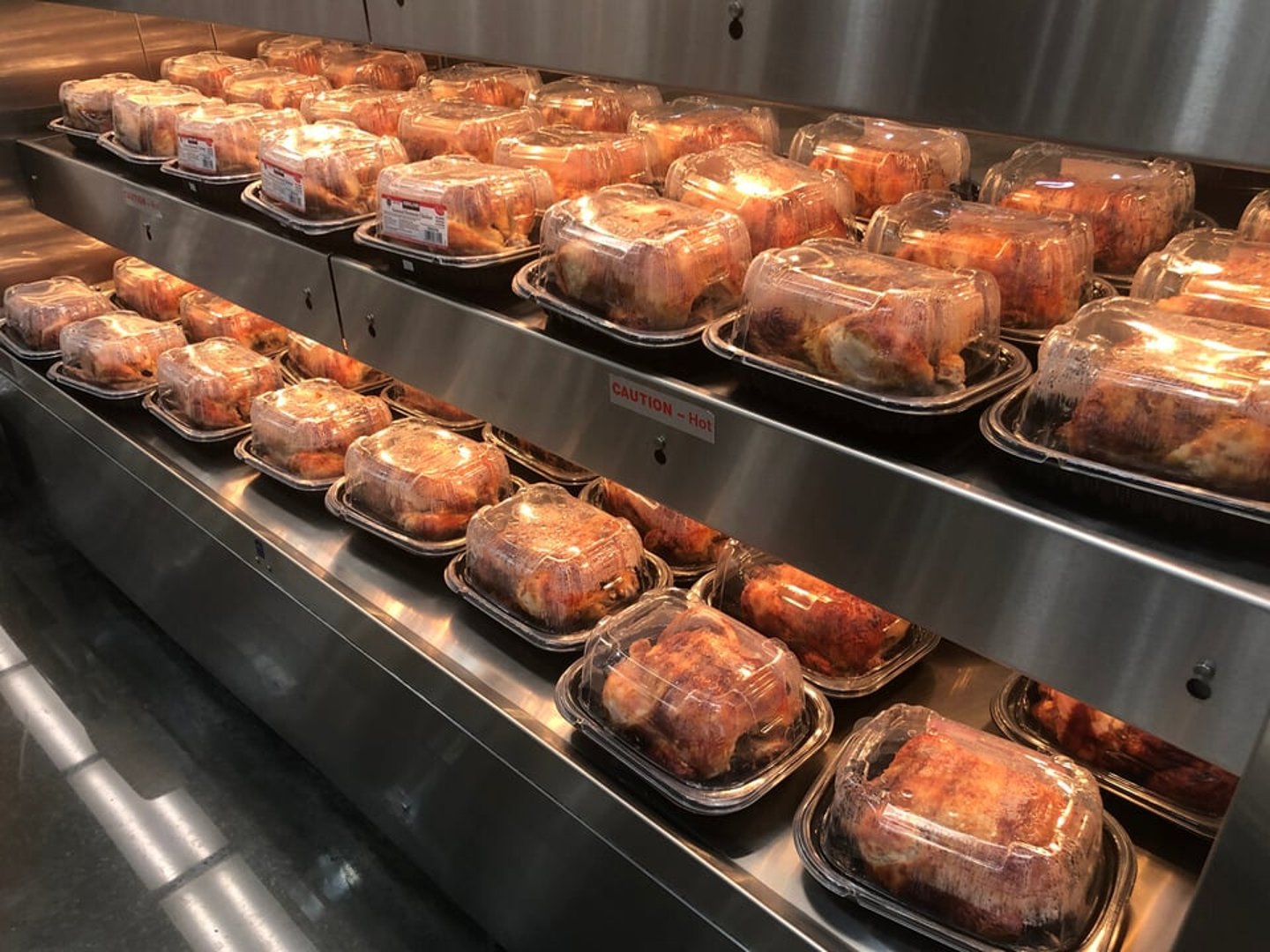
Costco’s Kirkland Signature rotisserie chickens, alongside its $1.50 hot dogs, are the retailer’s well-loved, eternal menu mainstays. The bird sells for $4.99, a price the company has famously held steady for over two decades through food inflation, tariffs and general economic unease.
A class-action lawsuit filed by two Costco shoppers in Southern California claims that the warehouse giant has “systemically cheated customers out of tens – if not hundreds – of millions of dollars” by marketing these rotisserie chickens as preservative free despite the presence of two additives that function as preservatives.
Sodium phosphate and carrageenan, the ingredients at issue, are commonly used in prepared foods to retain moisture and improve texture. Federal regulators have classified both ingredients as safe to eat, though the lawsuit argues that their presence contradicts the “no preservatives” signage Costco displayed both online and in-store.
Costco responded to the controversy by removing all references to preservatives from its signage and online descriptions, saying in a statement that the company wanted to “maintain consistency among the labelling on our rotisserie chickens and the signs in our warehouses and online presentations.” The retailer did not claim wrongdoing.
The lawsuit, lodged by Bianca Johnston of Big Bear and Anastasia Chernov of Escondido, claims that Costco’s in-store signs and online listings created a misleading “overall net impression” of the product they were selling. Customers like Johnston and Chernov would purchase the rotisserie chickens believing they were free of preservatives only to discover the problematic ingredients when squinting at the fine print. Their complaint argues that this discrepancy violates consumer protection laws in California as well as Costco’s home state of Washington.
The grocery industry is currently undergoing a dramatic shift toward transparent ingredient lists and away from processed foods, driven by increasingly discerning consumers. Shoppers are leaning into simplicity, transparency and science-backed nutrition rather than impulse picking the most “exotic” option. Concern over ultra-processed foods, on the other hand, has intensified, with 30% of surveyed U.S. consumers marking all ultra-processed foods as “avoid at all costs.”
READ: Retailers reflect on front-of-package label rollout
Issaquah, Wash.-based Costco currently operates more than 900 warehouses, including 600-plus in the United States and Puerto Rico, more than 110 in Canada, and 42 in Mexico. The company is No. 3 on The PG 100, Progressive Grocer’s 2025 list of the top food and consumables retailers in North America. PG also named the company among its Retailers of the Century.