
Retailers reflect on front-of-package label rollout
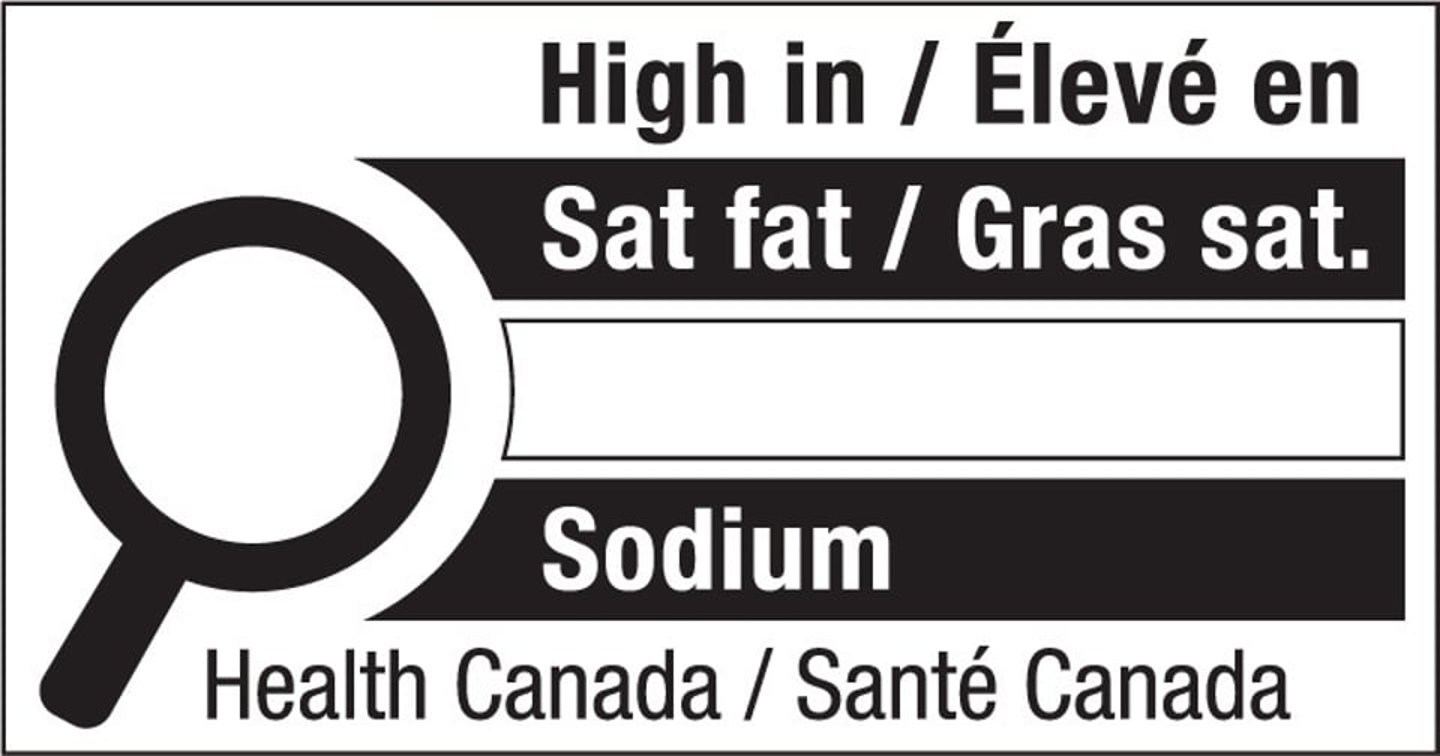
Health Canada’s new black-and-white front-of-package (FOP) warning labels for sugar, sodium and saturated fat started appearing on packaged foods weeks before their official rollout on Jan. 1, 2026.
The regulations require most packaged food and beverage products to carry a FOP symbol when one or more of those nutrients meets or exceeds set Daily Value (DV) thresholds — typically 15% DV, with adjusted thresholds of 10% or 30% DV for small-portion foods and main dishes.
Retailers tell Canadian Grocer they worked closely with vendors to ensure products met the new requirements, and that any items currently on shelves without the label were manufactured before Jan. 1.
“We have worked closely with our vendor partners to ensure compliance for products in our assortment, including our private label offerings,” says Stephanie Bonk, communications manager at Metro.
READ: Get ready for Canada’s new food labels: 6 key questions answered
She adds Health Canada’s new FOP labelling requirement serves “an additional touchpoint for Canadians to engage with nutrition information as part of their overall shopping experience,” alongside Metro’s own initiatives.
One example is Metro’s My Health My Choices program. Launched in 2021, it categorizes thousands of products under more than 40 attributes — such as “aluminium salts free,” “fat free,” “bone focus” and “no artificial nitrates” — helping “customers navigate options and make choices that align with their values and lifestyle,” Bonk explains.
Metro directed further comment to the Retail Council of Canada (RCC), while Loblaw also referred inquiries to the council.
“The new front-of-package nutrition symbols are another tool consumers can use to help them make informed decisions about how a food fits into their overall diet, alongside the Nutrition Facts table, ingredients list and Canada’s Food Guide,” says Santo Ligotti, vice-president, marketing and member services at the RCC.
“As with all new labelling changes, we expect there will be a learning curve as Canadians begin using the new symbols while shopping,” he adds. “RCC has been actively working with Health Canada on the implementation of the labels, and we know continued collaboration will be essential to their success.”
The symbols are less ubiquitous at health-focused chains such as Healthy Planet, which prioritizes sourcing from better-for-you brands.
“Because of our strict ingredient standards, our assortment naturally excludes many products that require the new high saturated fat, sodium or sugar warning labels,” says Muhammad Mohamedy, Healthy Planet’s general manager.
READ: Following healthy food guidelines in Canada comes at a high cost, study finds
That said, the chain carries some popular brands that now require the symbol, and Muhamedy says it’s already influencing purchasing decisions.
“We’re seeing customers pause when they encounter a warning on items they may have previously perceived as healthy,” he says.
Rather than creating confusion, those moments are prompting conversation. “We have expert nutritionists on the sales floor specifically to help customers navigate these choices and guide them toward the many alternatives we stock that better support their health and wellbeing,” points out Mohamedy.
Brad Fletcher, president of The Village Grocer in Markham, Ont., says its customers are eager for this type of information.
“It seems every day more and more customers want to be educated about their food and beverage intake,” Fletcher says. “From a consumer perspective, it’s information they can work from.”
He notes the regulations don’t apply to foods prepared in store without a Nutrition Facts table — such as certain frozen meals and soups — which make up a significant portion of his business.
Consumer interest in nutrition labels is already pretty high.
More than half (54%) of Canadian adults report being frequent label readers, up nine points by the third quarter of 2025, according to Ipsos.
“Canadians are on a self-driven path to monitor their intake of different nutrients,” says Emma Balment, director, food and beverage group, market strategy and understanding, Ipsos. “FOP labels will help those consumers make choices.”
Ipsos predicts roughly a 5% incremental increase in label use as a result of the new rules, though Balment notes emerging trends could temper that impact.
“The functional-foods trend can make higher sugar, fat or sodium content more permissible or ‘worth it,’” she says. “For example, someone seeking more protein for muscle growth may justify the sodium in meat snacks or the sugar in some high-protein confections.”