Discount shift sticking around for the long term: Loblaw CEO

Discount won’t be dying out anytime soon.
And Loblaw Companies president and CEO Per Bank said the food and pharmacy retailer is leading the global trend in Canada.
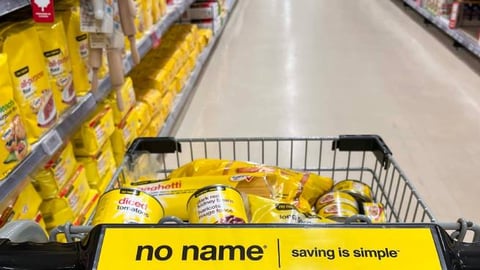
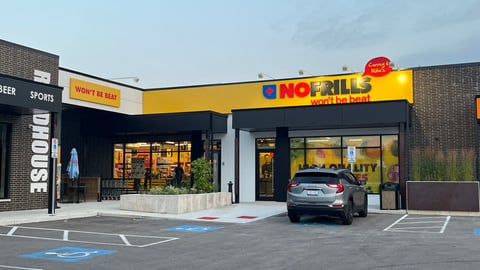
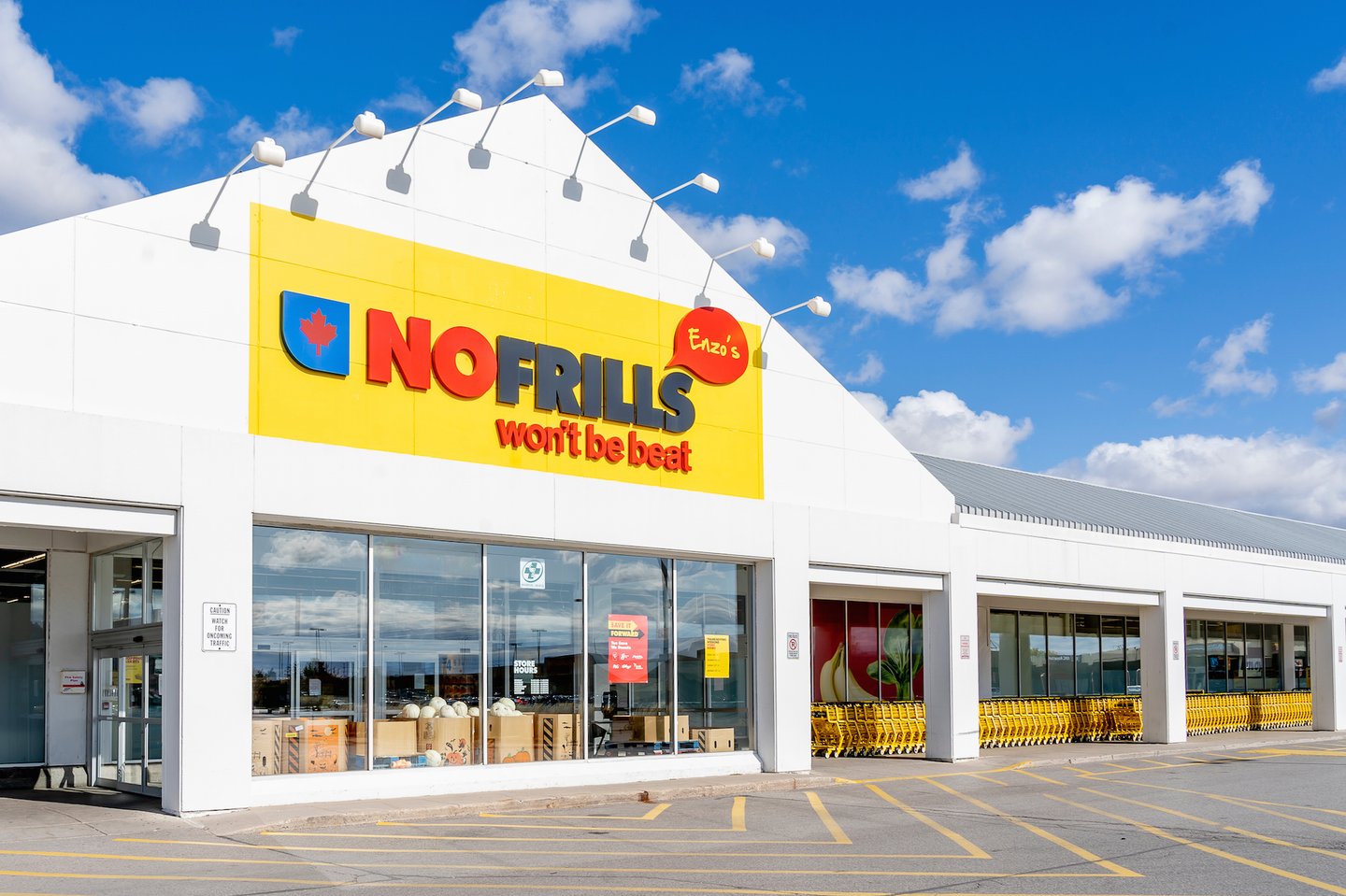
“The global shift toward discount retail is a long term trend,” he said on an investor call Thursday (July 24). “In May, we celebrated the opening of our 500th hard discount store [No Frills] in the community of Pincher Creek in Alberta. By expanding our reach into communities where affordability matters most, we are meeting customers where they are and delivering exactly what they need.”
Loblaw has so far opened 20 out of 80 planned stores for its fiscal year.
“Customers are increasingly seeking value. They can get that in many ways. Of course, our hard discount stores are doing well, and they're still leading and doing better compared to the rest of the portfolio,” Bank said. “Customers are increasingly seeking to buy more promotions, buy more on the private label.”
Bank pointed to the company’s “T” symbol program. Across Loblaw’s banners—Loblaws, No Frills, Real Canadian Superstore, Maxi and more—products subject to counter-tariffs are identified with a “T.”
As budget-conscious shoppers ditch more expensive, tariff-hit goods at the grocery store, sales for “T”-identified products have dipped by more than 15% on a weekly basis, Bank said.
“Price matters to our customers. They're shifting into other categories. They’re looking out for value more, more than more than we have have ever seen.”
Of course, the “Buy Canadian” movement is continuing to influence shopper behaviour, with many Canadians boycotting American products since the start of U.S. President Donald Trump’s trade war.
“There's some misconception that the tariffs are no longer a factor in grocery. Nothing could actually be further from the truth. The reality is that the tariffs countermeasures remain in place, and about a third of all supply cost submissions have been tariff related,” Bank said.
He added the “T” symbol program has had benefits behind-the-scenes as well.
“It has also incentivized supply suppliers to mitigate the tariff impact to avoid the ‘T’ label designations,” Bank said. “Our data shows that Canadians are responding positively to these to these initiatives.”
He said Loblaw has recently added 130 new Canadian vendors.
Richard Dufresne, chief financial officer, said the grocer remains concerned about non-tariff related cost increase requests from large global vendors.
“We are pushing back harder than ever to ensure that any increases we accept are fair and reasonable, and are partnering with our vendor community to mitigate price increases,” he said.
Loblaw shared its second quater results Thursday.
The retailer reported net earnings of $714 million, up from $257 million last year. The increase was primarily driven by the impact of lower costs related to assets associated with Loblaw's 2014 acquisition of Shoppers Drug Mart.
Revenue was $14.67 billion, an increase of $725 million, or 5.2%.
Food retail same-stores sales increased by 3.5%, while drug retail same-store sales rose by 4.1%.
E-commerce sales increased by 17.5%.
Other Q2 call highlights
- T&T has gotten the green light to open additional U.S. stores
Loblaw originally planned a six-store pilot for its booming Asian grocery banner stateside. With all six stores now locked in, executives said Thursday they plan to “add a few more to the test.”
“If you were to look at the absolute sales growth of T&T in Canada, it's actually our most performing banner of the whole organization, and where we continue to fail miserably is in our ability to forecast the sales of these new stores,” Dufresne said. “We systematically underestimate the sales of all the T&T we've opened so far.”
- Loblaw is leveraging AI
Dufresne said the retailer is integrating AI solutions into its supply chain operations, with other projects in the pipeline.
“An AI initiative that I'm really excited about is currently being rolled out across our store network, nicknamed Robin. We are leveraging agentic AI in a custom built tool to save time and enhance decision making in our stores using conversational, action-focused insights based on real-time data. Robin provides a dashboard of KPIs, presents AI-generated insights and recommends solutions, then tracks and executes to-do lists so managers will spend less time on back end logistics and more time with their customers and staff, while improving store level profitability. The success of this initiative has spawned a second version of the app that is now being tested with district managers to help them better manage their store networks.”
The grocer is also using the technology to analyze customer behaviour and preferences, enabling it to “deliver the right products, content and promotions at the right time on an individual level,” Bank said.
“Our PCO app and websites are increasingly being powered by algorithms that present customized deals, product recommendations and content unique to each customer’s need. We have even now meal suggestions based on customers’ dietary profile and purchase history with relevant ingredients also added to the cart. We're excited about the opportunities ahead. These innovations represent an exciting step forward in how technology can transform how we work and how efficiently and effectively we serve Canadians.”
- On rural vs. urban expansion
“We haven't really tested rural stores yet,” Bank said. “I think we have the first one opening very soon, and there is lots of potential to go into rural, but it takes a little bit longer time to plan to build, because we had many more options downtown the big cities where we could just go into existing buildings… But I do stay as optimistic.”