
Get ready for Canada’s new food labels: 6 key questions answered
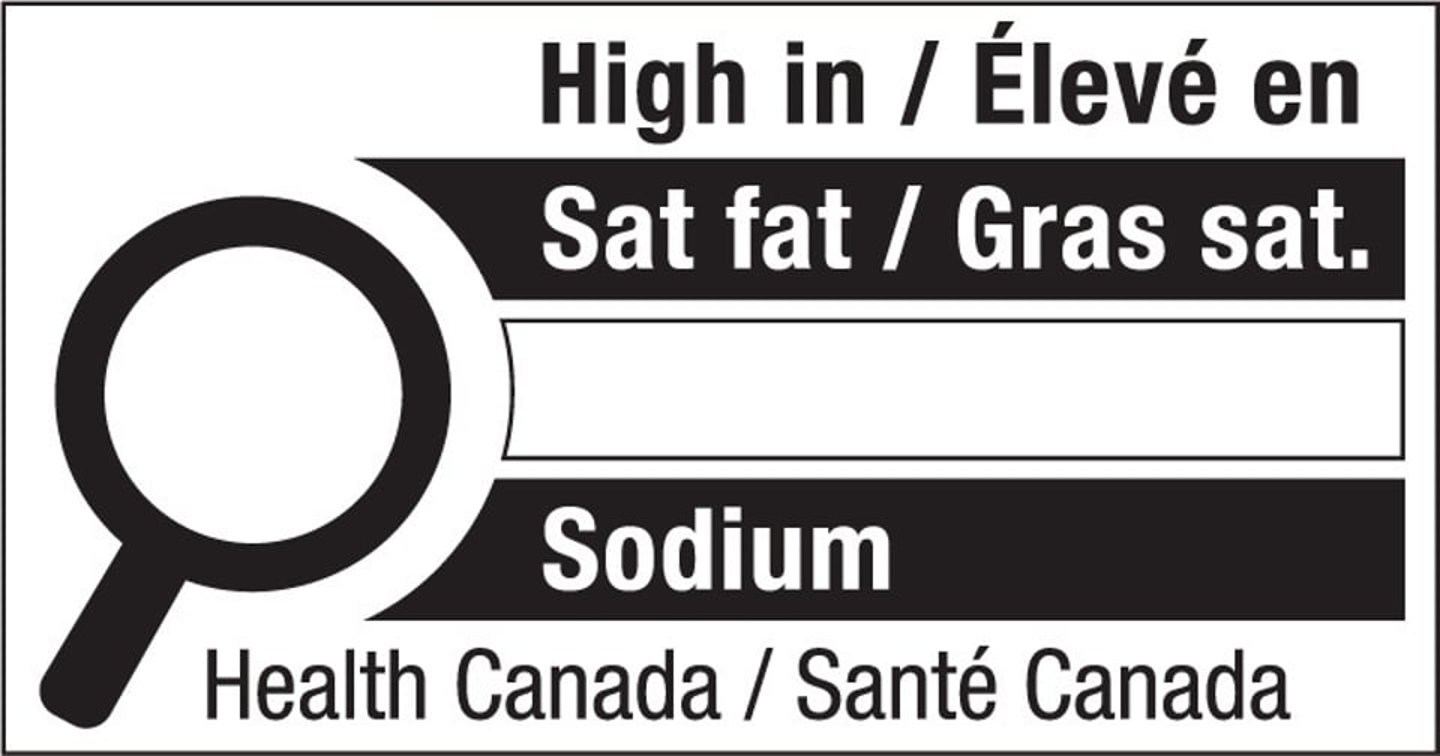
Starting next year, many packaged foods high in saturated fat, sugar or sodium will require a black-and-white Health Canada front-of-package (FOP) label.
The rule kicks in when a single serving contains 15% or more of the Daily Value (%DV) for these so-called “nutrients of concern.”
The goal: give shoppers a quick, visible cue to make better and more informed choices without having to flip to the Nutrition Facts table on the back.
For retailers, the rollout raises pressing questions: Are manufacturers ready? What happens if products aren’t compliant on time—must retailers pull them from shelves? Can existing inventory on shelf before Jan. 1, 2026, still be sold after the implementation date? And, of course, how might the labels affect sales?
After all, when tobacco warnings were first introduced—initially text-only, later with graphic images—sales steadily declined. That history prompts the question: could foods high in sugar, sodium, or saturated fat see a similar drop in consumption once front-of-pack (FOP) labels hit store shelves?
READ: Following healthy food guidelines in Canada comes at a high cost, study finds
To unpack what’s ahead, CSNC spoke with Michi Furuya Chang, EVP, public policy, regulatory affairs and head, division strategy at Food, Health & Consumer Products of Canada. Furuya Chang, who previously worked for Kraft Heinz Canada in policy, nutrition, regulatory and government affairs, has been leading the dialogue with Health Canada on behalf of the food and beverage manufacturing sector. (Coca-Cola Canada and Ferrero Canada were among the manufacturers to direct our requests for comment to the FHCP.)
We also connected with Erich Schmidt, director, communications and public affairs, at the Canadian Beverage Association.
1. Are manufacturers ready for January 1, 2026?
In a word: Yes. “I’m happy to say that based on surveys of our members—representing roughly 80% of Canada’s food, health and consumer product manufacturing sector—we believe most are on track to meet the deadline,” says Furuya Chang.
The FHCP has more than 180 member businesses across the CPG sector. “The industry had three and a half years to implement the changes, and we haven’t had a member say they won’t be ready,” she adds.
2. How strictly will enforcement be applied?
The Canadian Food Inspection Agency has two phases of planned enforcement, the first (July 20, 2022, to December 31, 2025) directed towards education and compliance promotion with the new requirements.
Phase II kicks in January 1. That is when the CFIA may take action in cases of inaccurate, false or misleading labelling information and will address food safety issues related to the regulations in these regulatory amendments.
Says Furuya Chang: “Health Canada will conduct health risk assessments in support of CFIA's compliance activities and continue to provide guidance on the interpretation of these regulatory amendments.”
More information on implementation and enforcement can be found here.
3. Can product already in stores and warehouses be sold through?
“Compliance is based on the production date, not when the product is sold. That means products made before January 1 can still be sold without the FOP label,” says Furuya Chang. “Health Canada understands manufacturers can’t control how fast items move off shelves, so there’s flexibility for inventory produced prior to the deadline.”
While recommending that retailers consult the CFIA for the latest details on the implementation plan, the CBA’s Schmidt says that "products imported, manufactured in Canada or packaged at retail before January 1, 2026, can remain in the warehouse and continue to be sold on store shelves."
4. How might this new label impact sales at c-stores?
Chile has required FOP warning labels for foods high in sugar, sodium, saturated fat or calories since phasing them in 2016.
“Experience from other countries, like Chile, shows there was an initial dip in sales for products with FOP warnings,” says Furuya Chang. “Consumers notice the label, and it can influence their choices. That said, data from Chile two, three, even five years out showed that purchase patterns of products with FOP labels generally returned to pre-implementation levels.”
5. One might assume these new labels apply only to candy, chips, soft drinks, etc.—but it also affects products you might not expect. So, will this confuse consumers in making better and more informed choices?
“Front-of-pack symbols can affect perception, but the key is education. Even highly nutritious items, like 100% orange juice, may carry an FOP symbol. Without proper context, it could appear negative,” says Furuya Chang. “But the FOP label is meant to reinforce the Nutrition Facts table, helping consumers make better and more informed choices.”
6. Will more manufacturers invest in low-sugar, salt products?
The shift toward lower-sugar options isn’t slowing. Canada’s reduced-sugar food and beverage market is expected to reach nearly US$3.5 billion by 2030, up from US$1.78 billion in 2023, according to Grand View Horizon research.
That is a projected 10.1% compound annual growth rate from 2024 to 2030. Beverages accounted for the largest share of revenue last year.
Beverage manufacturers understand the demand is there for healthier options, says Schmidt of the CBA.
“Our members remain committed to providing clear nutrition information and offering Canadians a wide range of beverage choices, including many low- and no-sugar options that reflect evolving consumer preferences,” he says.