Grocery prices soften for most categories in July, meat and fish remain elevated: report

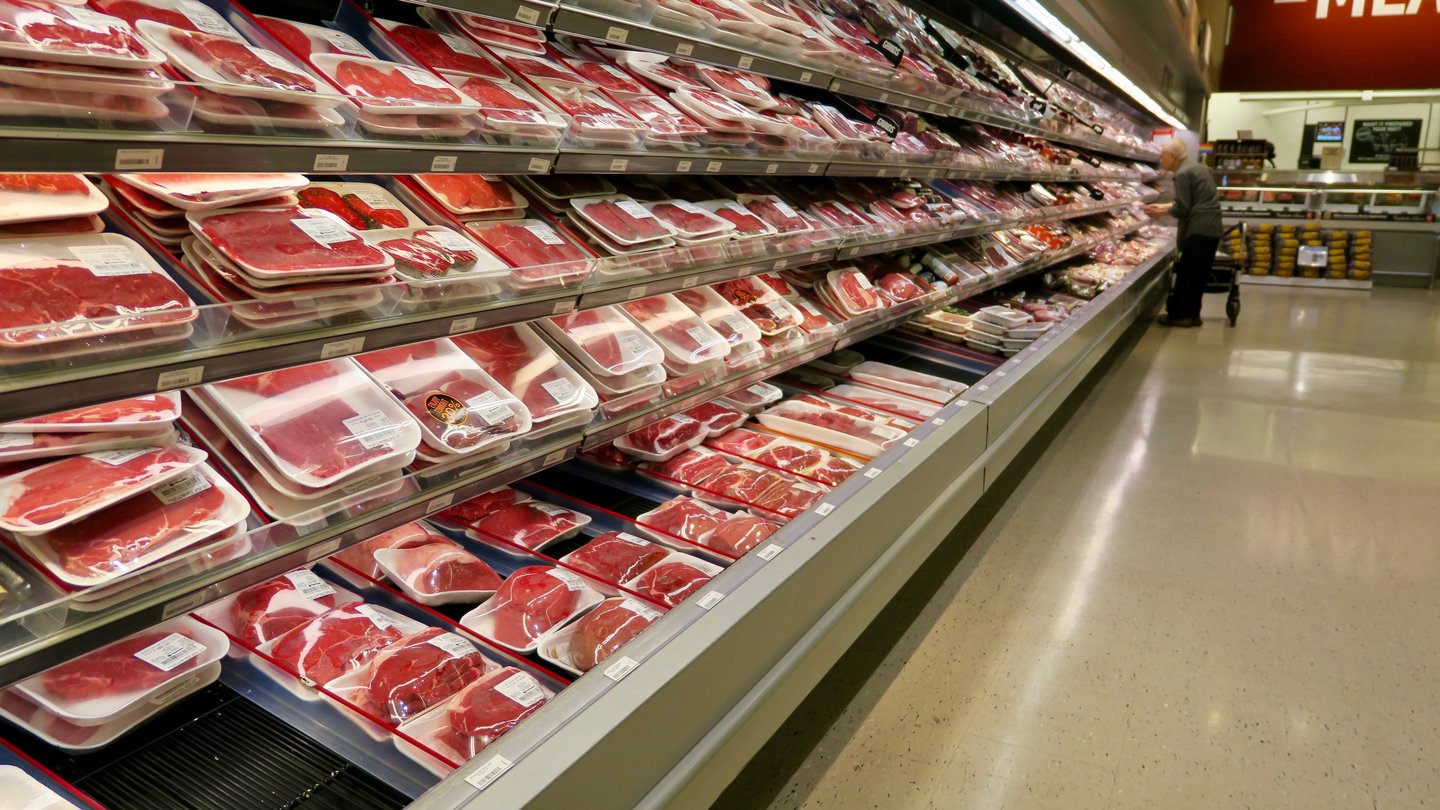
Though grocery prices softened in July, the cost of meat and fish remains elevated across Canada.
Dalhousie University’s Agri-Food Analytics Lab said the category saw an increase of 6.5% from June to July, adding around $5.72 to the average basket.
In partnership with GroceryPulse.ca, the lab tracked the cost of 50 products, analyzing 8,000 prices from 22 grocery banners in 13 Canadian cities.
Bacon recorded the largest increase at 28.9%, followed by Atlantic salmon at 25.8% and pork loin chops at 24.2%. Bacon prices increased in all 13 cities, while salmon and pork chops increased in 12.
Chicken breast prices moved sharply in the opposite direction, declining by 26.7% across the national sample. Median chicken breast prices fell in all 13 cities.
The lab’s 50-item food basket saw a modest increase of 0.3% from June to July, totalling an equal-city average of $298.38.
Thirty of the 50 products tracked declined, 17 increased and three remained essentially unchanged. Among comparable store-level observations, 62.3% of prices did not change.
Seven of the nine food category baskets declined in July. Vegetables provided the greatest relief, falling by 6.6%. Broccoli declined by 23.9%, romaine lettuce by 6.6%, onions by 5% and tomatoes by 4.7%. Bakery products fell by 4.2%, household products by 3.5%, beverages by 2.1% and dairy products by 1.9%.
Frozen products were the only category other than meat and fish to increase, rising by 2.8%.
Dalhousie said GroceryPulse monitors retail food prices regularly, allowing the lab to release data ahead of Statistics Canada’s monthly Consumer Price Index report.
READ: Under Carney, food inflation has outpaced inflation every single month
“This is primarily a protein-volatility story, not evidence of broad-based food inflation,” said Dr. Sylvain Charlebois, director of the Agri-Food Analytics Lab at Dalhousie University, in a press release. “Bacon, salmon and pork rose rapidly, while chicken breast became substantially cheaper. Consumers are therefore seeing very different price signals within the same department.”
Quebec City posted the largest increase in its 50-item basket at 6.1%, followed by Montreal at 4.2%. Calgary and Saskatoon each increased by approximately 2.4%.
The strongest declines were recorded in St. John’s at 4.2%, Halifax at 3.6%, Ottawa at 2.9% and Moncton at 2.7%. Overall, seven city baskets increased while six declined.
Charlottetown recorded the highest July basket at $318.48, while Ottawa recorded the lowest at $278.18.
“Our objective is to provide an early reading of grocery-price conditions,” Charlebois said. “GroceryPulse does not replace the CPI, but it can help consumers, industry and policymakers understand the direction of food prices before the official monthly figures become available.”