
Inside Whole Foods’ next-gen strategy
Whole Foods Market, like many other food retailers today, is undergoing a strategic evolution designed to bring more value, convenience and quality to its customers. What those other food retailers don’t have, however, is the power of Amazon to bring that evolution to the next level.
As VP of Amazon Worldwide Grocery Stores and CEO of Whole Foods Market Jason Buechel recently pointed out, being under Amazon’s umbrella has allowed Austin, Texas-based Whole Foods to lean even further into areas that have always made the grocer special. From providing convenience without compromise to harnessing next-generation technology, Whole Foods is actively leveraging its relationship with Amazon to create a new playbook for success.
Progressive Grocer spoke with Whole Foods Chief Merchandising and Marketing Officer Sonya Gafsi Oblisk about how the grocer is enhancing convenience; shifting consumer perceptions; expanding its commitment to sustainable, purpose-driven retail; and more.
Delivering Omnichannel Convenience
When it comes to the ever-important concept of convenience, Whole Foods is approaching it from several different angles in an effort to fit seamlessly into customers’ different lifestyles. E-commerce solutions, like the Whole Foods grocery offerings available on Amazon, are a solid complement to in-store shopping, Oblisk explains, with that digital access proving to be a huge win for the retailer.
“One thing that we know today across the grocery landscape: Customers are shopping at multiple retailers for different occasions and need states,” she says. “As we’ve built our Whole Foods online store on Amazon, we inherently are giving customers an opportunity to be able to combine trips and do more than one shop at once, just by the nature of what we offer through our very vast assortment across Whole Foods, and also across our Amazon grocery offering.”
The range of delivery speeds that Whole Foods is able to provide to its customers through its affiliation with Amazon is also a major boost. Whole Foods customers can have their groceries quickly delivered the same day, and in just 30 minutes with the Amazon Now service.
The notion of convenience without compromise also extends to the Amazon returns program that’s taking place inside Whole Foods stores.
“This is probably one of the best examples of a win-win with our customers,” Oblisk explains. “The level of convenience that having physical stores in prime real estate that are easy to get in and out of, where you can just go and quickly do a return, is incredible.”
The program has also been a win-win for the retailer’s bottom line by driving traffic to physical stores and attracting new customers who might not have shopped there previously. Whole Foods now receives a meaningful portion of Amazon returns, and it’s only growing.
Tackling Value Perception and Pricing Strategy
It’s no secret that Whole Foods has historically been known by a subset of consumers as relatively expensive and niche, but today, the grocer is actively promising its shoppers that it will provide lower prices and great value, according to Oblisk.
“We spend a lot of time and energy studying our competitors to make sure that we’re maintaining that promise to our customers,” she explains. “We also do a lot of deep dives with our own data and customer insights to understand what items are most meaningful to customers.”
She continues: “Where do they actually derive the most value? What items really will be most persuasive in terms of determining where someone chooses to come and shop? Those are the items where we really focus on ensuring we have the strongest everyday value throughout the entire year.”
For Oblisk, the winning combination for moving the needle on price perception at Whole Foods has been a balance of investing in those items that matter most to shoppers and offering promotions on relevant and exciting seasonal products. Proof positive: The grocer is seeing exceptional growth and engagement in its promotional and everyday value items.
Another key component of offering unbeatable value to its shoppers is private label, an area in which Whole Foods is expanding, and in which it has lowered prices on more than 1,000 products. The company has also found itself in a winning position to use its private brands to cater to evolving consumer trends, including a focus on health and wellness, clean ingredients, and transparent, consistent quality standards.
“We’re able to offer exceptional price points and still maintain all of our quality standards,” Oblisk says of Whole Foods’ three private label brands. “All the standards that appear throughout the store, those are part of the guardrails for how we build and develop all of our private label assortment, which is a

Sustainability and Purpose-Driven Sourcing
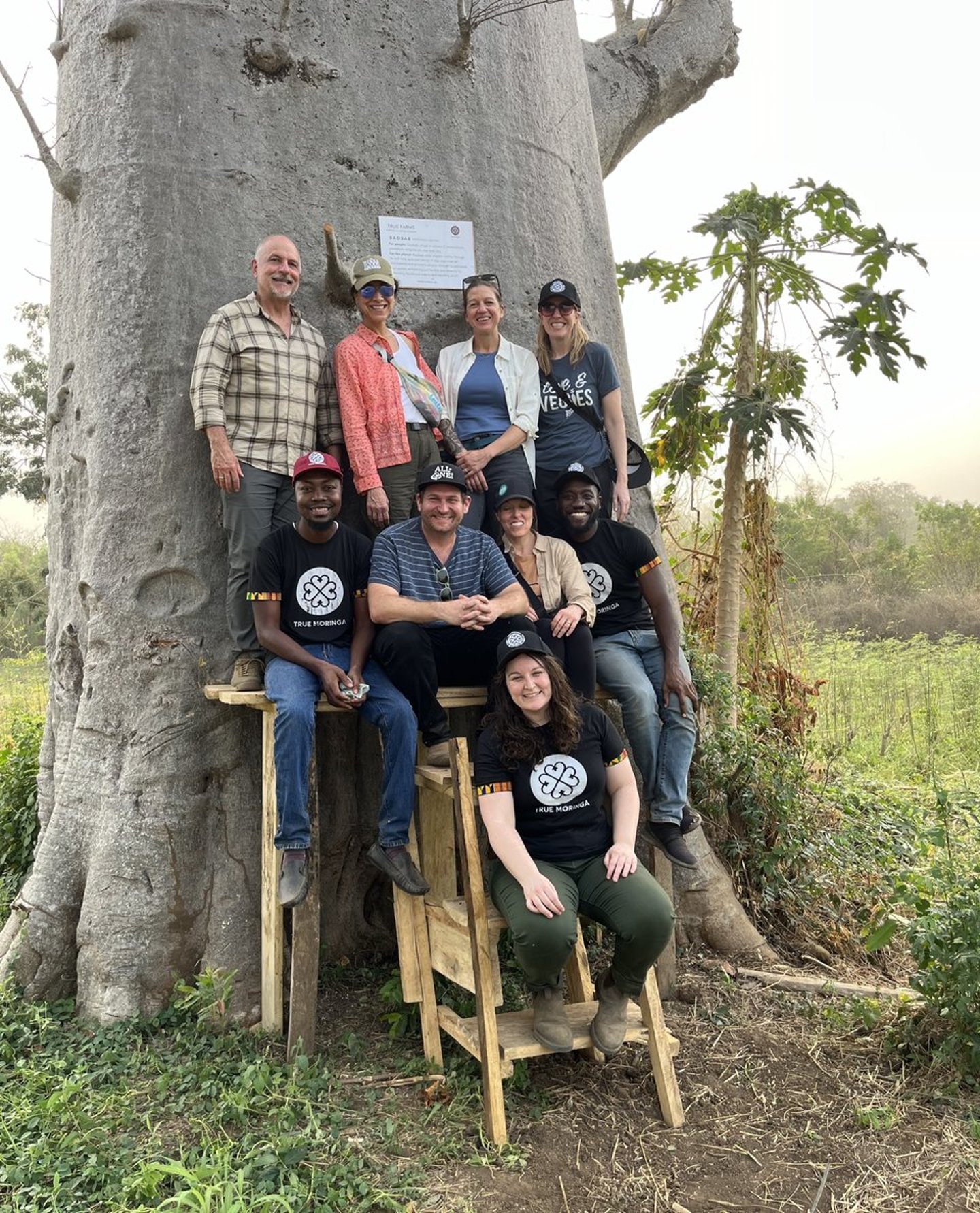
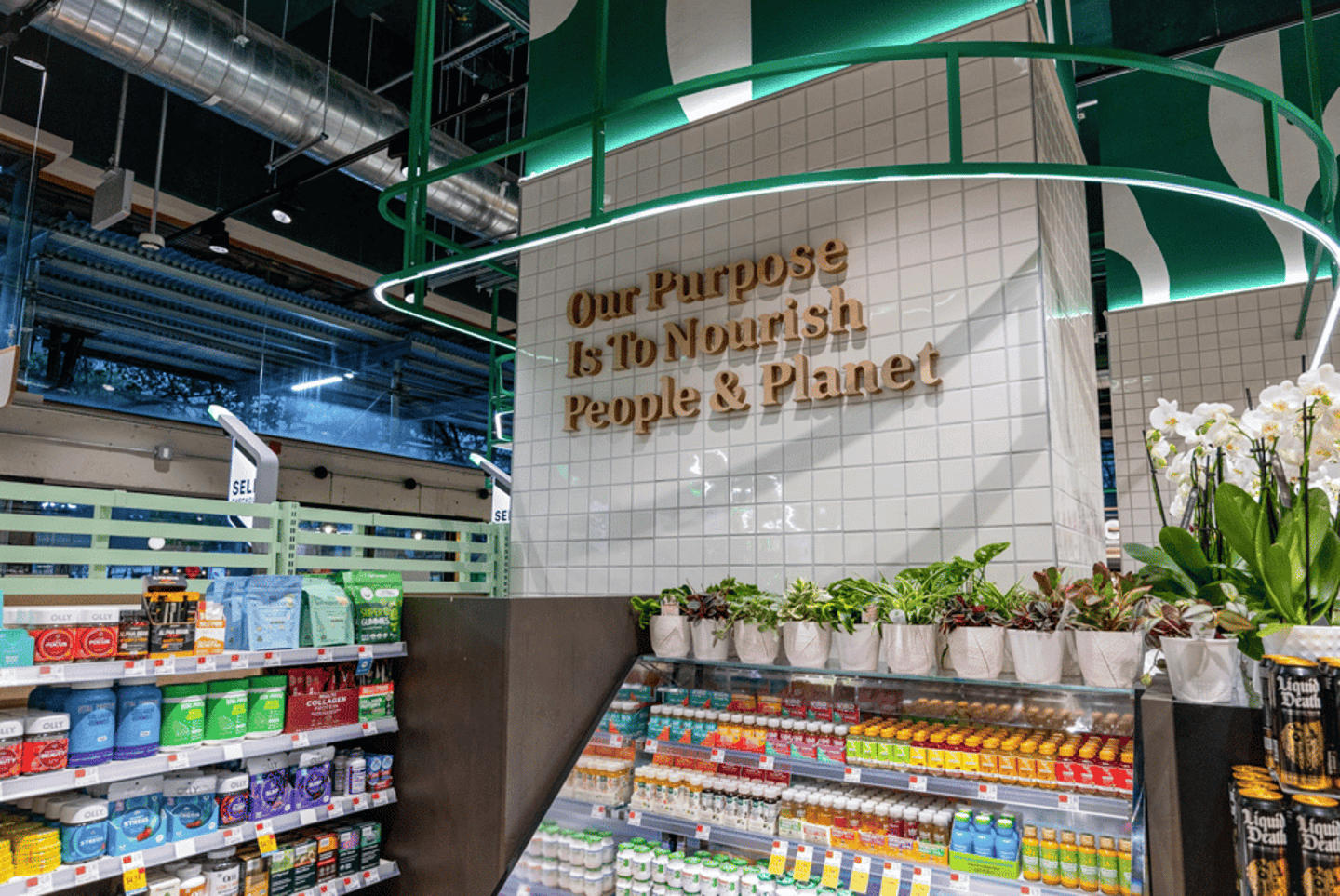
One thing that hasn’t changed under Amazon’s ownership is Whole Foods’ commitment to its original higher purpose of nourishing people and the planet. Sourced for Good is the grocer’s hallmark purpose-driven program that focuses on supporting workers, communities and environmental stewardship where its products are sourced, providing premiums that go toward improved wages, health care, student scholarships, planting trees to prevent erosion, and much more.
Sourced for Good suppliers are represented widely across Whole Foods’ aisles, including in floral, produce, seafood, coffee and chocolate, with the program continuing to grow. For Oblisk, telling the stories of those suppliers and the communities the products are supporting in-store is part of connecting the dots between everyday Whole Foods shoppers and the massive international financial inclusion projects that the grocer helps to undertake.
“That’s a big piece of it for us on the local side,” she explains. “Being able, through outdoor marketing, through signage communications, even through demos in-store and having our founders and some of their brand ambassadors come in, to share stories is really important.”
Oblisk continues: “This connection back to the grower, the farmer, the producer, the entrepreneur, whoever it may be, is a really important part for us, and this goes back to Whole Foods really being grounded in this notion of a stakeholder model.”
Whole Foods stakeholders, she says, encompass customers, the environment, the grower, the farmer, the producer, the rancher and more. “So really weaving that together and using our in-store touchpoints and then all of our owned and operated channels to bring that to life is important,” she notes.
The Physical Move Forward
One final way that Amazon has helped Whole Foods grow and thrive is by giving the grocer the scale it needed to meaningfully expand its footprint. Whole Foods currently has more than 550 locations worldwide, with 100 more coming in the next few years.
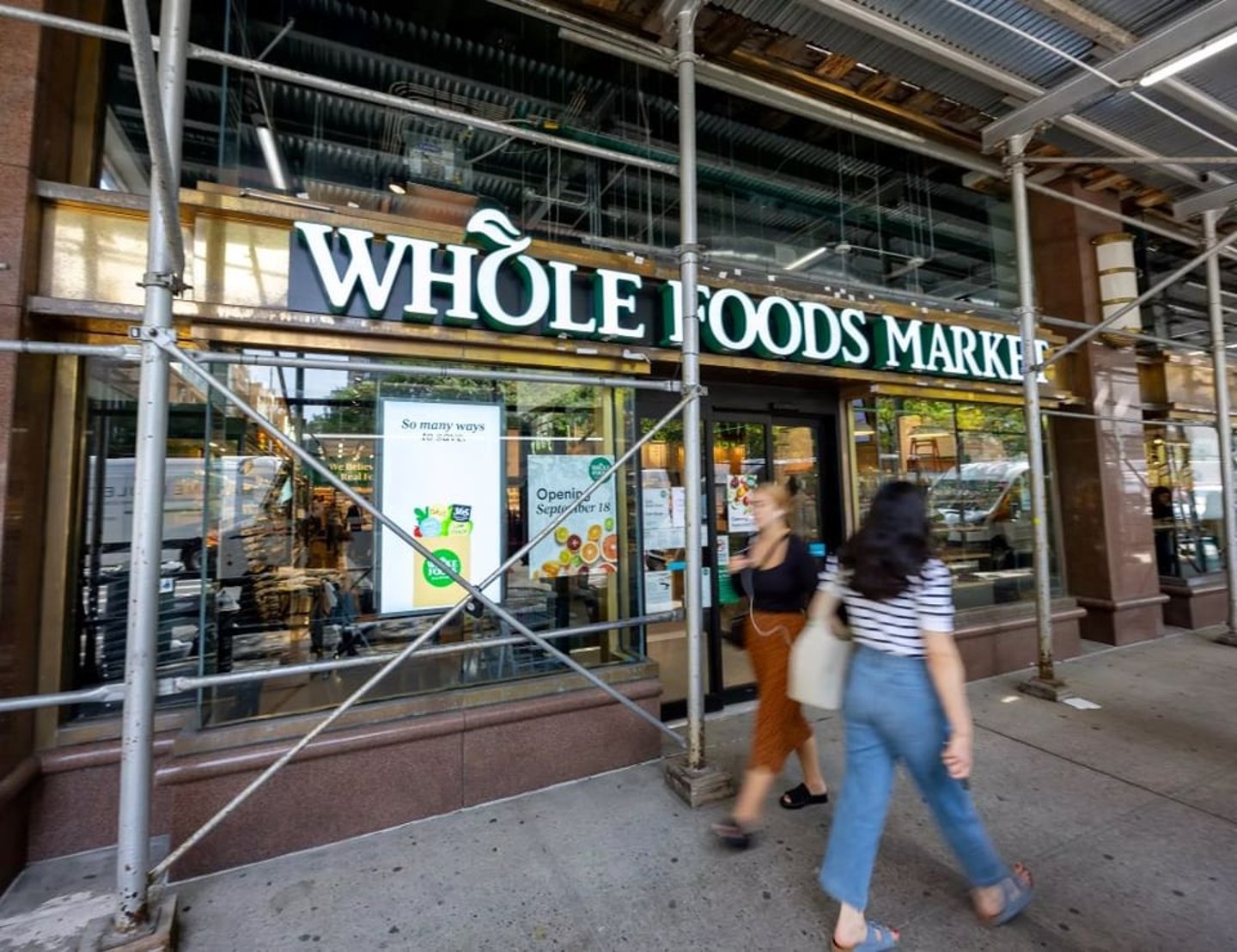
The company launched its smaller-concept Whole Foods Market Daily Shop in New York City in 2024, and the banner has since expanded across the New York metro area, into several states and even across the pond to London. Additional Daily Shop stores are slated to open later this year.
Oblisk shares that Whole Foods is actively learning, iterating and refining to make sure that the company is providing the best store fit for the individual communities and neighborhoods it’s moving into, and “really connecting with customers and showing up in the best way we can.”
While giving no specifics as to how Whole Foods and Amazon will grow the Amazon Grocery concept, which was launched alongside a Whole Foods store in Chicago, or the store-within-a-store experience at the Whole Foods in Plymouth Meeting, Pa., Oblisk says that the team is “excited to continue to iterate and invent and think about ways that we can make grocery shopping faster, easier and more affordable for all of our customers.”