Opinion: Frontline grocery workers should not have to accept violence as part of the job

For more than 111 years, Pattison Food Group has served communities across Western Canada. Today, nearly 30,000 team members come to work each day in our grocery stores, pharmacies, warehouses, distribution centres and support offices with one simple goal: helping feed, care for and serve their communities.
Most people see our team members behind checkout lanes, stocking shelves, filling prescriptions, or helping customers find what they need. And that is accurate, however, what people don't often see is that our teams wonder every day whether they will be threatened, assaulted or injured—while simply doing their jobs. Unfortunately, that is becoming an increasingly real concern.
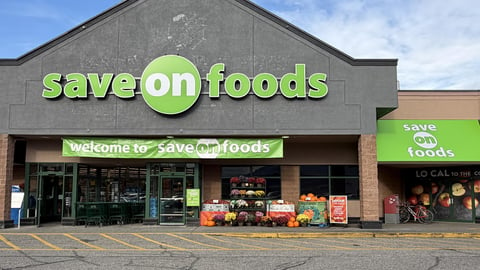
Last week, one of our store managers was seriously assaulted while working at a Save-On-Foods store in Victoria, B.C. He lost consciousness, sustained a concussion, and suffered significant injuries that will likely require surgical treatment.
Earlier this year, an individual deliberately set fire inside our Nesters Market store at Vancouver's iconic Woodward's building while team members and customers were inside. The fire caused more than $500,000 in damage and temporarily closed the only full-service grocery store in the Downtown Eastside's. In both cases, lives were put at risk, and the consequences could have been far more tragic.
READ: Pattison Food Group 'profoundly disappointed’ by arson sentencing
What concerns me most is that these were not isolated incidents
For years, retailers across Western Canada have been warning about a troubling rise in aggressive and violent behaviours in stores—especially since the pandemic. What began as an increase in theft has evolved into something far more serious. Our team members and customers have been threatened, assaulted, spit on, and confronted by individuals carrying weapons. We have seen bear spray attacks, knife incidents, violent altercations with homemade weapons, and repeated threats directed at frontline workers simply trying to do their jobs.
They happen in our neighbourhood grocery stores, pharmacies and shopping centres where people expect to feel safe. They happen to cashiers, clerks, department managers, pharmacists, and store managers. Increasingly, they happen to people who have no security responsibilities whatsoever. In fact, more than half of reported threats within our business are directed at employees who do not work in security roles.
Across our business, we are seeing a concerning increase in both the frequency and severity of threats, confrontations and violence. Equally troubling is the number of repeat offenders involved in these incidents. While we have invested significantly in security measures, including employing security guards and installing gates in our stores, too often the same repeat offenders continue to target retailers despite repeated interactions with businesses, law enforcement and the justice system. Years ago, we began raising concerns with all levels of government that offenders were becoming more emboldened. Unfortunately, what we feared then has continued to escalate.
I have spent my entire career—more than 46 years—in the grocery industry. In that time, Canadians have navigated economic downturns, labour disruptions, natural disasters, supply chain challenges and a global pandemic. What concerns me today is that we are increasingly asking frontline workers to manage levels of aggression and violence that simply did not exist when many of us entered this business.
This is not just a retail issue. It is a public safety issue. It is a community issue. It is an affordability, food security and economic resilience issue.
Businesses like ours play an important role in communities across Western Canada. We provide employment, support local suppliers, growers and producers, invest in our communities, and ensure reliable access to food and pharmacy services. In some communities, particularly those facing significant social and economic challenges, grocery stores are among the last remaining private-sector services still making those investments.
But businesses cannot be expected to invest in communities and provide essential services without reasonable confidence that employees and customers can safely work and shop there. Nor should frontline workers be expected to accept violence as simply part of the job.
To be clear, we recognize this issue is complex. We also recognize the challenges associated with addiction, mental illness, homelessness and repeat offending. We support prevention, treatment, and rehabilitation efforts, and we know there are no simple solutions. However, both things can be true at once: we can support vulnerable individuals while also protecting frontline workers. We can believe in rehabilitation while also expecting accountability.
For years, we have shared our concerns with governments, law enforcement agencies, and community partners. We have met with numerous government officials and have invested heavily in security, training, and support programs for our people. We remain committed to being part of the solution, yet despite those efforts, the incidents continue to become more serious.
Quite frankly, I am deeply concerned about where this trend leads.
When a store manager is left unconscious following a violent assault and an occupied grocery store is deliberately set on fire, we should view those incidents as warning signs. We cannot wait until someone loses their life before deciding that enough is enough.
The people most affected by this issue are often the least heard. They are the frontline workers who show up every day to serve their communities, help customers, stock shelves, fill prescriptions, and keep essential services running.
They deserve to know that their safety matters. They deserve to know that violence will not be accepted as part of their jobs. And they deserve to return home safely at the end of every shift. That should not be a controversial expectation. It should be the minimum standard we owe every frontline worker in this country.

Jamie Nelson is president of the Pattison Food Group, bringing more than 45 years of grocery retail experience. He leads the company’s strategic direction across retail, supply chain, distribution and manufacturing operations. A highly respected industry leader, Jamie received the Golden Pencil Award, Canada’s highest grocery industry honour, in 2023, and was recognized with the Canadian Federation of Independent Grocers (CFIG) Life Member Award in 2026. He also serves on the boards of GS1 Canada and The Grocery Foundation and is a member of the B.C. Premier’s Task Force on Agriculture and Food Economy. Through his leadership and industry involvement, Jamie remains committed to advancing the grocery sector and supporting the communities it serves.
Pattison Food Group operates Save-On-Foods, Buy-Low Foods, Quality Foods, PriceSmart Foods, Nesters Market, Nature's Fare Markets and other retail banners.