Prolonged drought puts scare into Norfolk pumpkin growers
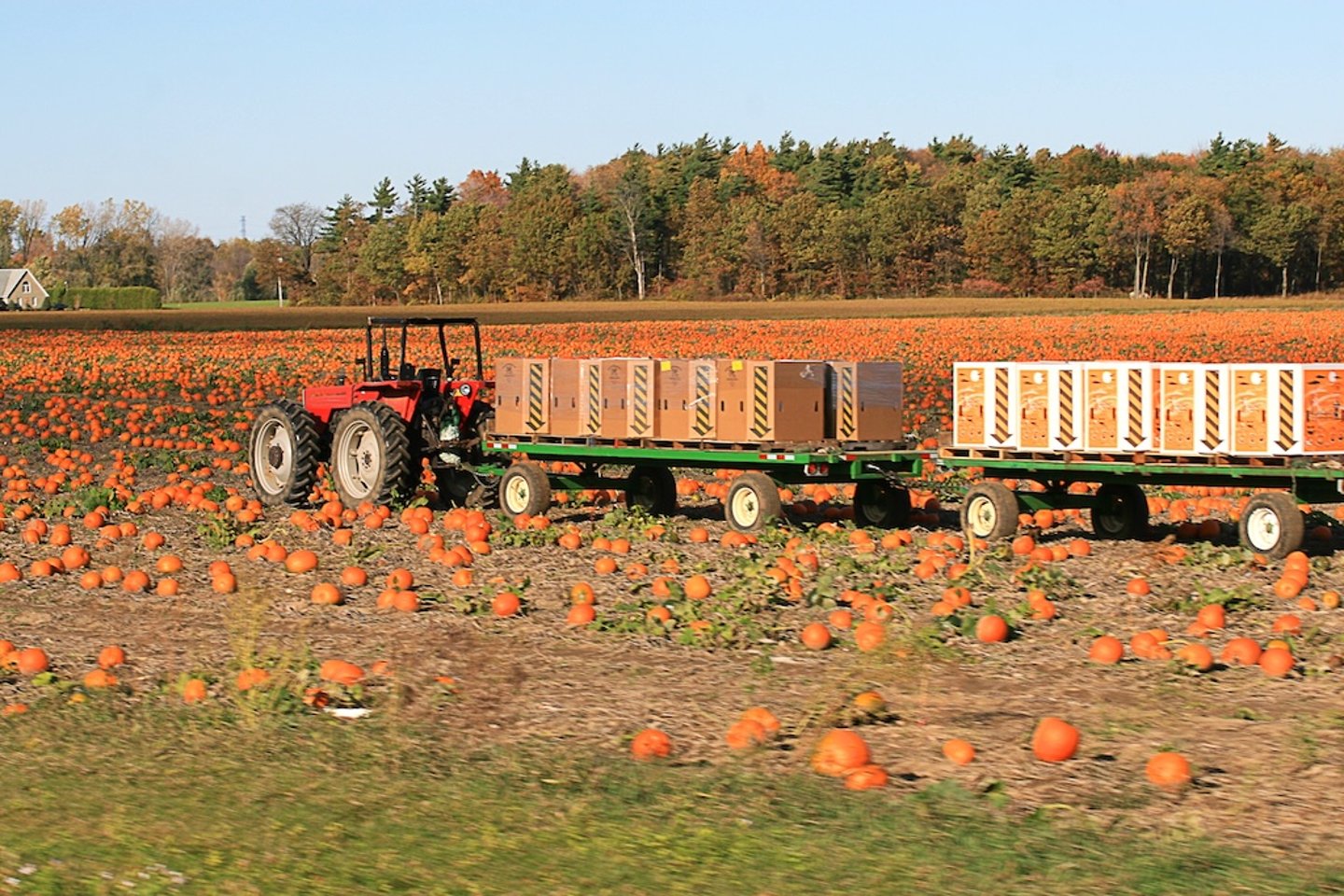
Canada’s largest pumpkin patch is looking a little lean.
Pumpkin farmers in Norfolk County say a prolonged dry spell has led to fewer future jack-o’-lanterns in their fields, and the pumpkins that did sprout are smaller than in past years.
“It was a very tough year for growing pumpkins,” said Ryan Kukielka, who harvests 450 acres of carving and pie pumpkins — plus some fancy heirloom varieties — on a farm in Vanessa, southwest of Brantford.
“We received very little rain — less than two inches the whole growing season,” Kukielka told The Spectator.
He irrigated his fields to help make up the shortfall in rainwater, but the crop still took a hit.
“The drought has left us with a lower yield and smaller pumpkins this year compared to last year,” Kukielka said.
The story is similarly spooky at Szatrowski Farm Produce in Greens Corners, west of Simcoe, where farmer Zebb Szatrowski said the intense summer heat zapped some of his pumpkin plants before they had the chance to flower.
“We actually didn’t have very many pumpkins this year because a lot of our pumpkins didn’t end up germinating,” Szatrowski said, explaining the lack of moisture in the soil caused fertilizer placed near the seed to interfere with the growth of the plant.
“All that fertilizer kind of burned up the pumpkin seed, and it didn’t germinate,” he said. “So we had a large portion of our pumpkins that didn’t even come up.”
Szatrowski normally grows 150 to 200 acres of pumpkins, mainly for carving. This year, the heat-stressed plants that survived the drought are yielding smaller pumpkins, and fewer of them. That forced Szatrowski to buy extra pumpkins from a larger grower in Norfolk to satisfy his wholesale contracts.
Rescuing thirsty crops
The federal government’s Canadian Drought Monitor for August said Haldimand-Norfolk is in the midst of a severe drought, with precipitation levels “well below normal” across southern Ontario.
The local field conditions mirror a trend seen across the country, with 70 per cent of Canada’s farmland classified as being in a drought at the end of last month.
Delhi farmer Dave VanDeVelde has noticed some flowering stress in his pumpkin field, but he said the five-acre crop is hanging in thanks to plenty of added water.
“We have irrigated them multiple times throughout the season to ensure that there is a crop, because otherwise there probably wasn’t going to be much of anything,” said VanDeVelde, who harvests 20 pumpkin varieties for sale as decorative gourds and baked into pies at Wholesome Pickins, the farm market he runs with his wife, Jenn.
Fruit and vegetable farmers in Norfolk irrigate their fields as a matter of course because the soil is sandy and porous, with excellent drainage ideal for growing tobacco, peanuts, potatoes and more.
Farms like Wholesome Pickins “have access to irrigation” thanks to available water sources and “existing infrastructure from the tobacco days,” VanDeVelde said.
But rescuing thirsty crops during a drought comes at a cost, since irrigating more frequently means paying more for water, fuel, hydro and labour.
Those added expenses cut into growers’ profit margin, while the reduced supply of pumpkins could mean higher prices for consumers.
“Most of our prices are negotiated well before we plant, but in general, the market prices rise when yields are low,” said Kukielka, who sells his entire harvest on the wholesale market.
Szatrowski had to focus his farm’s extensive irrigation system on his main commercial crop — 200 acres of fresh market potatoes — to ensure adequate size and supply.
That meant largely leaving the pumpkins to fend for themselves in the field.
“Pumpkins typically don’t need nearly as much water as potatoes,” Szatrowski said. “If you didn’t irrigate your potatoes in a year like this, it would make a huge difference.”
Canada’s biggest pumpkin patch
The 2021 Census of Agriculture found Norfolk farmers grow nearly 40 per cent of the 11,569 acres of pumpkins harvested in Canada.
Anchoring the county’s dominant position in the pumpkin market is Canada’s largest single grower, Scotlynn Sweetpac Growers, a Vittoria-based multinational that farms 1,350 acres of pumpkins each year.
Scotlynn’s director of maintenance and agriculture, Jorden Hughes, told The Spectator the company’s pumpkin crop “is in relatively good shape despite the challenges posed by this year’s hot and dry conditions,” with harvested fruit “showing consistent sizing across the board.”
Shipping started “a little bit slower” in late August, Hughes said, but over 300 truckloads of Scotlynn carving pumpkins have already left Norfolk bound for grocery markets throughout Canada and the United States.
The company expects to ship roughly 40 million pounds of pumpkin this fall.
Pumpkins can handle drier soil, Hughes explained, though Scotlynn staff spent months planting cover crops and tilling the fields “to position us for a strong harvest season.”
“And certainly, lots of burning of the midnight oil for irrigation … during the drought, which played a critical role in supporting crop health and yield,” he said.