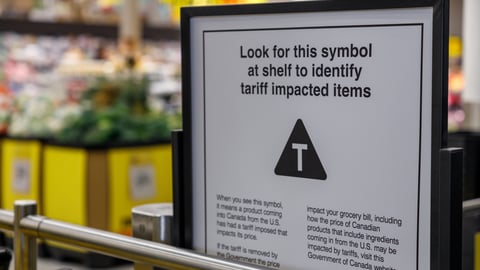

The $800 line that could cost Canada's food industry a billion
On August 29, the United States will close the door on a long-standing trade convenience: the de minimis exemption. For decades, this rule allowed small shipments valued at US$800 or less to cross the border duty-free, bypassing the cumbersome customs procedures that normally apply to imports.
For Canadian food producers—especially the small and mid-sized ones—the implications are significant. While the headlines have focused on tariffs on steel, cars, or lumber, this quieter policy change risks undermining a vibrant ecosystem of specialty and artisanal foods that have found eager consumers south of the border.
The hidden artery of food trade
The exemption was never about giant grain shipments or truckloads of beef. Those flows already move through established commercial channels, covered by USMCA [United States-Mexico-Canada Agreement] rules that keep most tariffs at zero. Instead, the de minimis threshold acted as a hidden artery for small players: the Nova Scotia jam maker shipping gift boxes to Vermont, the B.C. chocolatier sending truffle assortments to Seattle, or the Ontario pet treat company tapping into the booming U.S. specialty market.
Specialty food stores have also benefited from this trade mechanism. Independent retailers in New York, Chicago, and Los Angeles often relied on small, frequent Canadian shipments to diversify their offerings. Now, they too face higher prices, longer waits and more red tape, which could limit the range of Canadian products on their shelves.
Why small doesn’t mean insignificant
At first glance, the overall economic impact may look minor. Bulk food exports—Canada’s wheat, beef, canola oil, or pulses—will continue to flow unaffected. But focusing on aggregate trade numbers misses the point.
Estimates suggest that between $500 million and $1 billion worth of Canadian food exports to the United States move each year under the $800 threshold—everything from craft condiments and gourmet snacks to specialty beverages, frozen goods and shipments for trade shows and customer samples. This may be a fraction of Canada’s $40+ billion agri-food trade with the United States, but for the companies involved, it often represents their entire U.S. market entry strategy.
Food economics isn’t just about tonnage; it’s about market access, competition and consumer choice. When small firms lose their ability to compete, entire product categories shrink. American specialty retailers will see fewer Canadian craft brands on their shelves. And in Canada, entrepreneurs may think twice before scaling up if the first step into the U.S. market is suddenly cost-prohibitive.
Ottawa’s blind spot
One option Ottawa does have is to revisit its own de minimis threshold. Currently, goods entering Canada from the U.S. are duty-free only up to C$150—a fraction of the former U.S. level. Matching the U.S. threshold would not only benefit Canadian consumers by lowering cross-border costs, it would also give Ottawa stronger footing to argue for reciprocity in Washington.
Instead of treating de minimis as a technical issue, Canadian policymakers should see it as a strategic lever: a way to protect small exporters, rebalance trade irritants, and keep cross-border commerce flowing for the businesses least able to absorb new costs.
A tale of two trade systems
The timing also exposes a paradox. On one hand, USMCA protects large-scale trade flows; on the other, Washington is dismantling a system that supported the very businesses USMCA was supposed to empower. For Canadian food exporters, the message is contradictory: scale up or stay home.
This policy shift also reveals how vulnerable small businesses are in a tariff war not of their making. While policymakers spar over billion-dollar industries, the fallout is felt most acutely by the companies shipping a few hundred dollars’ worth of goods at a time. It is the micro-entrepreneurs, not the multinationals, who risk being collateral damage.
The bigger picture
Trade policy often looks like a chess game of billion-dollar pieces. Yet the board is also populated by pawns—the small shipments, the craft producers, the specialty stores—that give life to Canada’s food economy. Dismissing their struggles as marginal ignores their role in shaping competition, culture, and innovation.
The end of the de minimis exemption is more than a technical rule change. It is a reminder that when protectionism rises, it is usually the smallest who pay the highest price. For Canadian food exporters and the retailers that depend on them, this fall may prove to be one of the toughest harvests in years—not in the fields, but at the border.