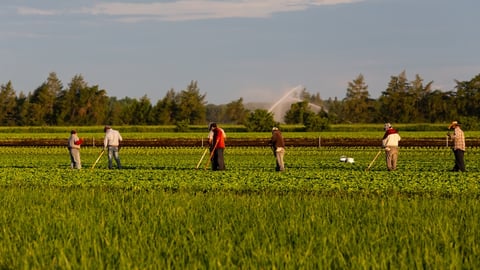
Feeding the harvest: the challenge and value of seasonal farm labour

Seasonal workers are both essential and challenging for Dan and Joanna DeBackere, proprietors at DeBackere Farms, in Central Elgin.
Well known locally for the fresh vegetables sold at the DeBackere Farm Market, at 5680 Sunset Drive, in Union, the family-run company is also a large wholesale operation, selling products across Canada and the U.S.
The DeBackere’s reputation as quality wholesalers of fresh farm produce—particularly tomatoes and bell peppers—rests in the busy hands of more than 220 seasonal workers. Recruiting, training and retaining those workers can be one of the farm’s greatest challenges.
Seasonal workers help plant, maintain and harvest about 350,000 cases of vegetables each year—roughly 3.9 million kilograms (8.5 million pounds) sold to buyers such as Loblaws, Metro, Subway and the Toronto Food Terminal.
READ: Temporary foreign workers are crucial to agri-food industry, says OFA
“Quality sells,” Dan said. “Your labour force is critical to get the job done right. You’re only as good as they are.
“Right after it’s picked, the crop starts degrading,” he noted. “Everything is critical, to get it in the barn, packed and cooled, immediately, to create a longer shelf life.”
The DeBackeres rotate about 250 acres of produce through roughly 600 acres of farmland in Elgin County, employing four full-time staff along with about 20 seasonal workers from May to October and roughly 200 additional workers during the peak harvest period in August and September.
“It’s extremely difficult to get people, because every farmer in southern Ontario is after the same people during the harvest period,” said Dan.
When production ramps up during harvest, farms often hire as many workers as possible to keep up with the pace. He said, “You can’t catch up once the push is on and you would hire anyone that comes along.”
Once the busiest weeks pass, however, the need for labour drops quickly and farms must reduce their workforce again.
Finding workers was hard, but so too was letting them go, as was the nature of harvest work, “You feel like you’re using people, but up front, we tell them that we may only need them for five weeks, then once it starts slowing down, we start moving people out.”
Mother Nature often complicates the process. The DeBackeres may advise candidates during job interviews that work will begin on July 25. When the job actually starts on July 10 due to favourable weather conditions, the full-time seasonals are quickly called into action to fill the gap. Similar conflicts arise when workers are told their jobs wrap up on Oct. 15 but an early frost ends the season on Sept. 28.
“We understand,” said Dan. “It’s a back-breaking job: the heat, the cold, the dust, the rain, the low wage, and it’s seasonal. Who wants to come for only five weeks, right?
“But every single product we do is hand-picked and then packaged,” he added. “Perishable items that bruise very easily have got to be handled, loaded, brought to the barns. Even though we have pretty decent automation on some of our lines, it’s still a lot of handling involved, a lot of grading, and physical lifting of these cases.”
Many long-time members of the DeBackeres’ workforce are Vietnamese immigrants who now live in London, Ontario. The family also works with various employment agencies that provide migrant and new Canadian labourers.
Aging population will widen labour gap in Canadian agriculture: report
Training can be a challenge, particularly with the language barriers. “It’s a lot of hand and eye,” he said. “It’s about all you can do to show some of them but there’s usually somebody who speaks both languages a bit and can kind of relate things.”
Jobs must first be advertised locally before temporary foreign workers can be hired, but Dan said “very few Canadians apply … They email us back and ask why are you offering minimum wages for such a difficult job. It’s tough on us,” Dan said.
“We understand—we don’t want that job either—and we understand it’s not enough, but it’s not us setting the price.
“We’ve had to increase (product) prices again this year,” he said. “People think the price of food is going to go down, but it’s going to keep going up. Cost of production is ridiculous, with red tape and wages. Our labour is our biggest killer.
“Although it’s minimum wage, roughly 33% of every dollar (for vegetables) goes to wages now,” added Dan. “It’s a bad position for farmers to be in when we struggle with labour force. We can’t offer a lot of money.”
Seasonal agricultural workers live in a number of bunkhouses on the DeBackere farm, with each unit accommodating about six people.
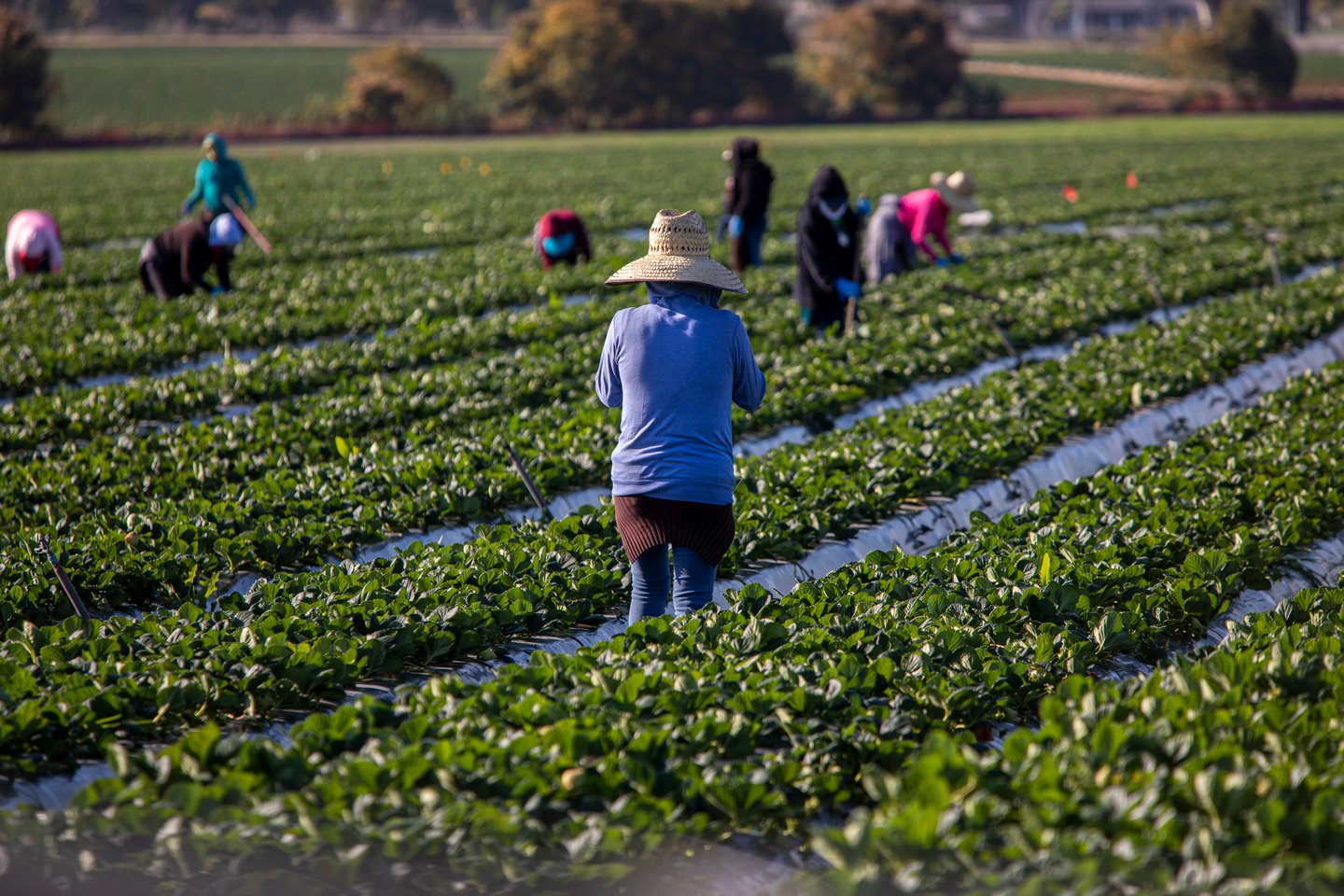
Because many seasonal workers live in housing on the farm, the DeBackeres say their responsibilities extend well beyond the workday, with employers often helping workers address everyday needs outside working hours.
Dan explained, “At night, you’re just ready to go to bed and the phone rings. You’ve got to keep your phone on all the time because you never know what is going to happen. We could have a full-time staff working with our gang just to keep them happy.”
His wife added: “It’s different than a normal employer where you’re responsible for your staff Monday to Friday, 8:30 a.m. to 4:30 p.m. Here you’re making sure that everything is okay for them 24/7 because they’re living on your property.
“You’re dealing with a lot of interpersonal things,” said Joanna. “When you have x number of people living in a house together, with different personalities and working together, there are always things that come up.”
It can be like walking on a tight rope when product quality is added to the equation, said Dan.
Training new workers can also take time, particularly when harvesting delicate produce that must be picked carefully to maintain quality. “Honestly, we’re not out there telling them to get moving, get moving, get moving, but there’s a fine line between being profitable and not,” he said.
“When you’ve got 200 people out there, you can’t keep track of them all, so if 10 of them are in the cornfield sleeping, you wouldn’t know it. We try to get the best production that we can out of them,” he added.
He sometimes wonders whether piecework pay would serve him better than hourly wages.
“These products have got to be mature when we pick them,” he explained. “If you start paying for piecework, there are three or four more peppers on that plant that are real close, but we want to wait five days before we pick them. They’re guaranteed to go in that bucket when it’s piecework. Then when it comes through, your quality drops.
“So, you’ve got to take the good with the bad, pay by the hour and hope for the best.”
Working and living standards on the farm are highly regulated, he said. The Ontario Ministry of Labour can inspect farm operations at any time. Southwestern Public Health inspects worker housing each year. Employees receive health and safety training and select an employee representative, and farm workers are free to reach out for assistance to others in the community.
“We have no issue with that. We feel that we’re very compliant and very easy going,” said Dan. “I find that you get good production out of happy people. For the most part, there are not too many employees who don’t like us. I’m sure we’d be more profitable if we were stricter.”
Added Joanna, “You treat people the way you want to be treated.”