Generation Next Thinking: Is your workforce ready for what's next?

How do you prepare a workforce for a future that seems to change by the minute?
From technological leaps and geopolitical events to shifting employee dynamics, the business world is moving fast—no exaggeration. “The pace of change is quickening—and that’s been true throughout history—but, we’re starting to get to a point where it’s really hard for organizations to handle that pace,” says Gordon Sandford, national lead partner for digital transformation and lifelong learning, EY Canada.
Add to that a hefty dose of turmoil. “We’re at a stage where once-in-a-lifetime events aren’t once-in-a-lifetime anymore. Whether it’s wildfires or COVID or tariffs, these big jolts are happening fast and frequently,” he says.
Kate Turner, managing director at Accenture’s retail practice, sees similar challenges. “Many organizations feel like they can’t keep up with their customers—and the same goes for their employees,” she says, explaining that businesses are managing a uniquely diverse workforce with multiple generations working together, each with different needs. At the same time, technology— especially artificial intelligence (AI)—is advancing at an unprecedented rate.
READ: How tech is shaping the workforce of the future
“The use of AI is speeding up many things we didn’t even think last year would be possible—and now here they are,” Turner says. “All of these forces combined are creating an incredible pace of change for organizations that they’re struggling to keep up with or identify priority areas, while also serving evolving employee needs.”
For Canadian grocers, the clock is ticking to future-proof their workforce—or risk falling behind. That requires rethinking workforce strategies that embrace change and equip their employees for the future—however unpredictable. “We get very preoccupied with the next shiny widget,” says Sandford, “but we have got to make sure that we’re bringing people along … It’s not a better world if the people aren’t ready to flourish in it.”
Getting smarter about upskilling, reskilling and AI-skilling
While AI is one of the shiny new tools transforming grocery retail—from automating inventory management to real-time data analysis—the opportunity extends beyond back-end efficiencies and into employees’ daily work. This starts with empowering employees to use AI responsibly, supported by training and guidelines, says Jeanet Lamoca, senior career and leadership coach at Careers by Design.
“Not allowing employees to use AI isn’t going to stop them from using it. So, get wise to it, and then incorporate it as a strategy,” Lamoca says. “You can either be bulldozed by it or you can be in front of it and start to build and shape how it’s used in your organization.”
She recommends involving employees—particularly younger ones or early adopters—to help inform those strategies. Teams can find out how people in the organization are currently using AI, how they’d like to use it, how it improves their work and how it might give them more time to do meaningful work versus routine tasks, advises Lamoca.
READ: The new AI-powered grocery store
At Longo’s, that approach is already in motion. The company recently assembled an AI accelerator team, consisting of representatives from areas such as operations, supply chain, human resources, IT and finance. “Their focus is building our communications around what tools we have available and how to properly use them, as well as identifying use cases that can drive efficiencies and make work a bit faster and easier for team members,” explains Liz Volk, chief human resources officer at Longo’s. The company is also developing a training curriculum and workshops so employees can feel more comfortable using the tools.
The appetite for learning is certainly there. According to Accenture’s recent report, Reinventing Enterprise Models in the Age of Generative AI, 94% of employees want to learn new skills and work with tools such as generative AI. Yet, only 5% of organizations are actively reskilling their workforces at scale.
“Organizations need to think about how to incorporate AI into their business functions—across everything their employees are doing,” Turner says. “That creates an opportunity for organizations to upgrade skillsets to remain competitive. It also changes the dynamic—helping people to use AI rather than thinking of it as something that will replace their job. They also need to consider the role it plays in efficiency and productivity, freeing up people’s time to think about more strategic problems they need to solve.”
READ: Canadian execs anticipate need to reskill workforce in era of AI
This technological shift extends to the front line, where tasks are becoming increasingly high-tech. “Many stores have already adopted tools like handheld scanners, digital pricing systems and new inventory platforms,” notes Anwesha Mukherjee, founder and CEO of the Institute for Human Capital Practitioners. Staff is also expected to assist customers with self-checkouts, mobile apps and digital payments. “Their roles are evolving—they’re not just scanning items and giving customers the bill,” she says. “They need to guide customers through the process and troubleshoot.”
That means training strategies must evolve as well. “On-the-job learning works best, especially in such a dynamic environment,” says Mukherjee. She recommends retailers use short, digital lessons between shifts and peer coaching to help employees quickly build confidence with new tools.
Rethinking leadership for a new era
Along with new technology, the workforce of the future demands new leadership skills—moving away from onesize-fits-all approaches. “For years, the archetype of a great leader was a charismatic figure with a clear vision—a command-and-control style,” says EY Canada’s Sandford. “Going back to the pace of change, it’s very hard to be that leader these days and say, ‘I have an exact vision.’”
Instead, leadership today requires adaptability, emotional intelligence and collaboration. “We’re seeing the growth of servant leadership, which is a very different paradigm,” Sandford says. “A servant leader would say, ‘I’m not exactly sure what the future is, but I’ll engage with my team, and we will figure it out.’”
The problem is that many leadership development strategies haven’t evolved to reflect this shift. As Sandford explains, organizations still tend to promote high-performing “doers” without fully preparing them for the transition. “Many organizations aren’t building that mentor-apprentice guidance to this new style of leadership,” he says.
To bridge that gap, organizations must rethink how leadership is built—not just taught. That means moving beyond traditional courses and training. “We need to infuse more learning and apprenticeship into the flow of work to help build people to be better leaders,” Sandford says. “You need to show people the way.”
Lamoca from Careers by Design recommends a shift toward a coaching leadership style that empowers teams to become more self-managing. This requires leaders to “let go of being the authority of all things” and give teams greater input. “That is really hard for a lot of leaders—it means delegating and giving teams more responsibility and accountability, but also supporting them.”
From wages to wellness: Meeting evolving employee needs
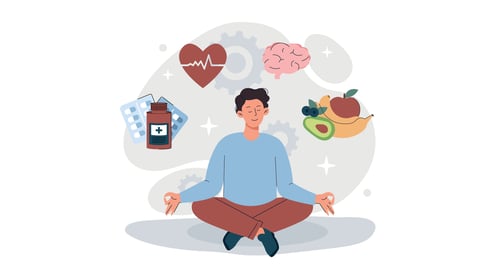
What do today’s employees want from their work experience? More than just a paycheque, they’re seeking meaningful growth and genuine support that goes beyond basic needs.
Longo’s exemplifies this shift with a comprehensive approach to employee support. It offers a variety of well-being programs, from regular workshops during its “Well-being Wednesdays” series to employee assistance programs and mental health awareness events. Longo’s taps into its health- and wellnessfocused vendors for such events and recently brought in support dogs to spread positivity in the office.
Volk emphasizes the importance of consistent communication, so employees get the most out of Longo’s support programs. Its twice-weekly internal newsletter highlights the company’s wellness offerings and how employees can take advantage of them.
This focus on well-being is one of the most transformative trends in the workforce—and it’s reflected globally. According to EY’s recent study, The First Global Generation, 51% of young people (aged 18 to 34) worldwide rank their mental and physical health as the primary measure of future success—outranking family relationships (45%) wealth (42%) and occupation (41%).
“They don’t necessarily believe in the old career model where you gut it out in the beginning and reap the rewards later,” says Sandford. “They don’t see that long-term payout.” Upcoming generation Z and generation Alpha are prioritizing health, well-being and purpose above compensation, he adds. “It’s about total rewards versus just compensation.” And while generational differences in the workforce aren’t new, Sandford says, “I would encourage leaders to understand that these may be more significant and more pervasive.”
Of course, money still matters—and retailers may need to step it up in today’s economic climate. Walmart Canada is doing just that, having recently announced an additional $32.7 million in pay increases for eligible employees—on top of nearly $200 million in earlier boosts to pay and benefits.
The company says it regularly conducts compensation reviews to ensure its associates are offered competitive pay, along with solid benefits and career development offerings. In addition to health and dental coverage, for example, Walmart Canada provides access to 24-7 virtual care, employee assistance programs and well-being programs through Telus Health.
As part of its Live Better U educational program, Walmart covers the full cost of tuition, books and course fees for career-driven learning and development. “Our associates are our greatest assets, and investing in good jobs is key to attracting talent,” said Steve Schrobilgen, chief operations officer, end to end at Walmart Canada, in a press release.
Beyond job perks, employees are increasingly prioritizing benefits like growth—but not just climbing the ladder. “Many early and mid-career workers want opportunities to grow—not just upwards, but laterally, too,” says Career by Design’s Lamoca. “That growth gives people security and fulfilment—it helps them feel they’re learning and contributing more.”
Flexibility also remains crucial in today’s workforce—especially younger people—despite the push on the return to office. “While many employers are looking to have their workforce come back in to some extent, I think offering flexible work schedules is still important,” says Lamoca. “For those in their early careers, it’s important to stress touchpoints that are in person so they can learn from more senior staff and create those connections.”
Meeting these varied needs requires strategies that are tailored to generational differences, especially considering there are now five generations in the workforce at once, notes Accenture’s Turner. “Gen Z wants more purpose, feedback and flexibility in their jobs, so organizations need strategies around creating hybrid working environments. They can also start thinking about tailoring skilled pathways to address multi-generational needs. That’s key because the needs of gen Z look very different than boomers—and then there’s everything in between that spectrum.”
Don’t believe the hype: DEI is still a priority
Diversity, equity and inclusion (DEI) was one of the hottest workplace topics over the past few years, with many companies making bold, public commitments. Today, the U.S. is seeing significant pushback—driven by government orders and legal challenges—that has led some major corporations to scale back their DEI initiatives.
While the rhetoric might be spilling over the border, moves to undo DEI are not taking hold in Canada, according to Wendy Cukier, academic director and founder of the Diversity Institute at Toronto Metropolitan University.
“While it’s true that multinationals based in the United States are certainly trying to figure out how they navigate new rules there versus requirements here, the Canadian legal, constitutional, human rights and jurisprudence frameworks that are in place are unassailable,” says Cukier. “In my view, it’s business as usual in Canada.”
READ: Costco successfully defends its diversity policies as other U.S. companies scale theirs back
She affirms the business case for DEI policies remains strong—especially in retail—as consumer demographics shift and diversify. Cukier points out that if 30% of a retailer’s market is made up of racialized people or newcomers, if 7% of Canadians seek halal products, and if women are making the majority of purchasing decisions, then ignoring that diversity means missed opportunities.
There’s a strong case on the labour front, too. “If you’re not doing a good job on equity, diversity and inclusion, you will not be able to attract the best and the brightest,” Cukier says. “We know that younger people, in particular, pay close attention to this, especially when it comes to the 2SLGBTQI+ community. A significant portion of young people will judge organizations based on their corporate social responsibility, environmental practices and EDI practices.”
For its part, Longo’s is staying the course—continuing to focus on DEI through key pillars such as leadership engagement, education and training, and community support. “As an example, we’ll be participating in the Toronto Pride Parade and inviting our team members to join,” says Volk. “So, we’re not dialing back anything and [parent company] Empire has the same philosophy … In fact, they’re finding that weaving DEI into the strategy is even more important.”
New research backs up the importance of DEI to employees. In a national survey by the Diversity Institute in partnership with the Future Skills Centre and Environics Institute, nearly half of the 5,000 Canadian participants believe their organization is paying the right amount of attention to DEI, while 22% think it’s paying too little. Just over a quarter (26%) say their organization is paying too much attention to DEI.
“The research is clear that when people feel valued and appreciated, and when young people see practices that align with their values, you’re going to improve retention and productivity,” says Cukier. “Canada is changing, your market is changing, your talent pool is changing … But, fundamentally, this stems from commitments to values that are inherently Canadian and provide a tremendous advantage.”
Generation Next Thinking is an ongoing series that explores the cutting-edge topics that are impacting grocery retail today and in the future.
This article was first published in Canadian Grocer’s June/July 2025 issue.