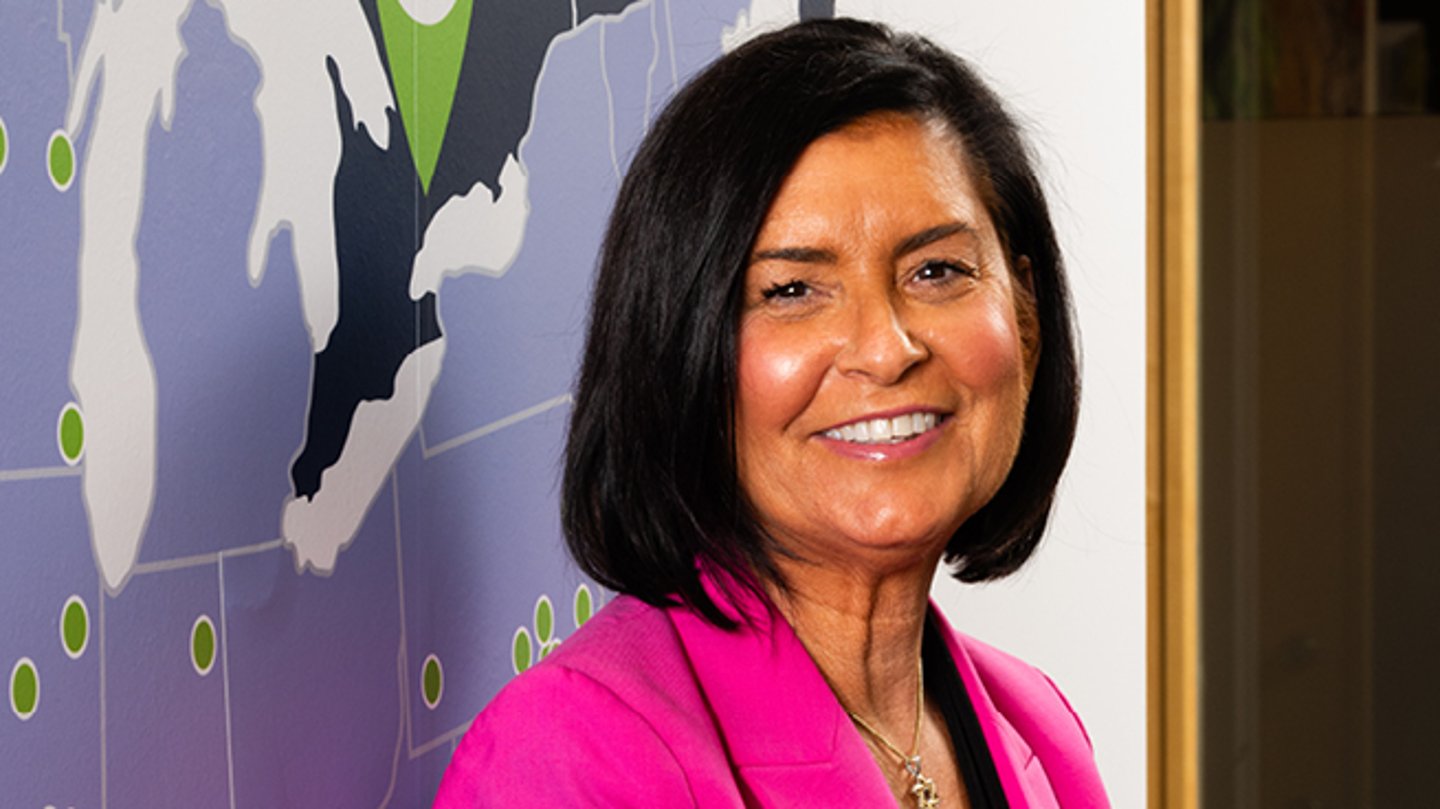
The Leaders: Lessons from UNFI Canada president Stacey Kravitz

How did you get your start in the business?
I’ve been in the food business my whole life. I feel like I fell into it. I started working in bakeries, I worked in restaurants through school, and my mom worked for Kraft for 26 years, so I would work at Kraft in the summertime. After graduating from McGill University, I didn’t really know what I wanted to do—I managed restaurants for a while, then my husband and I moved from Montreal to Toronto. I wanted to get into sales and my mom helped get my resume into the right hands at Kraft in Ontario, where I started as a sales rep.
What is your leadership story?
It spans 30 years now across sales, sales strategy, brand strategy and general management—really within two companies, Kraft (later Kraft Heinz) and now at UNFI Canada. After spending two decades at Kraft in progressive roles—pretty much in the sales field—in 2016, it was time for a change. I was offered the position of VP of sales at UNFI, where I eventually took on customer experience and became SVP. And then, right at the start of COVID, I took over as president.
As a leader, I’ve always focused on building strong, people-first teams that deliver results. And I’m deeply involved in the industry, I’ve sat on the boards of CHFA [Canadian Health Food Association] and The Grocery Foundation, and on the board of governors for FHCP [Food, Health & Consumer Products of Canada] and was part of the founding team of the Toronto chapter of Network of Executive Women [now NextUp]. I think it’s so important to give back.
Like this story? Subscribe to the Canadian Grocer Express Newsletter!
In your mind, what are the qualities a great leader should possess?
Transparency, perspective and care. And care comes in many forms—understanding your people, understanding who you’re working with, [working] for, and believing in, and being engaged in, what you do. I think if the leader is engaged, then people can follow. And it’s around creating trust, showing up authentically as yourself and making space for others to grow. The best leaders know how to listen deeply to understand the behind of what is needed. And that’s not a trait you see in many leaders, but it’s a trait in leaders that I’ve had the opportunity to work for and that have formed who I am today as a leader.
What are traits you’ve observed in other leaders that you’ve sought to avoid?
Leaders who make it about themselves, who need to be the smartest person in the room and who are not open to feedback. It’s a trap to think you know everything.
As a leader, how do you navigate uncertain times like we’re experiencing right now?
Again, it’s about transparency and perspective. I’ve learned this having taken over my [current] role at the start of COVID. Whether it’s economic shifts or industry disruption like we’re seeing today or internal changes, I want to make sure our people know where they’re going and why they’re going there. And even if we don’t have all the answers, I want them to have confidence we’ll get there and whatever is around the corner is going to be fine. There isn’t an experience, as bad as it might be, that I’ve gone through where the other side hasn’t been rosier in some way; so you learn, you develop, you grow, you make mistakes—those are critical things. If you’re not transparent and you don’t provide perspective, then people don’t know where to go.
How do you continue learning and developing as a leader?
First of all, learning has been a lifelong journey for me. I’m a constant learner. I read, I listen to feedback. I surround myself with people who challenge me, who are better at things than I am and I learn from them. I think that’s really, really important. And I’m about to be certified as an executive coach, which I’m super excited about. I’ve learned so much in this course and it’s helped me grow as a leader. You’re never too far along to continue learning in your career.
What is one lesson you wish you had learned earlier in your career?
That vulnerability is a strength, not a weakness. Early in my career I really fought to lead, and I know now that being open and real builds stronger teams and stronger outcomes.
READ: There’s power in vulnerability: Star Women winners panel
What is the biggest risk you’ve taken in your career?
Leaving Kraft, at least at the time, felt like a big risk. I’ve taken a bunch of other leaps of faith over the years, but this one felt like a huge risk. I had 20 years baked into that company; it was part of my soul. Leaving was not easy, but it was time—I had grown to the level I needed to grow and I was ready for something different. Although I was anxious, once I started in a new place, I felt like I had landed well. It was a good learning lesson for me and it gave me the opportunity to lead in a completely different space. And it wasn’t just doing more of the same at a different company—we were in turnaround mode [at UNFI] in Canada. The move pushed me to stretch, it built my confidence and [helped me see] that if I could do that, I could probably do anything.
What has been your most difficult day as a leader? What did you learn from it?
When Kraft was purchased by Heinz, I stayed on for a year and was part of the team that, three months into restructuring, had to let a number of people go. It took me weeks to get over that day. Restructures are always tough, but even when you understand the business rationale, they are deeply personal and that day proved it to me. What I learned was the [importance] of empathy, clarity and care—three words I use a lot—because in those difficult moments, people won’t remember the details, they’ll remember how you made them feel.
How do you approach feedback—both giving and receiving it?
Feedback is a gift, I ask for it often and give it in the moment. But, you deliver it with empathy and clarity. Early in my career I wasn’t very self-aware, and self-awareness and accountability are so important as you’re becoming a leader. I’ll admit, I was really defensive when it came to feedback. I’d stand up for myself in this hard-fought war I was having with I don’t know who, maybe myself. I thought being a strong leader meant having all the answers rather than learning, growing and developing, and I thought I had to do it all myself. That mindset didn’t leave a lot of room for growth. When I was a senior manager and passed over for promotion, I got some really tough feedback, but it was straightforward, it wasn’t mean, it was “here’s what we think, Stacey...” I hadn’t had that honest direct feedback before and it was hard to take, but owning it changed the trajectory of my career. I honestly think had I not taken that step at that point in my career, I wouldn’t be sitting here today.
This article was first published in Canadian Grocer’s June/July 2025 issue.