Private label offers a path to stronger Canadian food supply chains, says CFIN exec

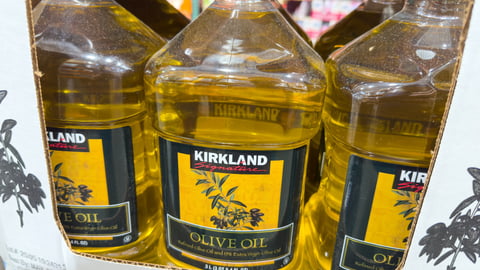
Canada’s grocery retailers may have an important role to play in strengthening the country’s food supply chain, and private label could be one of their most powerful tools.
Building Resilient Food Supply Chains Through Canadian Innovation, a new report from Canadian Food Innovation Network (CFIN) says Canada’s reliance on imported processed foods has made the food system more vulnerable to global disruptions. But deeper partnerships between grocers and domestic manufacturers could help rebuild processing capacity at home while creating new opportunities for retailers.
“I think there’s a real opportunity here for grocers in that store brands are not just budget options anymore,” Alex Barlow, vice-president of programs, CFIN, told Canadian Grocer. “I think for a lot of Canadians they’re a key part of their grocery cart now, and for grocers it’s a really strategic tool to hopefully try and repatriate some of that supply chain and find long-term domestic partnerships.”
READ: Inside Metro's private-label success
The CFIN report examines Canada’s food supply chain across three areas: domestic processing capacity, operational efficiency and supply chain visibility. It explains that several structural issues are contributing to food affordability challenges in Canada:
- reliance on imported processed foods
- underinvestment in agri-food
- fragmented supply chains
Food prices in Canada have risen sharply in recent years, the CFIN report notes, with the Bank of Canada finding grocery prices have increased about 22% since 2022—nearly double the rate of overall inflation. Part of the issue is structural. Canada produces large volumes of agricultural products but much of the processing that turns those ingredients into finished foods takes place outside the country.
“The most visible gap is in the shelf-stable and frozen goods,” says Barlow. “We produce a large amount of raw materials. I’d say on proteins we’re fairly self-sufficient. But on our raw materials, we’re often shipping products south to be processed and then we’re eventually buying them back at a premium.”
That reliance on external processing exposes Canada’s food system to global supply chain disruptions, from shipping delays to energy costs and trade tensions.
For grocers, private label may offer a practical way to strengthen domestic supply chains. There is particular opportunity with mid-sized Canadian food manufacturers, Barlow points out.
READ: How Farm Boy's Josh Drache Takes the Lead
Canada has about 570 processors that fall into this category, typically employing between 100 and 350 workers, the majority operating in Quebec, Ontario and British Columbia. These companies often have enough scale to supply retailers but may need stronger partnerships to expand production.
“In Canada, if we look at the mid-size player who I think is really suited to work well with our grocers, it’s important to really try giving them more opportunities for private-label contracts and helping them maintain shelf space,” Barlow says.
Private label arrangements can also simplify the relationship between manufacturers and retailers.
“What we’ve heard from processors is that they really benefit from some of those relationships because the processor can focus on the plant floor capability and throughput, and the branding and growth of that particular product is held by the retailer,” Barlow says.
More broadly, the report says Canada needs greater investment in domestic food processing capacity and supply chain technology. Many manufacturers operate on thin margins and lack the capital needed to modernize facilities or adopt new technology.
Without those investments, supply chain vulnerabilities are likely to persist.
“This is not an industry that’s coming out with double-digit profit margins to lean into in times where costs suddenly spike,” Barlow says. “This is a sector that operates quite lean in that regard, often under 5%.”
For retailers, stronger partnerships with Canadian manufacturers could help build a more resilient domestic food system while reducing exposure to global supply shocks.
“We really need to treat our food sector—and food processing in particular—as part of an industrial strategy,” says Barlow. “That would allow us to stop being reactive—reacting to imports or price inflation—and instead become more proactive producers with a more resilient supply chain.”