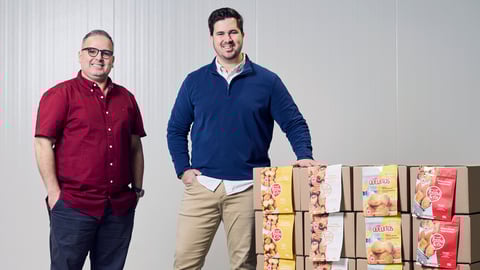
From socca to success—the story behind Peacasa
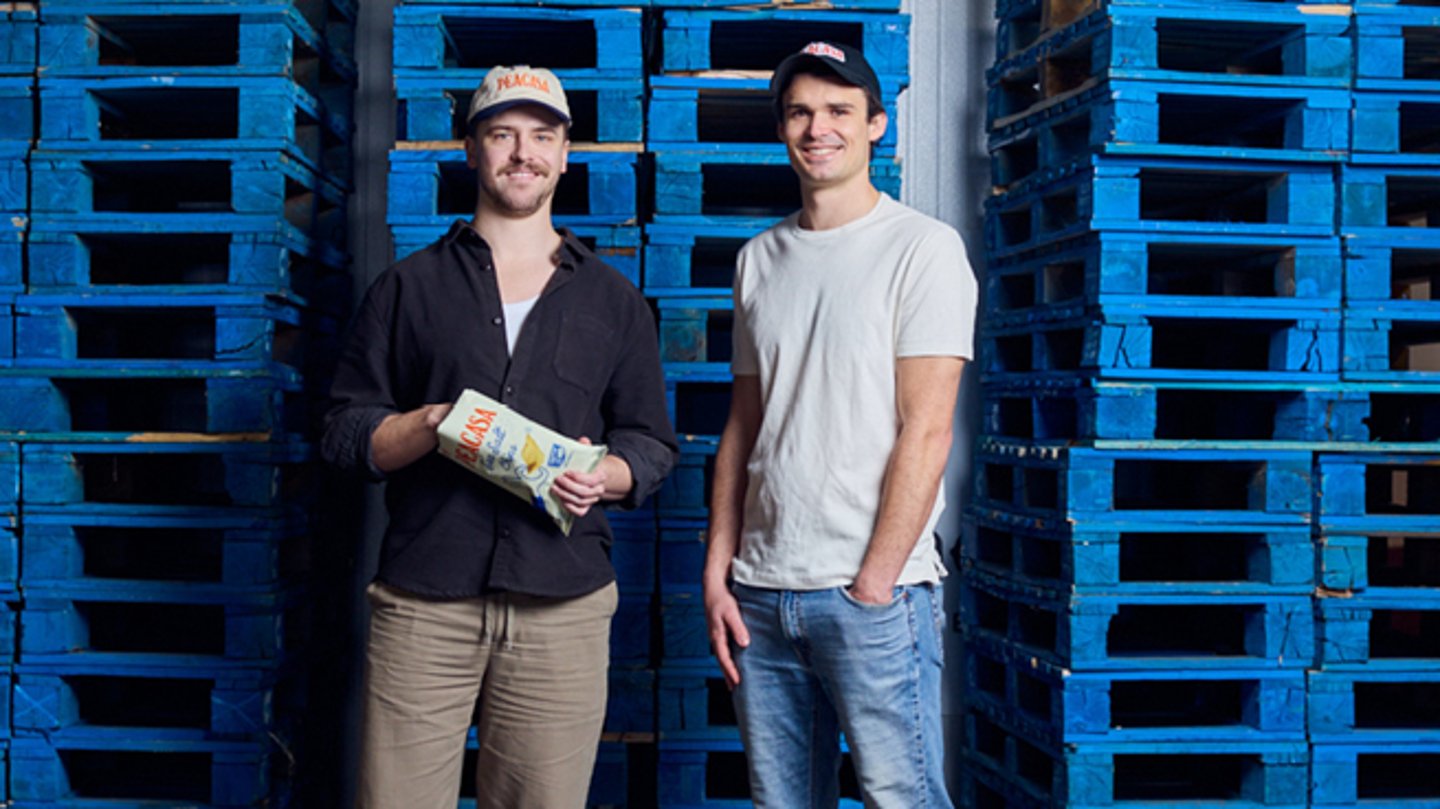
Aaron Johnstone and Victor Delage first met in 2015, when the two were studying business at the University of Ottawa. It wasn’t until the end of 2018, however, that a Mediterranean street food called socca would inspire the duo to start a food company.
While hiking through France—where Delage was working as a professional sailor—he introduced Johnstone to socca, a light flatbread Delage had grown up eating. “They make it from chickpea flour and olive oil,” Johnstone explains. “They make it in these big copper pans and cook them in wood-fired ovens on the streets. It’s super simple ingredients and it’s amazingly delicious.”
The two thought the high-protein snack would be a great product to sell in Canada. By the summer of 2019, Delage left his sailing career and moved back to Toronto and into the basement of the Johnstone family home in Markham, Ont. to give their business idea a shot. Johnstone followed, quitting his job as a retail analyst to go all-in on launching a chickpea chip business called Peacasa.
READ: Innova's top food and beverage trends for 2026
Their first step was to develop a recipe using Canadian-grown chickpeas. “It was trial and error,” Johnstone explains. “Every month, we’d get a bit better at the recipe and figure out what was working and what wasn’t.” They sold their chips at local farmers markets in Toronto, regularly selling out. However, Delage and Johnstone then faced the challenge of scaling up their homemade snack. “We were making around 40 bags in Aaron’s parents’ kitchen per eight-hour shift,” Delage says. “We had a lot of people at the markets asking us what stores they could buy them in, but we couldn’t make enough by hand to sell in grocery stores.”
The dilemma forced the duo to reassess their manufacturing process with an eye for commercialization, discovering a “secret” technique that would allow them to make their chips with machines. “We started getting into the food science behind it,” Johnstone explains. “We were learning what makes a chip crispy and the science of frying and moisture. We discovered this new process that no one was using, which allowed us to make chips with just chickpea flour and no filler.”
By early 2020, they began speaking with co-packers to manufacture their product. “Most of them just shut the door in our faces,” Delage recalls. “They weren’t willing to take on this new process or take a risk on a new product.” The entrepreneurs realized they’d have to manufacture their chickpea chips themselves. Delage began sourcing equipment from Europe while Johnstone took the lead on financing and figuring out how to start their own factory. In 2021, they set up shop at The Grove—an agri-business manufacturing facility in London, Ont. COVID delayed a few key equipment shipments, so the pair came up with a workaround. “We bought this small tabletop unit, which we ‘MacGyvered’ to work on our line, but we still had to cut every chip by hand individually for the first four or five months of production,” explains Delage.
READ: Small bites, big appeal - what's driving snack trends in Canada
Meanwhile, they signed on with a major national distributor, Jonluca Neal, which led to launches in about 50 independent stores by the end of 2022. Then, after participating in the CHFA East trade show in fall 2022, they got their first big break into a major grocer, debuting in 200 Loblaws stores the following spring.
“I felt like we had an actual business when we got that listing,” says Johnstone. Shortly after their Loblaws launch, the equipment they needed finally arrived.
What followed was a big year for Peacasa. In 2024, they completed a rebranding and packaging refresh and got their second major listing in seven Whole Foods Market stores in British Columbia early in the year, which expanded to 12 stores nationally a few months later. They also launched with the Sobeys local program into 50 Ontario stores, along with 40 Longo’s locations, 50 Healthy Planets and more independents, bringing their total store count to 500 in 2024.
New product innovations came that year, too. While the duo launched with Sea Salt and Honey Dijon flavours, they added Salt & Vinegar. In 2025, Peacasa expanded into about 200 Safeways across Canada, 30 Co-op stores in Alberta and 25 IGAs in British Columbia.
Johnstone and Delage have plenty to look forward to in 2026. They just launched mini, 30-gram bags and variety packs and they’ll also begin selling their products in Walmart and Amazon.
Running a successful business is one thing, but doing it with a friend makes it better. “Victor is such a good guy to be in business with,” says Johnstone. “I don’t know anyone who works harder than him, and he also happens to be really smart.” Delage echoes Johnstone’s sentiments: “Our friendship has evolved over the years as we’ve built this out. We’ve always had the same vision of building this into something bigger.”
This article was first published in Canadian Grocer's February 2026 issue.