Why today’s shoppers expect more than a paper shelf tag
If your shelves could talk, what would they say?
They should share stories of products that are close to needing restocked, real-time promotions, detailed product information and communications tailored to your customers.
Increasingly, grocers are turning to electronic shelf labels (ESLs) to glean these insights and bridge the gap between physical and digital retail—an experience that has become mission critical in the modern age of retail.
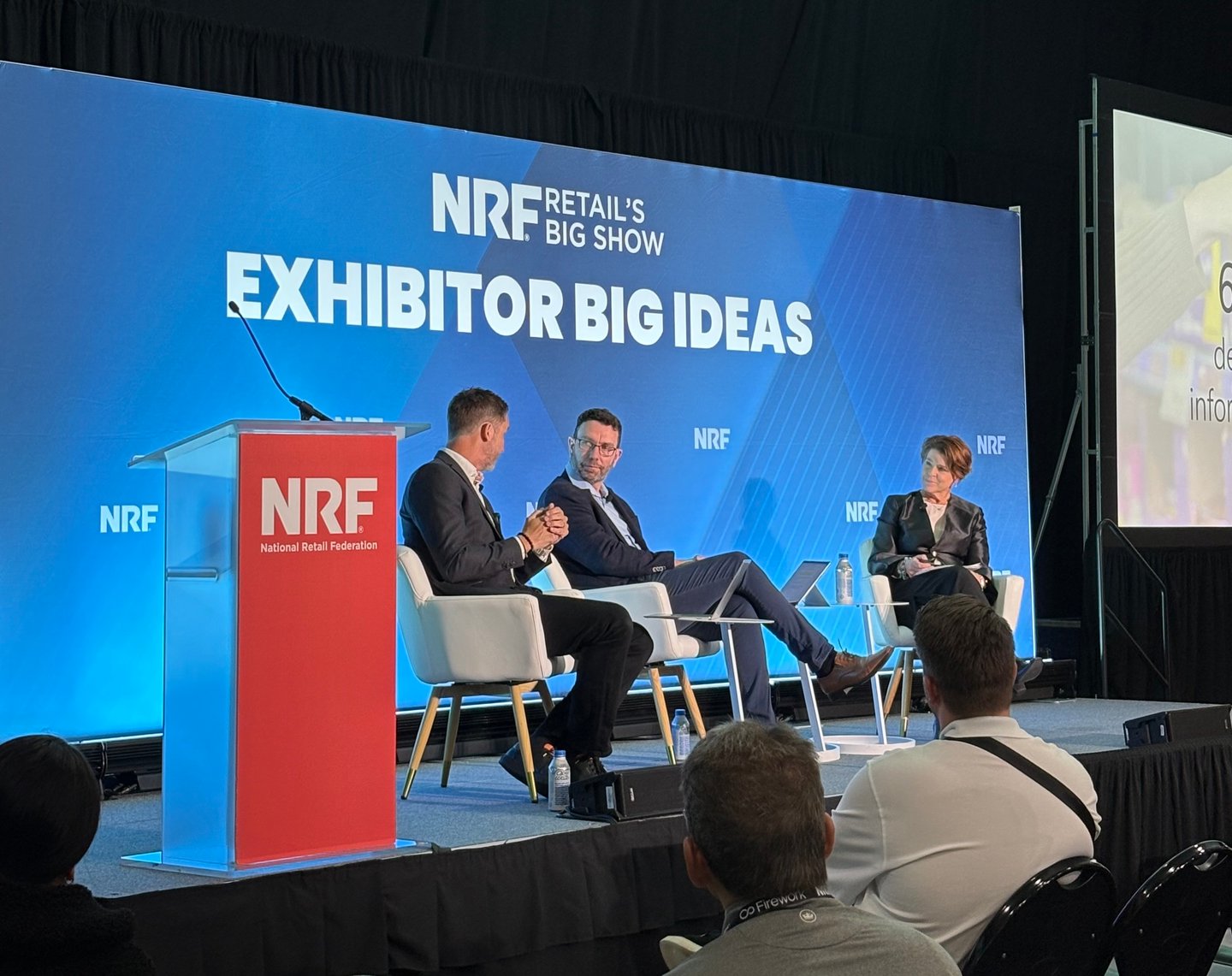
“Our view is the physical store is not dying, but it must change,” said Rob Smith, chief technology officer at East of England Co-op—a regional, member-owned cooperative serving local communities through its food stores, travel agency, gas stations and more—during a presentation at NRF in New York on Sunday.
“We have to evolve and this only really works when the physical brick and mortar store becomes connected to digital to become a truly endless aisle,” he said. “People don’t think in channels, they think in brands and if that doesn’t line up you ultimately lose the customer.”
READ: Retail power shifts in Canada
In fact, according to research conducted by Pricer, an ESL provider based in Sweden, eight out of 10 shoppers are “ambient” shoppers and expect the experience to be the same across multiple channels.
“They expect the exact same experience in store as on their phone, which they bring to stores,” said Pricer’s global CPO Finn Wikander. “So, if prices don’t match [in store and online], or if product isn’t available, trust is gone and the shopper will be, too.”
Shoppers expect more than what a paper shelf label can deliver. In fact, Pricer’s research found six out of 10 shoppers demand extensive information at shelf. This includes storytelling around sustainability and even inspiration on how to use the product, said Wikander, which can be provided at shelf.
Not only this, but electronic shelf labels can contribute to the bottom line. Seven out of 10 customers walk out of a store when what they’re shopping for isn’t in stock, according to Pricer. Adopting electronic shelf labels can keep stock levels as accurate as possible.
“We think an empty shelf breaks trust,” said Smith. “If you haven’t got [the product], the customer isn’t going to come back. With a digitized solution, the shelves tell the truth in real time.”
READ: Retailers discuss meeting customer needs at GroceryConnex
And, of course, when technology removes manual work, it allows front-line staff to focus on serving the customer, said Smith.