Beef farmers say their questions about new trade talks fall on deaf ears
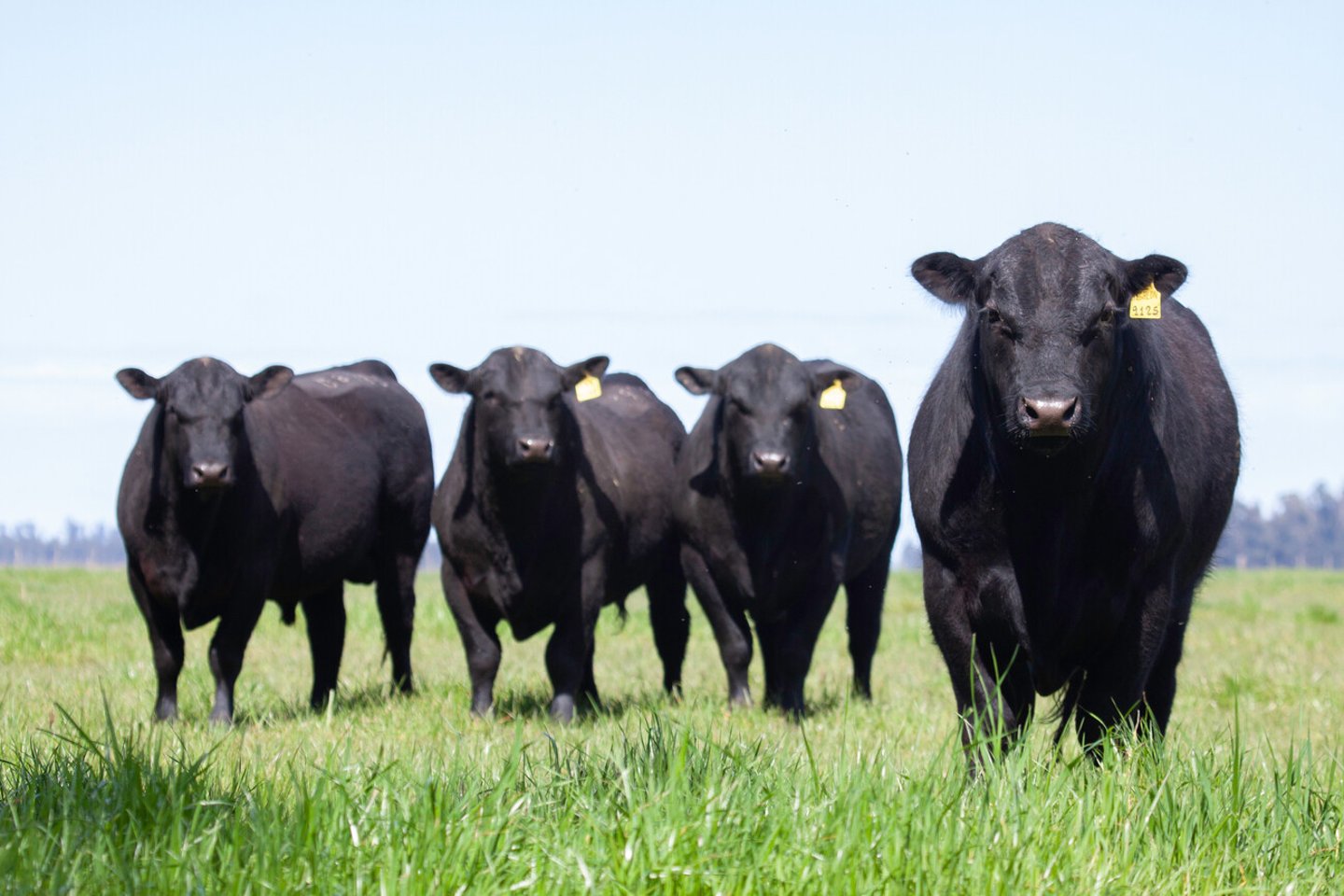
Local MP Alex Ruff visited Pallister Farms in Southgate, Ont. on May 16 for an information session on a pending trade deal with a trading block of South American nations.
Leaders in the beef sector explained why Canada should be looking first at the domestic fall-out before using beef as a ‘bargaining chip’ in negotiations.
Overall, Canada is pursuing trade agreements outside of its traditional partner, the U.S. That’s due to unpredictable tariff changes, and it’s well understood.
But Don Hargrave questions whether Canada’s negotiators have any facts or studies projecting what higher imports will mean for Canada’s food security, food safety or for beef farming and the many other associated industries over the long-term.
No info, little interest
The Grey Highlands farmer is a board member of the Canadian Cattle Association and the cow-calf director on the Beef Farmers of Ontario.
He took a lobbying trip to Ottawa on May 5 and 6, but said he heard no meaningful statements back from government.
His message did raise the interest and concern of MP Alex Ruff, Bruce-Grey-Owen Sound. That led to the Saturday event, at which MPP Paul Vickers was also present.
Mr. Ruff said Saturday that he had asked a question in the house about the upcoming trade talks. He was assured from the government side that they were speaking with the beef producers.
But that’s not what he’s hearing from those in his riding who are beef farmers. No one at the event Saturday knew of anyone from the federal government reaching out on the topic. Those present included board members from the Canadian Cattle Association and the Beef Farmers of Ontario.
MP Ruff confirmed Mr. Hargrave’s statement that no one knows what will be offered by Canada’s negotiators in terms of access to beef imports from those member countries.
Mr. Ruff said he would be pressing for transparency.
Farmers foresee that Canada may give in to pressure to dramatically raise beef imports to gain access for Canadian exports.
China recently stopped importing Brazilian beef. Mr. Hargrave said that’s a problem the size of 160,000 tonnes of beef or 1.4 million cattle a month that Brazil has to solve quickly as the Chinese quota limit is neared.
He sees that as a big incentive for the government to sacrifice Canada’s beef production—first, for whatever specific exports Canada wants to get into Mercosur countries, and second, for the optics of completing an agreement to diversify trading partners.
Based on experience, 40% of increased imports will end up on the Ontario market.
Canada did do a public consultation and received submissions late last year.
Dairy, poultry and egg producers have also said that Canada should not make market concessions and where needed, include strong safeguards.
Canada will be looking to lower tariffs for its forestry products, chemical and plastics, auto parts, aluminum, industrial machinery and information and communication technology.
Mercosur countries
In January, the European Union put in place its own agreement with the trade group called Mercosur.
That group includes Argentina, Brazil, Bolivia, Paraguay and Uruguay.
Canadian beef producers note that those include areas where large volumes of beef are raised at a low price.
They say those cattle were raised with no need to meet Canadian standards about animal care, labour and the environment. All of those factors into local farmers’ costs.
“It’s not that we’re afraid of competition, but it’s got to be fair competition,” said Matt McKinnon, president of Grey County Beef Farmers.
READ: How Canada's food and beverage companies can grow outside the U.S.
Farmers are calling for a level playing field, and for negotiators to take a balanced and reasonable attitude.
Already, every country must allow 10,000 tonnes of imported beef tariff-free under World Trade Organization rules. There is a tariff of about 27% in place above that amount.
In 2025, Canadian beef imports were about 30% of domestic consumption—the highest in more than 30 years, the CCA said.
Farmers and food
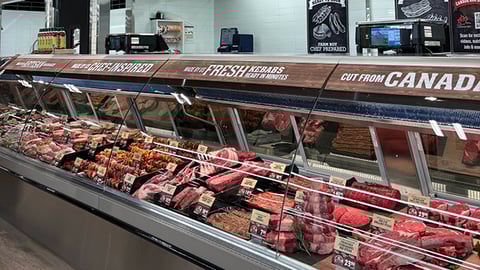
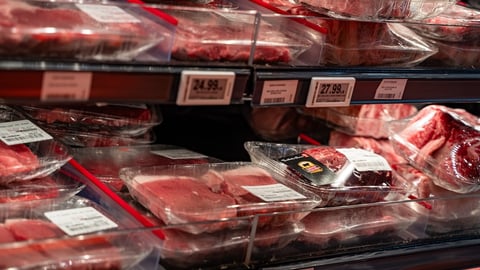
Some people at the beginning of barbeque season may be tempted to shrug and hope for bargains at the meat counter in the future.
Imports that are already allowed haven’t lowered consumer prices, Mr. Hargrave observed. He said that several trade deals that had been announced as bringing lower prices to US consumers have not done so in the way forecast.
In the background for those deeply involved in the beef sector are large-picture issues—like what record-keeping is like in those countries on herd health and tracking of foot-and-mouth disease and BSE (mad cow disease).
Mr. Hargrave said to his knowledge the Canadian Food Inspection Agency has not done an audit on Mercosur food safety in 15 years.
READ: Mr. Carney, which CUSMA strategy is it this week?
Lisa Pallister, co-operator of the seventh-generation feedlot and cropping operation, Pallister Farms, as well as Feedlot Sector Director of the Beef Farmers of Ontario, said that Canadian producers consistently have worked to improve the quality of beef. She added that any consumers who don’t check labels probably have picked up that imported beef already, and found it to be lower quality.
For Gage Thompson, a young cow-calf farmer in Southgate and Grey Highlands, it’s a real threat.
Farmers can’t throw a switch to stop and start production. Beef herds here are still being re-built, he said. Farmers have been encouraged to make that investment, and now question how that expense could be recovered in the face of more imports.
So, it would be much worse if higher import amounts were effective immediately, rather than phased in.
Food sovereignty—a country being able as much as possible to feed itself—is another long-term argument made to protect domestic producers. That was given as China’s motivation, in cutting off imports from Brazil.
Rounding up attention
The new round of talks between Canada and Mercosur will be at the end of the month.
Beef farmers provincially and nationally have turned to the public because they lack confidence that the government has their backs in this negotiation, of which so little is known.
The Canadian Cattle Association (CCA) has launched a campaign asking for support for domestic beef producers.
The CCA is gathering names and emails from Canadians who want to let the Canadian government and its negotiators know that “Canadian beef is for plates not trade bait” as its website says.
The CCA says that in 2025, the annual import quota was filled for the year by mid-January, and all by Mercosur countries.
“Canadian beef is a main sticking point in negotiations, but Canadian beef farmers and ranchers should not be used as a bargaining chip,” the CCA website states.
“We have nothing to gain and much to lose in these negotiations.”
Beef production in some of the Mercosur countries has been associated with environmental degradation, the CCA said, while beef farming in Canada protects grasslands along with carbon storage and wildlife habitat.
Canada itself exports beef—with three quarters going to the US. On the import side, half comes from the US, about 20% from New Zealand and Australia, 6% from Uruguay and 6% from Mexico.
The Government of Canada website has information on the Mercosur trade talks. The Canadian Cattle Association and Beef Farmers of Ontario are collecting emails of support.