‘A lot of money to be made:’ How Canada's food and beverage companies can grow outside the U.S.


Diversification is a hot topic for the country’s food and beverage sector with the Canada-U.S.-Mexico (CUSMA) free trade agreement up for renegotiation this summer.
But how can companies uncouple with the U.S.? And where should they go next?
“The U.S. is our number one trading partner. I don’t think that’s ever going to change,” Ashley Kanary, director of global agri-food for Export Development Canada, said in a panel discussion at SIAL Canada.
“We still survive under the blanket that CUSMA provides—that hasn’t gone away. What’s changed now is the mindset with Canadian exporters to find out what else is out there in the world. It’s a big world of discovery.”
The panel, hosted by Steve Tipman, executive director of TFO Canada, also included Sylvain Charlebois, professor and director of the Agri-Food Analytics Lab at Dalhousie University, and Patrick Khouzam, a managing director with MNP’s corporate finance group and regional leader of the company’s food and beverage processing team in Montreal.
“We are a victim of a somewhat lazy economy. It was so easy to do business with the Americans,” Charlebois told attendees. “You have to work a little harder to go elsewhere. It’s more difficult and more challenging, but I think it’s going to be rewarding over time.”
Untapped markets
“Everybody wants to go somewhere, but they don’t exactly know where to go," Kanary said.
Export Development Canada (EDC) is focused on three regions (in addition to the U.S.): Europe, Latin America and the Indo-Pacific—where EDC has 12 offices with a main hub in Singapore.
“Getting access to the four billion consumers in that marketplace is important in Canada. We spent the last 50 years chasing 300 million people just south of the border,” Kanary said.
He said EDC is working to “demystify” the European market for food and beverage exporters.
“There’s a big population base [in Europe], but it’s a different way of eating. And they have different regulations and different rules,” Kanary said. “It won’t be easy… I don’t think we’ll sell wine or croissants to France. But will we sell seafood or value-added products from Canada? Absolutely.”
For Latin America, Kanary said suppliers can use U.S. retailers with parent companies south of the border as a springboard for growth—citing The Fresh Market, acquired by Chilean retail company Cencosud in 2025.
Canada has trade agreements in force with 51 countries (soon to be 53 with addition of Indonesia and Ecuador). Charlebois urged attendees to take advantage of those agreements: “There’s a lot of money to be made.”
“We have different paths to money around the world,” he said. “The more we do that, the better off we are. Dependency is a killer, and we're paying for it right now.”
READ: Mr. Carney, which CUSMA strategy is it this week?
But for Kanary, education is essential for businesses looking to grow around the globe: “That’s our learning curve… When the government of Canada negotiates these agreements globally, it’s up to us to take advantage of them. And frankly, we’re not at the moment.’
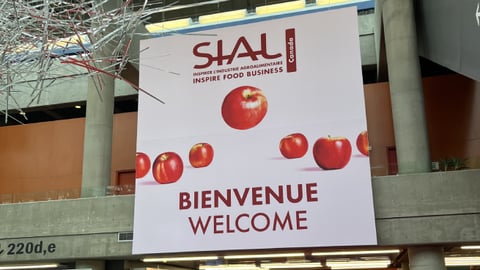
SIAL Canada’s 23rd edition runs April 29 to May 1 in Montreal.