
Canada’s booze boycott is about to backfire

President Donald Trump’s ban on Canadian alcoholic beverages is set to take effect on September 29. It covers a broad range of beer, wine and spirits. For Canadian producers, this is no small matter: in the 2024–25 fiscal year, we exported $1.4 billion in alcoholic beverages to the United States. That is a lot of business to put at risk.
Canada started this particular fight in March 2025, when most provinces pulled American alcohol from their shelves. Alberta and Saskatchewan later resumed purchases, but elsewhere the restrictions remained. Canadians overwhelmingly liked the idea. Taking bourbon and California wine off the shelf felt like a way to stand up to Trump.
READ: Carney asks provinces to return U.S. alcohol to stores
And yes, it hurt some American companies. The White House says Canadian imports of U.S. alcoholic beverages fell by roughly US$581 million over the 12 months ending in February 2026, compared with the previous 12 months. Minnesota-based Phillips Distilling was hit hard enough to move production of Sour Puss for the Canadian market to Station 22 Distillery in Montréal. The boycott had consequences.
But did we seriously damage the American alcohol industry? The broader export numbers suggest a different story.
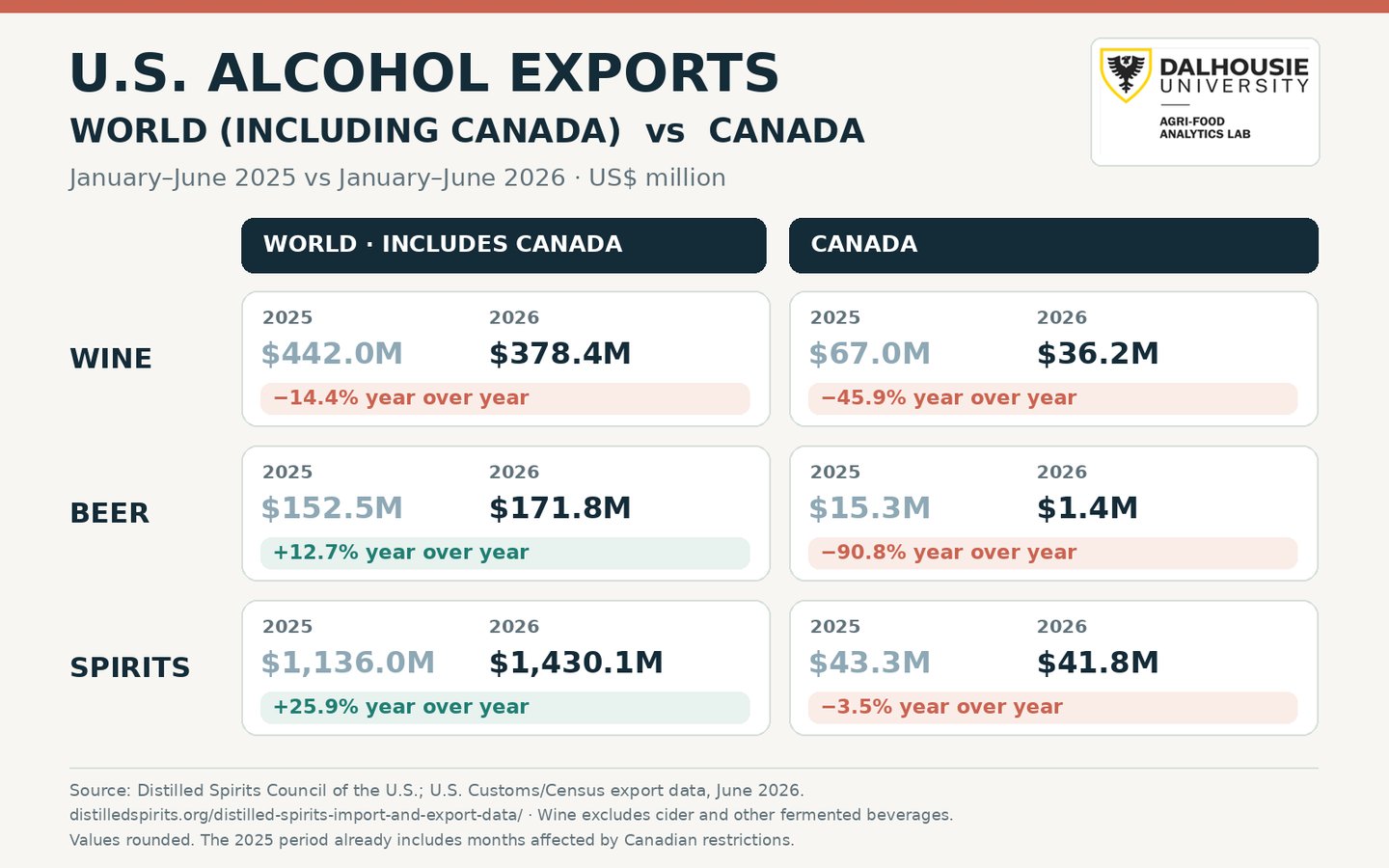
Compare the first six months of 2026 with the first six months of 2025. U.S. wine exports to Canada fell by more than 45%, beer by more than 90%, and spirits by about 3%. Yet U.S. beer exports to the world rose 12.7%, and spirits exports rose 25.9%. Wine exports fell 14.4%. Canada mattered, especially to particular producers, but growth elsewhere helped cushion the blow for beer and spirits.
Wine is a different story. Its global decline is real, although we should be careful about blaming it all on Canada. Other forces are at work.
That brings us to an uncomfortable question: who has more room to absorb an alcohol ban? American producers have a vast domestic market and customers around the world. Canadian brewers, wineries and distillers facing a closed U.S. border have far fewer options.
Standing up to Trump may feel good. But if this ban takes effect on Sept. 29, Canadian producers could pay a much higher price than the American industry has paid for our boycott. We should at least be honest about that before declaring victory.