
The Food Brand’s Guide to Cause Marketing
At any time, but especially during periods of economic hardship and uncertainty, many customers and employees expect the brands they engage with to step up and help support the communities where they live and work.
Cause marketing — when a for-profit company contributes to a nonprofit organization by making a donation that is linked to sales or other consumer actions — is one way to extend that support, and there’s evidence to show it can bring measurable benefits to both partners. For the company, these can include public goodwill, customer and employee loyalty, and increased sales. For the nonprofit, it can mean public engagement with its cause, and financial or in-kind support for its mission.
“Cause marketing activations are rooted in a partnership where shared value is co-created by the company and the nonprofit organization,” says Claudia Galella, vice-president of partnerships at Food Banks Canada (FBC), which supports a network of over 5,500 food banks and local organizations addressing food insecurity in communities across Canada. “We always approach partnerships by first learning about the company. If cause marketing is the most effective way to achieve a partner’s business objectives, we work collaboratively with them to design a customized campaign.”
That said, there are certain core ingredients that tend to feed success, which include:
A Clear Call-to-Action
Cause marketing asks customers to support a cause through a clearly specified action, whether that’s making a purchase, test-driving a car, or subscribing to brand communications.
This type of activation “reinforces the company’s commitment to community impact, and connects customers to a shared purpose,” Galella explains.
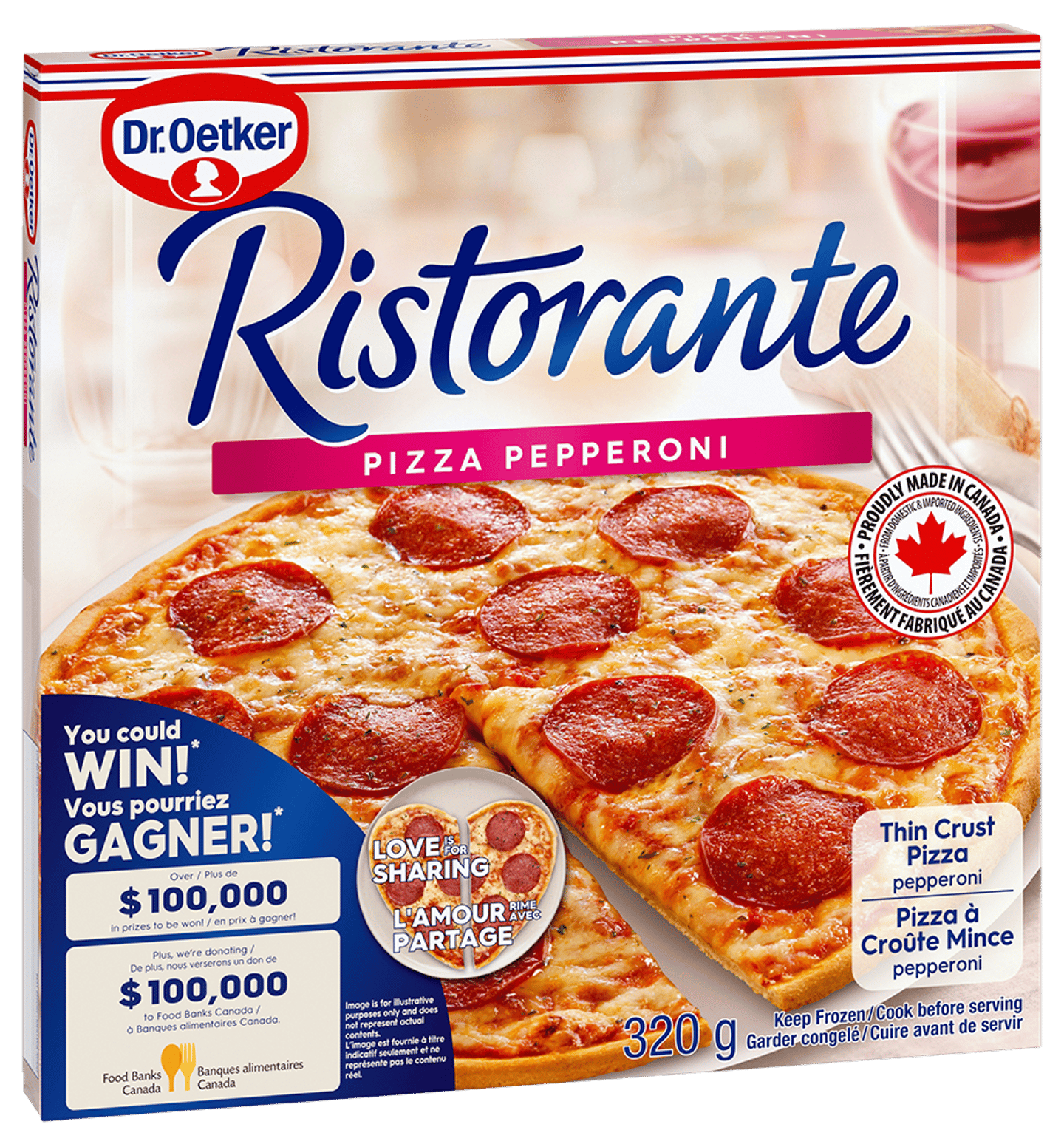
For example, Food Banks Canada and Dr. Oetker Canada recently partnered on the Love is for Sharing campaign, where customers entered a code from participating Ristorante pizza packages for a chance to win prizes. Over 115,000 people participated, and Dr. Oetker “shared the love” by donating $100,000 to FBC, which allowed them to use its logo in promotions announcing the contest and the donation.
Narrative
Cause marketing allows brands to tell stories about the community support they’re enabling and the impact it’s having. “We see storytelling in their promotions, but also in the partnering company’s internal communications, which helps to increase employee loyalty and enhance company culture,” says Galella.
Food Banks Canada helps with campaign messaging and stories. “Campaign messaging is not only about the impact the company is having, but also the impact the individual customer can enable,” Galella says. “FBC can provide two meals for $1, so customers can see that if they take part in the campaign, then they will provide, for example, one meal. It’s tangible.”
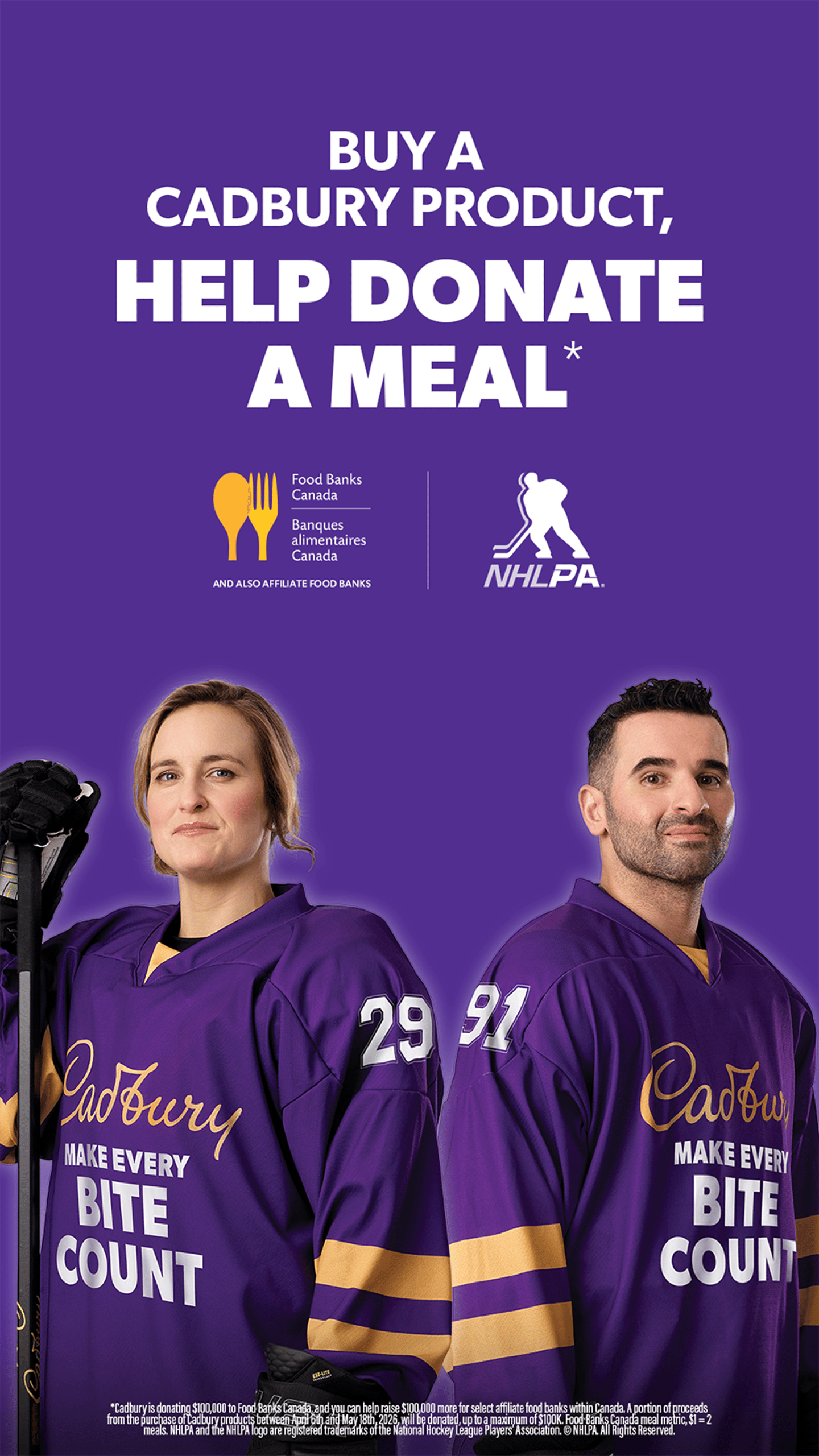
Last spring, Food Banks Canada partnered with Cadbury on the first wave of the Make Every Bite Count campaign, starring the professional hockey players Marie Philip Poulin (PWHL) and Nazem Kadri (NHL). It also featured real numerical facts about food insecurity in Canada printed on hockey jerseys (e.g. “91 percent more food bank visits from kids since 2019”) and the message that “Cadbury makes hunger the number to beat.”
A portion of the proceeds from Cadbury product sales went to Food Banks Canada and affiliated food banks. The campaign’s strong narrative elements and notable spokespeople helped to garner it over 64.9 million paid media impressions and 51.3 million earned media impressions.
“The Cadbury brand is rooted in generosity, and as a food company, addressing food insecurity is deeply meaningful to us,” states Pierina De Carolis, head of communications and government affairs at Mondelez Canada. “For the past 10+ years, we’ve had a great partnership with Food Banks Canada — not only because of the ease and quality of collaboration, but because we trust that they are doing real, meaningful good in communities across the country and driving tangible change for Canadians in need.”

Authenticity
Companies seeking to make a real and sustained difference should partner with organizations that line up with one or more of their values or philanthropic pillars. Food Banks Canada has partners across many sectors, because the impacts of food banking and food insecurity extend into areas such as the environment, financial well-being, and mental health. “However, there is a natural and intuitive alignment with food brands, grocers, and other retailers who sell food or essential household goods,” Galella says.
For instance, the Ladles of Love soup brand from Toronto-based manufacturer Victory’s Kitchen has giving back embedded in its blueprint. Since it launched in October 2025, it has been donating the monetary equivalent of one meal for every product purchased. So far, it has raised over 200,000 meals for food banks.
The Ladles of Love brand was created specifically for this initiative in honour of the founders’ late friend Ethan Mattison, who tragically passed away at 17 years old. He had volunteered at Ladles of Love, a grassroots soup kitchen in Cape Town, South Africa.
Alignment enhances the authenticity of cause marketing, as does loyalty to the cause. “With long-term partners, consumers and employees come to expect that they will be supporting us again,” says Galella. “Over time, the partnership becomes woven through the fabric of the partner’s corporate culture, evolving into an authentic reflection of what the company stands for. It also allows the nonprofit to count on the support and plan accordingly. It’s a win-win.”