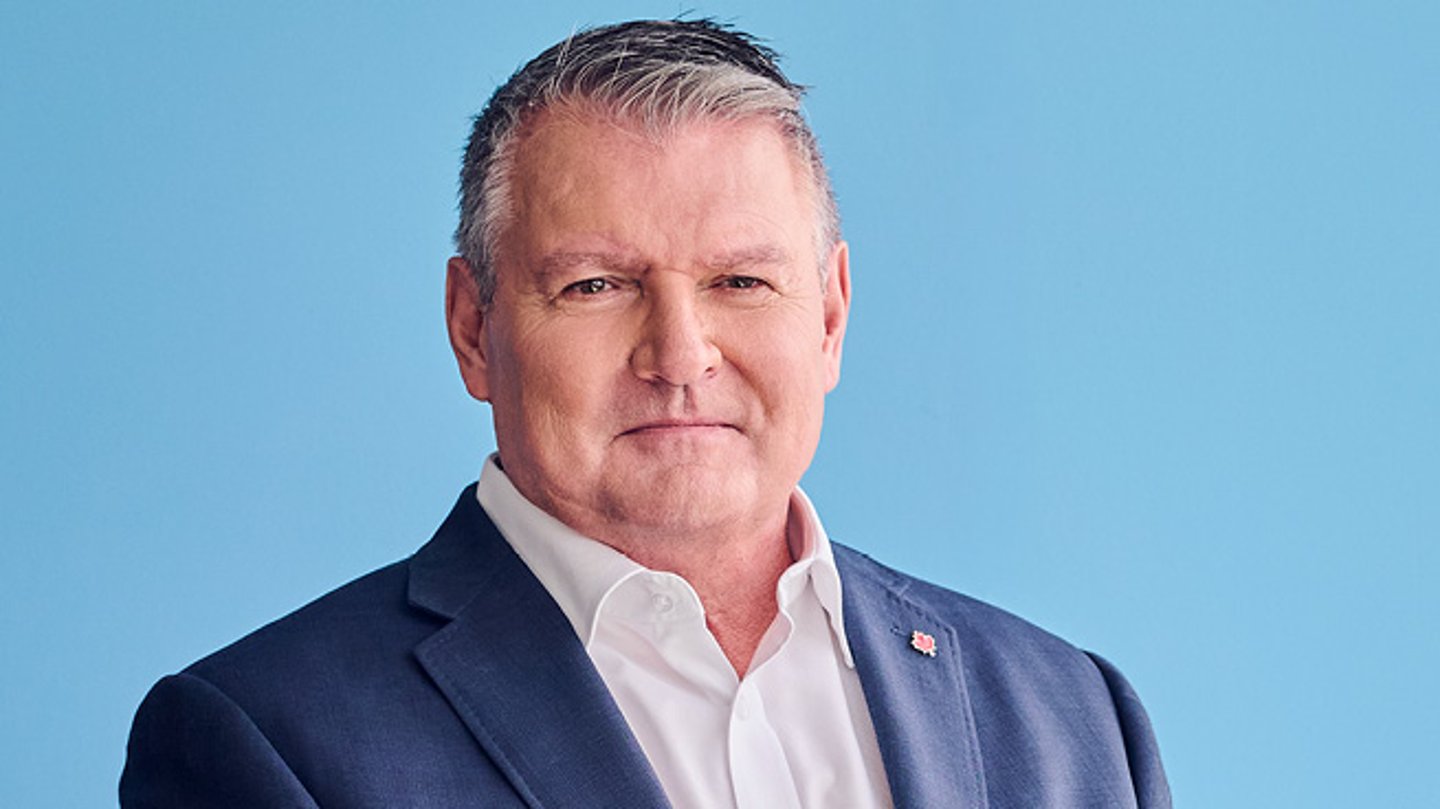
The Leaders: Lessons from Mark Taylor, president and CEO of Lactalis Canada

How did you get your start in the business?
I’d like to say I had a really clear plan right from the start, but that would be a lie. Like a lot of people, my career pathway emerged almost organically. I had an interest in agriculture and studied it. When I was young, I lived in a rural part of the U.K., so my first jobs were generally working in horticulture or on farms, which I really enjoyed. But my first proper career start came when I bumped into somebody who was recruiting for Diageo. I had a good conversation with this guy, and he invited me to London to meet the HR team. I said, “Why not?” They offered me a place, so when I left full-time education, I went straight into the Diageo graduate training program.
What is your leadership story?
My philosophy has always been: if you don’t like the way things are, get promoted to a position where you can change them. Driving positive change has always been highly motivating for me. If you apply yourself, work hard, work diligently and you’re fortunate enough to have that coupled with delivering success, then you put yourself in the best position to be promoted. I’ve been fortunate to have those opportunities throughout my career. I’ve changed companies a number of times, but I’ve never actively sought to do that—those [opportunities] found me. It’s given me the opportunity to build a really broad swathe of experiences and perspectives and to come into contact with all sorts of amazing people. And that isn’t something I define by job title or position. Amazing people can be anywhere in an organization, you just have to take the time to engage with, listen to and learn from them. That’s helped me immensely in building out my [leadership] style, because you are the product of all the people and organizations you come into contact with.
How has the way you lead evolved since your first management role?
When I started, I had come off a short stint in the army and, of course, leadership styles in a military environment are quite different to what they are in most businesses. It took me a while to understand that if I asked somebody to do something, they might question me, which didn’t happen in the army. But what has evolved is my deeper understanding of the importance of aligning the organization’s goals and objectives to those of individuals. The sweet spot is if you’re leading a team of people whose motivations are aligned with yours and the organization’s. That requires a lot of effort, work and time, but it’s time well spent.
What’s a piece of wisdom you’ve carried through your career?
If you’re not the expert on a topic, if you’re not the best informed, you’re probably better off listening rather than talking. Another important one is that learning needs to be a lifetime activity. As a leader, you should never stop learning. I consume huge amounts of new information all the time; I listen to dozens of podcasts, I read a lot and I make time to interact with people and organizations outside of our own to understand different perspectives, challenges or opportunities and to build my own knowledge.
READ: Lactalis Canada signs deal to buy Agropur's fine cheese business
Is there a belief about leadership you’ve changed your mind about over the course of your career?
That hierarchy isn’t the best way to approach it. The reality is that I work for everyone else in the organization; they don’t work for me. My fundamental role is to create the conditions for success and support all the people in the organization to do their best work. Philosophically—coming from the background I come from, where hierarchy was the model—that was quite a big realization and change for me, but it’s something I firmly believe in.
Some leaders struggle with people challenging their thinking. How do you create space for this?
It’s difficult sometimes, but good leaders understand where they have blind spots and they dial up the skills where they’re weaker. So, I’ve known for years that I need to dial up my people skills—my wife tells me this all the time! I do a lot of management by walking around. I try to get out to our sites as often as I can—it’s the only way you really find out what’s going on. To get those insights you have to spend time with people—in the field or walking around the office, not in formal meetings—and ask, ‘How’s it going?’ ‘What are the challenges you’re working on?’ You learn so much and sometimes it informs what you need to prioritize and what can be improved. Those informal interactions are really important and they’re the part of the job I enjoy most. We have a lot of highly committed, highly capable people and every time I have those opportunities [to interact] I come back energized and with loads of ideas. My to-do list always gets longer.
Assuming you’ve had failures and setbacks in your career, what have they taught you?
One [learning] is the understanding that you have to have failures, otherwise you’re not pushing things hard enough. Two, it’s how you manage risk in decision-making processes so you know failures are not catastrophic. The third is about the speed at which you are able to recognize when something’s failed or failing, and change direction and adapt to that new reality. And finally, it’s executing the new plan that replaces what you were trying to do. And I think we’re doing this all the time—there’s a multiplicity of things we face, and you can’t always predict what those things are going to be. But you can ensure your team, your organizational structure and your processes are robust enough to manage whatever comes out of the gate.
What are you most proud of in your career?
I’m most proud of the journey Lactalis Canada has been on since I joined in 2018. The business has been completely transformed. When I arrived, I had a 100-day plan; that plan went out the window when on day 10, I was presented with the opportunity to acquire [certain cheese portfolios from] Kraft Heinz, so I focused on that for nine months. But the reality is, the business has more than doubled in size and has improved its ability to deliver sustainable profits that will sustain significant investments. Improving our processes, improving our service, improving outcomes for our customers as well as our teams and other partners, is extremely rewarding. So, when people say to me, “Well, you know the business has doubled in size in six or seven years, can you do it again?” The answer is “absolutely yes!”
READ: Lactalis Canada opens R&D centre in Ontario
Looking ahead, what are you most optimistic about?
The future. I’m an eternal optimist; I see so many opportunities. The challenge is how you prioritize them. From a leader’s perspective, I have to be careful how many of those ideas and opportunities I share with my teams because as a CEO you can create chaos. You know, if I’m having 10 ideas before breakfast and sharing those with no filter to my team, people are going to be thinking, “Oh my goodness, what are we doing?” But I’ve got a really great executive team and a fantastic enterprise strategy and development team who are a filter for a lot of those ideas and help prioritize them. But yes, I see so many opportunities for the future.
This article was first published in Canadian Grocer’s September/October 2026 issue.