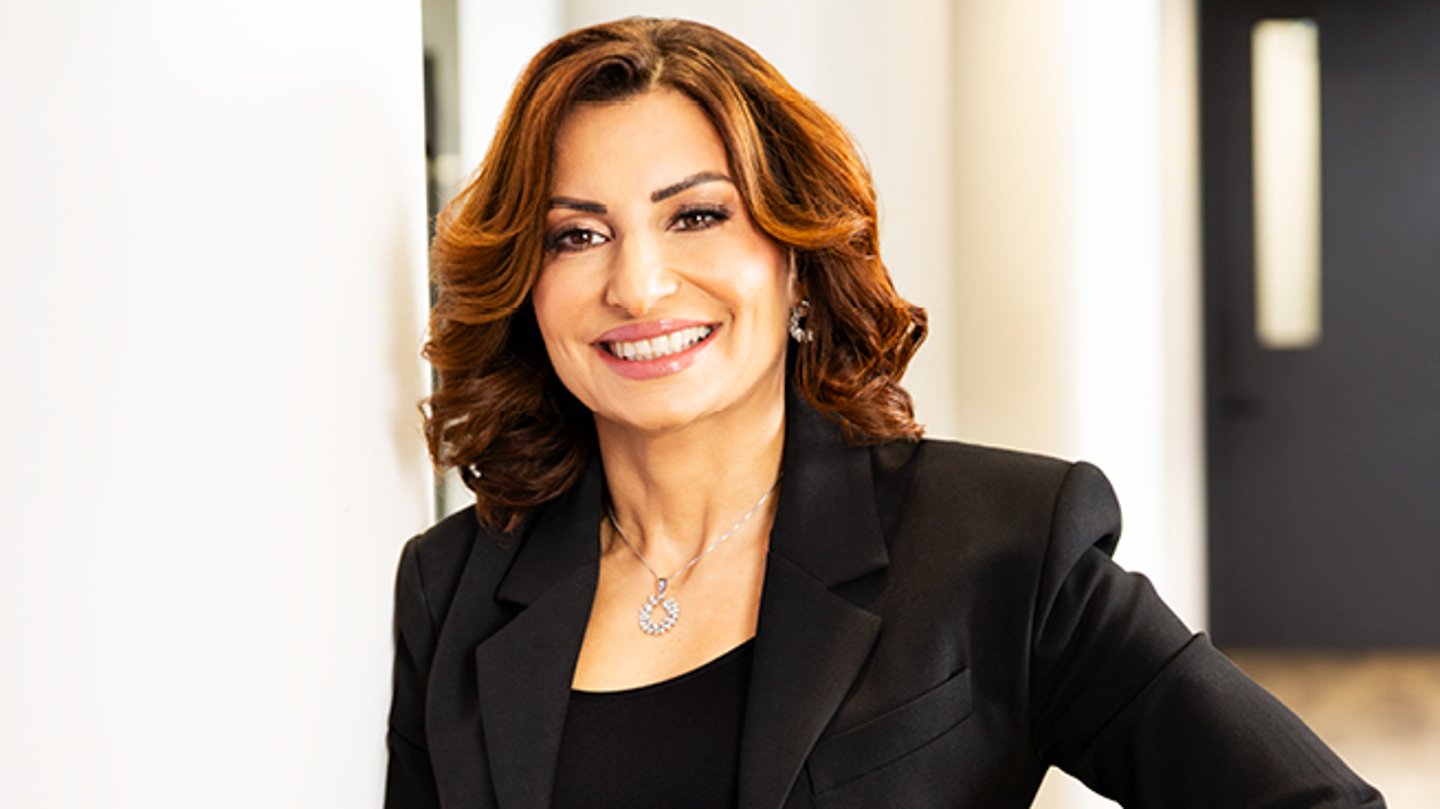
The Leaders: Lessons from Naniss Gadel-Rab, president, Mondelēz Canada
What is your leadership story?
I started my career on the factory floor as an engineer in Unilever Middle East’s Future Leaders Program. My curiosity and desire to learn pulled me closer to the heart of the business and led me to roles in marketing, sales and strategy. I was fortunate enough to work across nine countries and three continents touching more than 15 global brands. Each transition brought its own challenge with plenty of uncertainty, but it also unlocked new horizons and richer perspectives. And with every leap, a little more magic was created that not only shaped my career, but also who I became as a human and leader.
In early 2025, after more than two decades with Unilever, an unexpected and exciting opportunity to lead Mondelēz Canada came my way. The brands, the culture and the people were simply too sweet to turn down. While change can feel uncomfortable, it’s the birthplace of
new possibilities beyond what I thought I was capable of. I’m stepping into this chapter as president with excitement and energy for what’s ahead. If there is one constant in my journey, it’s change. Growth never happens in comfort zones but rather in those uncertain, thrilling moments when everything shifts.
You’ve worked in several markets around the world. How have these experiences helped shape you as a leader?
Working across different markets did not just broaden my scope—it sharpened my perspective, expanded my leadership skills and deepened my strategic thinking. Different cultures elevated my appreciation of diverse thinking and experiences and strengthened my commitment to inclusion. Best of all, having the opportunity to work in different parts of the world in many different roles helped me build a global network that made the world feel smaller—not by shrinking it, but by humanizing it.
Is there a leadership principle that is non-negotiable for you?
Authenticity and openness are the foundation of trust, and trust is the foundation of everything else. When people feel truly seen, heard and safe to bring their full selves to work every day, something remarkable happens—you don’t just build a strong culture, you build a team that thrives, making the impossible, possible.
How has your leadership style evolved over time?
Leading across different teams, markets and challenges shifted my focus from only delivering results to becoming more people-centric, building strong talent and investing behind the capabilities of the teams. Early in my career, I gravitated toward leaders who led this way—those who empowered their teams, invited different perspectives and trusted people closest to the work to make decisions. I realized leadership is not about having all the answers, it’s about asking the questions that unlock creativity, spark curiosity and open doors to uncharted possibilities. That approach had a lasting impact on me because it felt both human and effective, and it created space to learn, grow and contribute meaningfully. In today’s environment of constant change and rising expectations, that same leadership style is even more critical. Over time, when people are empowered to think boldly, the results follow naturally.
READ: Meet our 2017 Star Women in Grocery winners
How do you evaluate when it is time to pivot from a strategy that isn’t working?
This is a powerful leadership question. The first step is to understand what is not working—the strategy itself or the execution behind it. As the saying goes, “execution eats strategy for lunch.” From there, it is important to listen to two important anchors: 1) data—it tells us what is happening in the market, and 2) stakeholders—our consumers and customers help us understand what’s happening. In many cases, only one or two elements of the strategy need recalibration. In others, a new strategy is required. When both the data and stakeholders’ insights consistently tell the same story, it’s a clear signal it’s time to pivot. Every pivot must be grounded in facts and insights, and it must be clearly articulated. Explaining why we are changing the direction is essential to bring teams and partners confidently along the journey.
How do you stay curious and ahead of industry shifts?
The speed of change has never been faster; therefore, curiosity and agility are more critical than ever. To me it’s about intentionally looking beyond the industry, listening closely to employees and customers, and creating space for challenge and debate. This means building learning into my calendar, staying connected to the front lines where early signals emerge, and staying connected to our consumers by actively listening to their voices on social media and engaging with the local culture around us. I also find it important to ask questions, welcome diverse perspectives, and pay attention to cultural and workforce shifts—not just market data but insights and turn them into action before disruption forces it.
READ: Fostering customer trust in a world of artificial intelligence
As president of a CPG company, what are your main challenges right now? How are you navigating these challenges?
The CPG industry, while demanding, is incredibly fulfilling and rewarding. I like to frame challenges as opportunities because this is where transformation begins. For example: Volume growth in CPG is becoming harder, which creates an opportunity to design culturally relevant innovations that resonate with consumers. Margin pressure is intensifying across the board, yet it challenges us to rethink category growth through demand creation, not just cost management. And assortment complexity is increasing, which opens the door to digitization and simplification to improve speed and efficiency. The CPG industry will keep evolving and the winners are those who will act with resilience and agility to reshape the trends of the future.
What’s an important change leaders need to embrace right now?
I believe successful leaders need to embrace uncertainty and a flexible mindset to pivot their plans and adapt to the new trends and market realities. Leaders also need to integrate technological proficiency as an enabler to their organizations. Technology empowers a business to work smarter, faster and deliver a better experience for customers and employees. And leading with empathy is paramount. Empathy is what turns strategy into culture. It is, and will remain, one of the most powerful leadership differentiators of all time. I believe the future belongs to those who can combine compassion, courage and curiosity to build resilient teams.
READ: Bot shoppers and beauty foods: Grocery’s next big shifts
Is there a piece of advice you return to again and again?
A simple yet powerful metaphor I often return to and share with my team is, “be a coffee bean.” When a potato, an egg and a coffee bean are all put into boiling water, each reacts differently. The potato becomes weak and soft, the egg becomes hard inside, but the coffee bean changes the water itself creating something completely new and aromatic. So, in every challenging situation, instead of letting the environment change you, you have the choice to transform the environment to create a positive impact.
What do you want to accomplish in your role?
My aim is to leave the organization stronger than when I arrived. This means developing the next generation of leaders and creating a lasting positive impact not just for my team, but also for our customers and consumers.
This interview has been edited for length and clarity.
FAST FOUR
1. YOUR FIRST JOB? Engineer in a soap factory.
2. BEST AND WORST HABITS? My best habit is a good workout. My worst habit is spending hours browsing social media.
3. HOW DO YOU TURN OFF WORK? By spending time with my husband and two boys.
4. BIGGEST INDULGENCE? Shopping—both in-store and online.
This article was first published in Canadian Grocer's February 2026 issue.