
Sizing up climate change
The narrative in 2025, so far, is that sustainability matters less. Its an interesting take, because if this is the case, there’s no data showing the impact of climate change decreasing.
In fact, last year was the warmest year on record with global average surface temperature reaching 1.55 C above pre-industrial era (1850-1900) levels, according to the World Meteorological Organization, with each of the years in the past decade all in the top 10. This coincides with the concentration of carbon dioxide, the most prevalent greenhouse gas (GHG), reaching 150% of the pre-industrial average, with methane at 265% and nitrous oxide at 125%.
If the environment matters less now, planet Earth hasn’t gotten the memo. So, what do Canadians think about climate change?
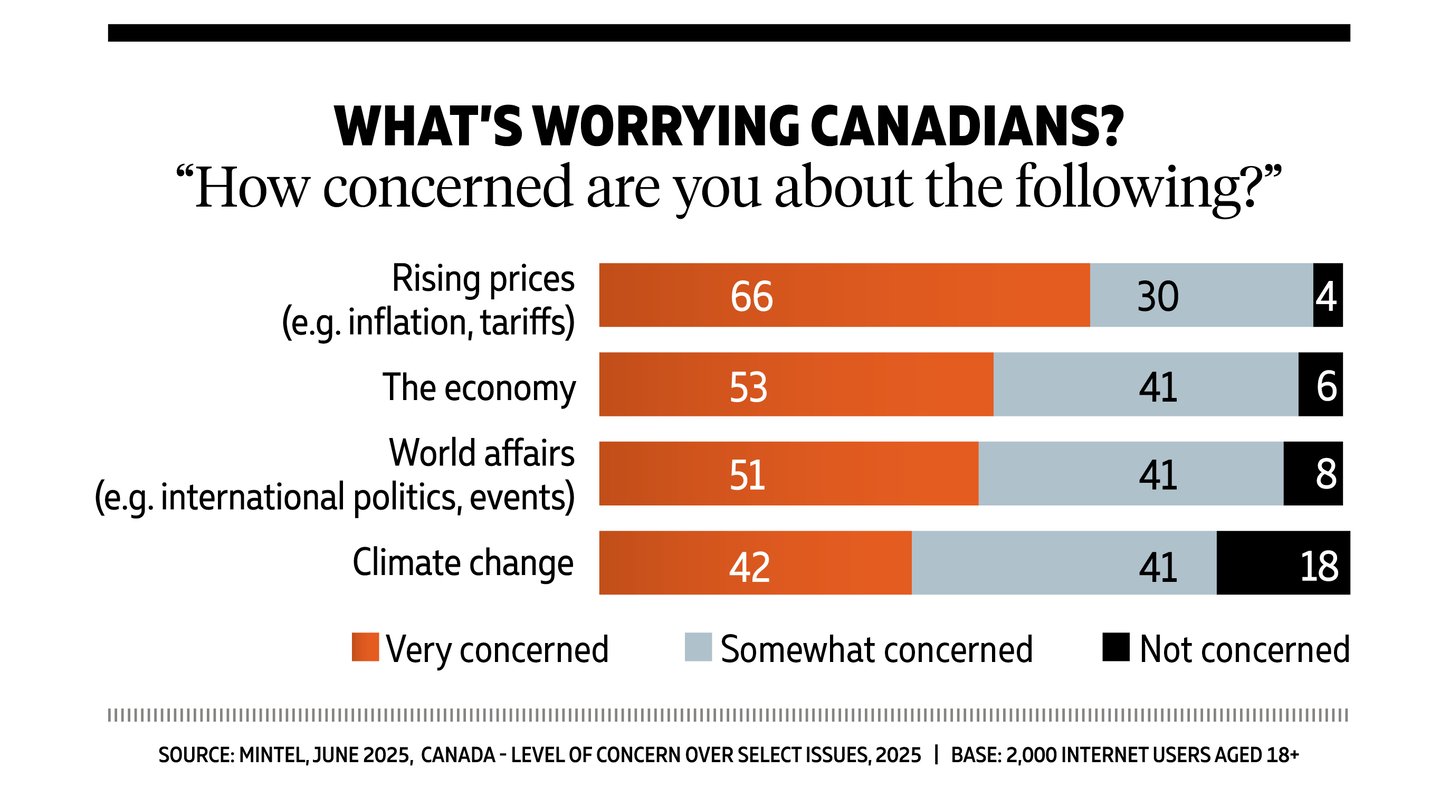
Mintel tracks what Canadians worry about, and climate change remains a concern among 80% of the adult population, with 42% saying they are “very concerned.” To be clear, rising prices and the economy are the top worries expressed, but this doesn’t mean the environment somehow matters less.
READ: Climate control: How grocers are responding to weather disruptions
Rising prices and the economy being the top concerns for Canadians illustrates that environmental action can’t be at odds with perceptible, pocketbook considerations. This applies to any industry that aims to moderate its environmental footprint.
Established behaviours are also extremely difficult to change. Studies show eating less meat is a tactic to lower GHG emissions. Consider, however, that less than one-fifth of Canadians follow a vegan, vegetarian or flexitarian diet. This means convincing people to reduce meat consumption for the sake of the environment is impractical, at least on the scale needed to make a meaningful dent in GHG emissions.
Innovation that helps companies produce the foods people love and are accustomed to in an increasingly sustainable manner is more likely to prove scalable, and, therefore, effective.
Consumers also want companies to deal with their concerns around the environment and. More specifically climate change, but most don’t give credit for what they can’t experience first-hand. For instance, when it comes to the environment and food, waste - whether in the form of packaging or food waste - is a priority. Carbon footprint matters, but it's further down the list. It's not that people don’t care about carbon and climate change more broadly, its just a hard connection to make compared to sectors such as transportation where tailpipe emissions are visible. Frankly, there’s no easy way to answer this.
Taking a longer-term view can help recognize the benefits of investing in innovation to reduce GHG emissions. One reason is the hard science already outlined. The world is warming due to an increasing concentration of carbon, methane and nitrous oxide in the atmosphere. This situation creates challenges for agriculture, which relies on relatively consistent and predictable weather patterns.
A second reason is brand relevance. If current trends persist and scientists’ predictions come to fruition, the impacts of climate change will become clearer to people in the years to come. The reputation of brands that don’t make meaningful investments in this space may suffer. Indeed, three-quarters of Canadians agree that “food and drink companies have an obligation to reduce the environmental impact of their production methods,” according to Mintel’s Sustainability in Food 2024 report.
Data does not support the narrative that Canadians no longer care about climate change and sustainability. Pocketbook issues will likely always remain front-and-centre, yet most consumers believe companies are obligated to mitigate their environmental impact. Making investments in this area will continue to matter and lend themselves to more resilient brands.
This article first appeared in Canadian Grocer’s September/October 2025 issue.