
Booze Economics: Why Liquor Boards Shouldn’t Play Tariff Games
It was reported recently that Quebec’s liquor board, the SAQ (Société des alcools du Québec), will be giving away about $300,000 worth of American alcoholic beverages that are nearing expiry. The initial plan was to discard the stock, but public pressure forced a reversal. In a province long associated with milk dumping due to supply management, rescuing American booze from the same fate is nothing short of ironic.
Read: Tariffs - Quebec will donate rather than destroy expiring U.S. alcohol, minister says
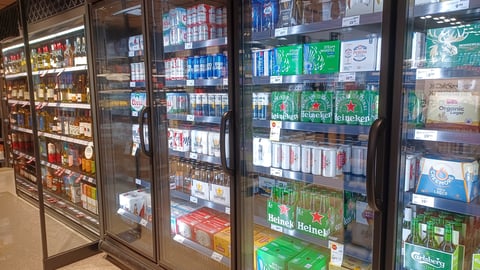
Since March, when Quebec pulled all U.S. wines and spirits from its shelves, the SAQ has been holding roughly $27 million in inventory. Just storing it has cost taxpayers about $500,000 in warehousing fees. This is the economic cost of politicized supply chain decisions—sunk capital and waste that, ultimately, land on consumers and taxpayers. Ontario, Nova Scotia, Manitoba, and Newfoundland and Labrador are in the same position, sitting on stock with no announced plan. By contrast, British Columbia, New Brunswick and the Yukon have sold their remaining inventories to licensees and restaurants, at least extracting some value. Alberta, Saskatchewan and Nunavut have resumed sales altogether. These approaches are far more sensible, but the question remains: why should government monopolies, rather than consumers, decide what belongs on the shelf?
American exporters see the situation for what it is: a government-imposed ban, not a consumer boycott. That distinction matters, because liquor boards are monopolies, and the perception of abuse of power could eventually invite legal action from American distilleries. In the meantime, the alcohol industry itself is adjusting to larger trade realities.
Read: LCBO removing U.S. alcohol from its shelves in response to tariffs
Last week, Diageo confirmed it will close its Crown Royal bottling plant in Amherstburg, Ont., by February 2026. The company stressed that all Crown Royal will continue to be mashed, distilled and aged in Canada, but made clear the move is part of a broader strategy to improve efficiency and resilience in its North American supply chain.
The announcement raises another concern: if liquor boards are willing to politicize inventory decisions with American products, will some now target Crown Royal as well—especially Ontario’s LCBO, in the very province where the plant is shutting down?
Such a move would be short-sighted. Crown Royal is not only one of Canada’s most iconic spirits, but also one of the country’s most successful global brands. Jeopardizing its market position for political purposes would risk undermining both domestic pride and export credibility in a sector where Canada actually leads.
While Diageo did not cite tariffs directly, the backdrop is obvious. Higher trade costs and uncertainty are forcing companies across food and beverage to redesign supply chains closer to U.S. consumers. This is exactly what Washington had in mind. By wielding the buying power of nearly 400 million affluent consumers, President Trump’s tariff strategy has enticed firms to onshore and reshore production.
Economic indicators suggest the approach is bearing fruit. U.S. GDP was revised upward this week to 3.3 percent growth in Q2, far stronger than the previously estimated 3.0 percent and a sharp rebound from the 0.5 percent contraction in Q1. Consumer spending remains strong, and predictions of an economic collapse under tariffs have not materialized. For Canadian businesses tied to U.S. markets, the implications are clear: tariffs are no passing phase but a structural feature of the trade environment.
Ottawa’s recent decision to cancel counter-tariffs at least signals a willingness to work pragmatically with its largest trading partner. That move may help restore predictability for Canadian exporters. But the lesson of the SAQ remains: when governments politicize inventory management, taxpayers end up footing the bill, supply chains lose flexibility, and Canada’s credibility as a trading nation is put at risk.
And if liquor boards were ever reckless enough to politicize a global powerhouse like Crown Royal, the damage would go far beyond one brand. It would signal to the world that Canada is willing to sacrifice one of its strongest export success stories on the altar of short-term politics. For a country that already struggles to project itself as a food and beverage leader, turning Crown Royal into collateral damage would be nothing less than economic self-sabotage.