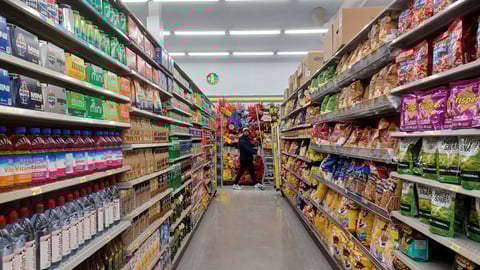
Dollarama takes top spot in reputation survey
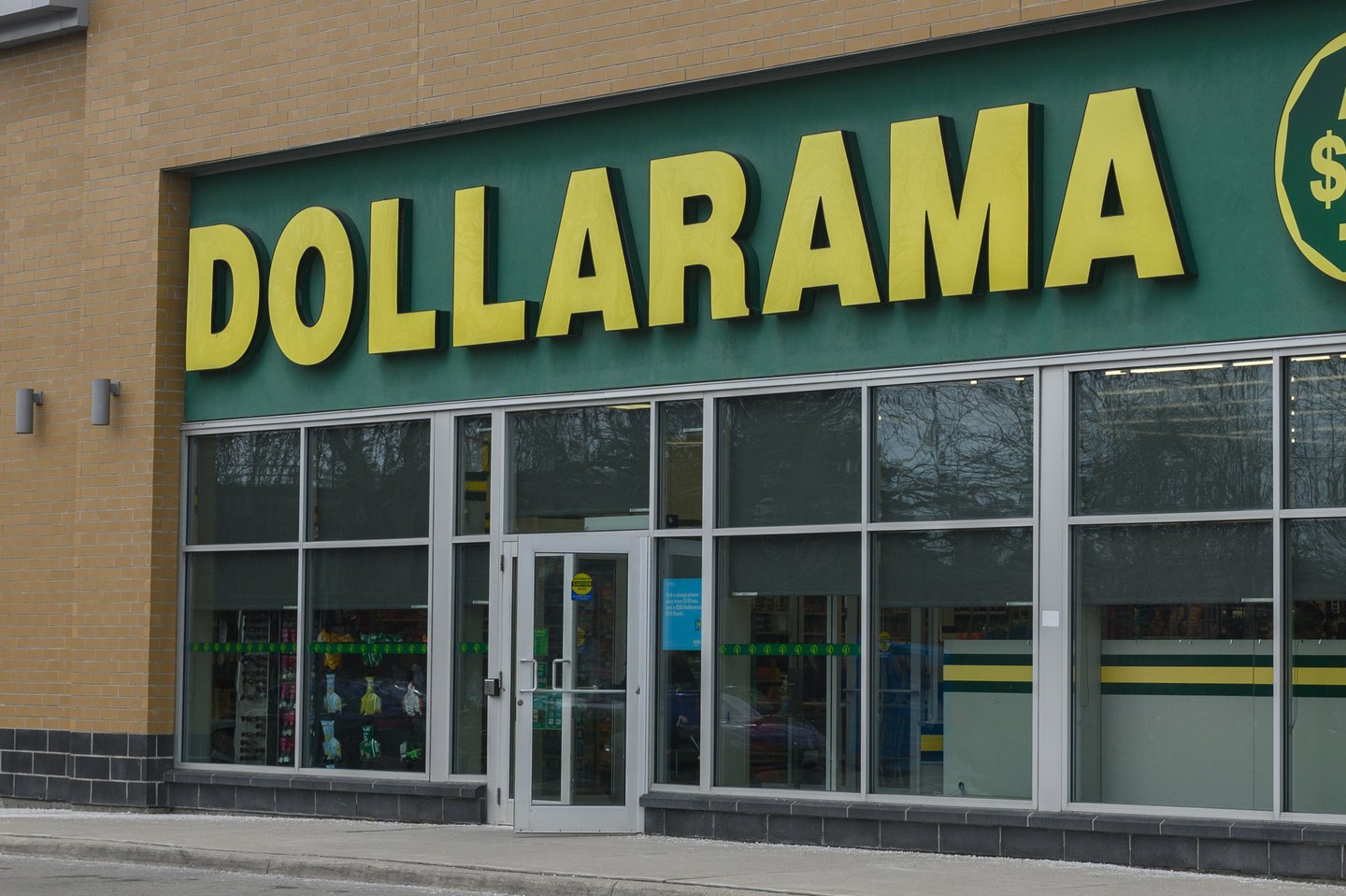
Dollarama has been crowned the most reputable company in English Canada, according to Leger’s Reputation 2026 report. The discount banner takes the top spot from Costco, which fell from No. 1 to No. 3 this year.
Now in its 29th year, the study ranks the most reputable companies based on a survey of more than 38,000 Canadians. Respondents were asked about a selection of companies from the 334 surveyed across 29 sectors, indicating whether they have a good opinion of a company, a bad opinion or don’t know enough to have an opinion. The reputation score is simply good opinion minus bad opinion.
In this year’s survey, 80% of respondents said they have a good opinion of Dollarama and 7% said they had a bad opinion, giving the retailer a score of 73. This was up five points from 2025, when Dollarama landed at No. 8 in the ranking. Comparatively, 77% of respondents said they have a good opinion of Costco and 5% said they have a bad opinion, earning the retailer a score of 72—narrowly beaten by Samsung.
“This is a big signal that Canadians are looking for something affordable, they’re feeling the cost-of-living pressure and brands like Dollarama and Costco that [offer] affordable, practical and reliable solutions are really great for Canadians,” said Lisa Covens, Leger’s senior vice president, public affairs and communication, Central Canada, on a recent webinar revealing the ranking.
Deal-hunters who share their finds online may also be giving these retailers a boost. Covens said there are social media accounts dedicated to finds-of-the-week at both Dollarama and Costco. “You’re seeing a lot of buzz around that, which might have also elevated Dollarama this year,” she said.
Rounding out the top 10 in reputation are Sony, The Weather Network, Toyota, Canadian Tire, Lindt, Google and YouTube.
In the grocery sector, No Frills was tops in the category and No. 26 overall, with a score of 59. Other grocery and mass merchandise retailers that placed among the 334 are Giant Tiger (#54), Sobeys (#56), Walmart (#66) and Loblaw (#136).
Food and beverage brands that placed among the top 50 are McCain Foods (#11), Maple Leaf Foods (#14), Heinz (#21), Kraft (#27), Ferrero (#43), Danone (#45), Ocean Spray (#47) and General Mills (#49).
The growing influence of reputation
The webinar also covered why reputation matters. Leger research from 2025 found that 49% of consumers stopped buying from a company in the past year because of its poor reputation, 57% would pay more for a product or service from a company they consider credible, and 79% said reputation is an important factor when purchasing a product or service.
READ: No Frills turns up the savings message amid expansion
“Reputation matters because it shapes how people choose who they trust and how willing they are to stay loyal to a brand. It also influences whether consumers pull back or lean forward,” said Covens. “For companies with strong reputations, the benefits are clear. They’re more likely to win attention, earn consideration and convert into sales. They also tend to have more resilience when something goes wrong…because people are more willing to give them the benefit of the doubt.”
When reputation is weaker, the opposite happens, said Covens. “Consumers pull back, they’re less engaged, they’re less loyal, they’re more open to walking away. Even if they don't leave, they might reduce how much they spend or how positively they feel about the brand, or whether or not they’re likely to recommend it to their friends and families.”
Leger’s report also touched on social media’s central role in shaping perception. A March 2026 survey from the firm found that six in ten Canadians (61%) say they use social media several times a day, and 63% say what they see on those platforms has some influence on their opinion of the companies they encounter.
READ: Fostering customer trust in a world of artificial intelligence
However, the report states, influence does not equal trust. Only 22% say they trust the information they see on social media, while 73% say they distrust it. They have concerns about misleading or inaccurate content (76%), AI-generated or altered content (73%) and data collection and usage practices (72%).
“On the top 10 [reputation] list, I can almost guarantee that a number of those positions are determined by social media and how people are being influenced,” said Andrew Enns, Leger’s executive vice president, Central Canada. “But there’s also this notion that it’s not the greatest… and [people] aren’t sure it’s entirely accurate. It’s a really interesting relationship. From a corporate perspective, it’s important—absolutely—but it’s a risk-reward scenario.”