How AgriTech North is fighting food insecurity in Ontario
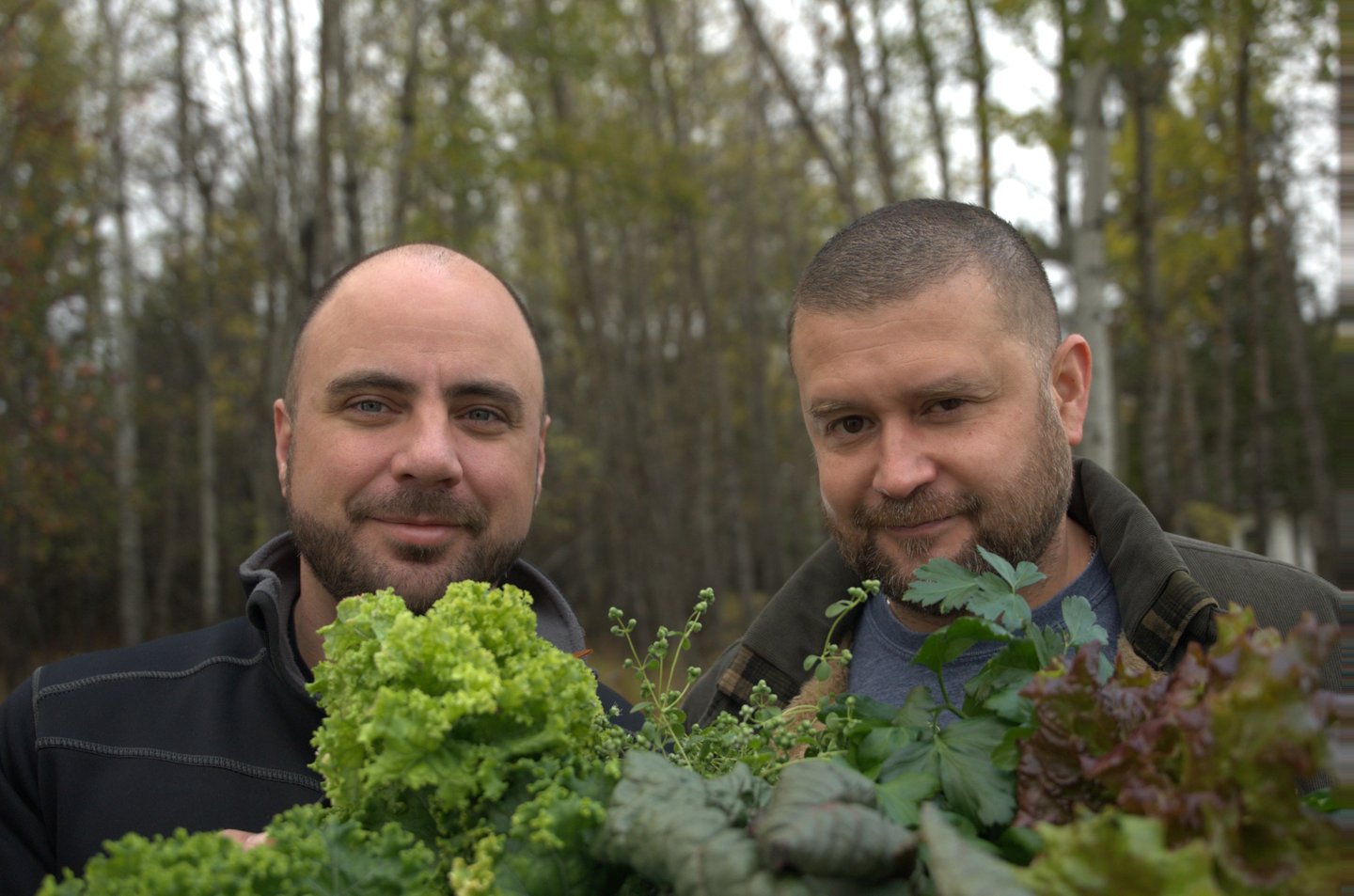
When Ben Feagin came back to his hometown of Dryden, Ont. in 2021, it wasn’t to build a company. It was to help his grandparents—and maybe grow a few herbs and greens on the side.
Trained as an engineer, Feagin had been working in the U.S., including a stint at the federal Department of Energy in Portland, while his fiancé Fabian Velez worked in high-end restaurants. The couple had no intention of staying in the northwestern Ontario community for more than a few years. But what began as what Feagin calls “a cute, small food security” project—a hydroponic vertical farm—quickly became something much larger.
“At 10,000 square feet, it’s now twice the size we ever expected it to be,” Feagin says, referring to a site that now includes the indoor farm, processing facility and retail. “It’s a massive living lab.”
Called AgriTech North, the B Corp-certified company operates a storefront in Dryden, national and international e-commerce channels and a regional distribution network serving restaurants, retailers and school nutrition programs across northwestern Ontario, including Kenora and Sioux Lookout. Feagin is CEO of the company and Velez is chief operating officer.
At the indoor farm’s core is a patented, refrigerant-free, water-based air conditioning and dehumidification system designed to solve one of indoor agriculture’s biggest costs: climate control. Feagin says it regulates temperature, airflow and humidity throughout enclosed spaces, reducing the constant cooling-and-reheating cycles caused by traditional systems that make many controlled-environment agriculture (CEA) farms cost-prohibitive.
“The system can cut HVAC-D energy use by as much as 71%,” he says—a significant saving for year-round production. The tech, he adds, also has potential applications in residential, commercial and industrial buildings.
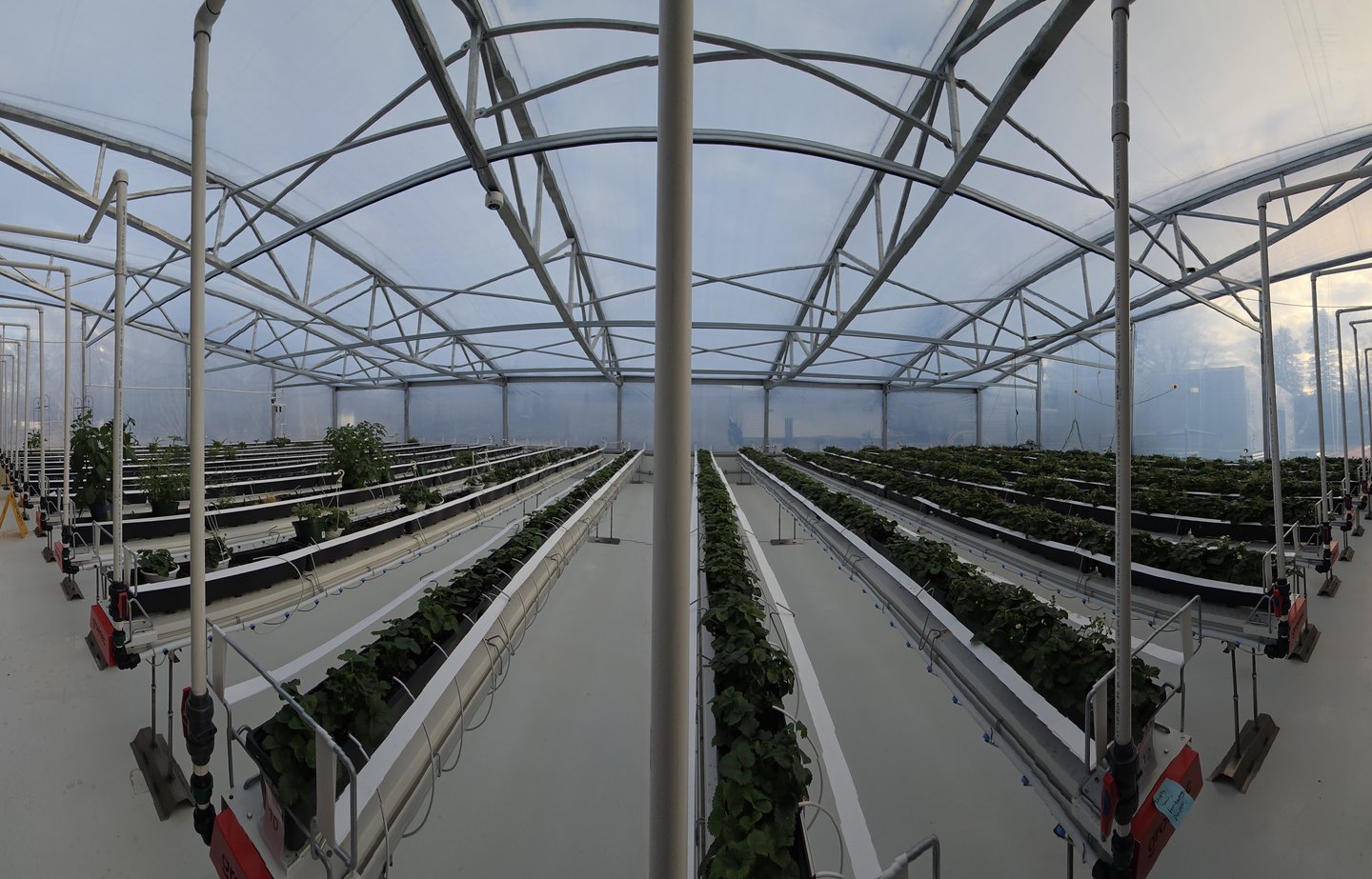
AgriTech North's 2,500-sq.-ft. patented greenhouse technology was also built with a triple-layer ETFE (ethylene tetrafluoroethylene) envelope, a lightweight alternative to glass that traps air between layers and has been academically validated to reduce heat loss by up to 70%. The company plans to scale manufacturing of the innovation in the next year or two, supported with funding by FedNor, Northern Ontario Heritage Fund Corporation, Agriculture and Agri-Food Canada, and Weston Family Foundation, among others.
Roughly 350 kilometres northwest of Thunder Bay, Dryden’s winters are brutally cold, the mercury plunging to −40°C. “Greenhouses all shut down in the North between November and March,” says Feagin. “It’s just too expensive to keep them heated.”
AgriTech’s innovations change that equation. The greenhouse produces herbs, cherry tomatoes, eggplant and strawberries year-round—not just lettuce, which is typically less energy-intensive to grow. “Lettuce is not food security,” he says, pushing back on what he sees as an overreliance on leafy greens in food security solutions. “There’s very little nutrition in it. You only really get Vitamin A and K from lettuce; you would have to eat a barrel full of it to hit just a few other daily intake nutrients.”
Food security is at the centre of AgriTech North’s mission. Dryden, with about 8,000 residents, is one of many small, remote centres across northern Ontario where Indigenous peoples make up roughly a quarter of the population, including Feagin, who is Métis.
READ: The outlook for Canada’s vertical farm sector
The region is larger than France, yet it continues to rely on costly supply chains stretching north from southern Ontario, with little in the way of distribution infrastructure for local and regional producers. In fact, northwestern Ontario is the last region of the province without a regional food terminal. “The grocery stores here have no produce manager, no local procurement capabilities,” Feagin says. “Stores won’t even allow direct delivery.”
Instead, regional supply is routed through small-scale warehouses in Thunder Bay or distribution centres in Winnipeg for consolidation and redistribution, a loop that adds cost and squeezes margins. “A local producer would have to ship to Winnipeg or Thunder Bay, four hours away, just to bring it back to a store that’s two blocks from them,” he says. “It’s ridiculous.” Hazardous winter roads only compound the inefficiencies.
AgriTech is offering a workaround. Its platform currently aggregates products from more than 100 local and Indigenous producers—many small‑batch suppliers that lack UPCs or formal quality‑assurance systems—and “white‑gloves” the process, handling labelling, barcoding, food safety compliance for regional, national and international markets, and logistics so those goods can reach conventional retail shelves.
Local partners on the platform include Brûlé Creek Flour, a flour mill 40 km from Thunder Bay; Sunrise Meats, a butcher operation in Emo that supplies specialty and smoked products; and Gerber Farms, a northwestern Ontario egg producer. “The pathway is: farmers’ market, then getting on our shelf, then scaling production, and finally having a free‑standing operation of their own,” Feagin explains. “Once they have their own operation, they can fulfill contracts directly with grocery stores or wholesalers."
“We have no intention of being a grocery store,” he adds. “We see ourselves as an economic bridge, because the region has no market access for vendors right now.”
AgriTech North’s charitable arm focuses on what Feagin sees as another key barrier to food security in northern Ontario: food literacy. He says vegetables like kale are still unfamiliar to a lot of shoppers. “You can’t just drop new produce on a shelf and expect people to know what to do with it,” he says. One of the charitable arm's efforts is school program partnerships to start building food literacy at a young age.
For Feagin, the goal is not to replicate a southern food system in northwestern Ontario, but to build something that reflects its constraints. “And if it works here,” he says, “it’ll work anywhere.”