
Q&A: Jessica Jones on Kraft Heinz Canada’s $250-million investment

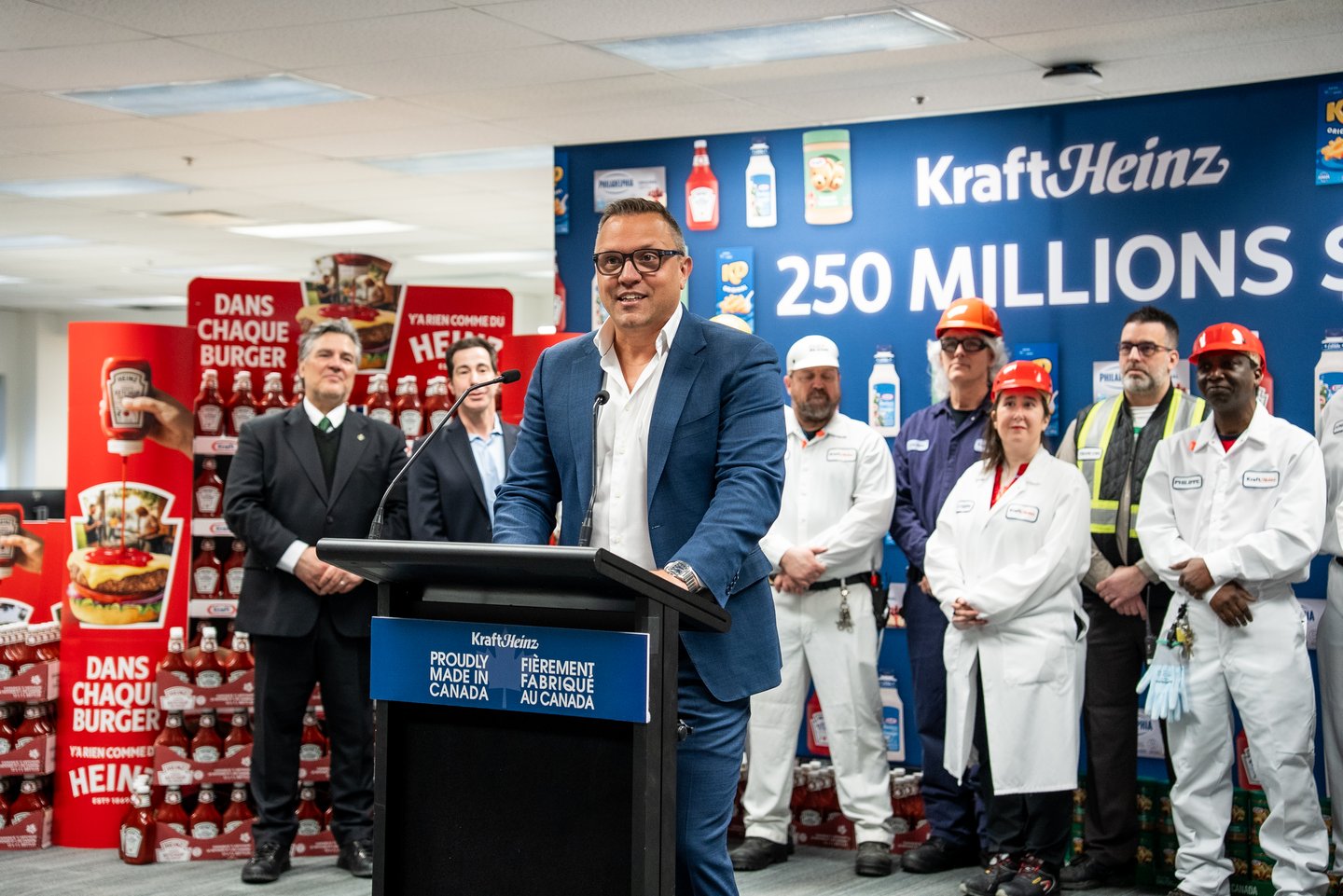
Kraft Heinz Canada is doubling down on homegrown manufacturing, investing $250 million to modernize its Mont Royal facility in Montreal. The 70-year-old plant, home to iconic products such as Kraft Dinner, Kraft Peanut Butter, Heinz Ketchup and Philadelphia Cream Cheese, will be upgraded to boost efficiency, sustainability and innovation.
Canadian Grocer spoke with Jessica Jones, head of supply chain at Kraft Heinz Canada, about what the investment means for the company, the industry and Canadian consumers.
What was the rationale for the $250-million investment in the Montreal facility?
Seventy per cent of the products we sell in Canada are made here, and 50% of the total goods sold come out of this site. It’s a plant that celebrated its 70th anniversary last year, and we know that consumers continue to want products made in Canada. So, it just made sense for us to continue doubling down on our commitment to making products here in Canada in our Mont Royal plant. The plant needs some love on all sorts of levels—from an infrastructure and modernization standpoint to capabilities that will meet our strategic plan and the growth that we want to bring.
Can you share some examples of how the facility will be modernized and what those upgrades will achieve?
We’re still doing a lot of the scoping work, and there are specific departments we’re focusing on first. This investment is over the next five years and following that, we’ll continue to add resiliency in our plan.
Peanut butter is one of the big departments we’re looking at. We run all of our peanut butter for the entire country off one line—one peanut roaster, one process, one pack line. So, there’s a resiliency piece and a sustainability piece we’re addressing as we invest in that area; for example, how can we roast our peanuts with better energy consumption? There is work we’re doing across the entire site with a sustainability lens of how to reduce our water consumption.
Some improvements are complete refurbishments, some are new investments and replacements, but we’re trying to keep that lens of driving efficiency in all senses, which includes sustainability. We’ve made external commitments on sustainability, so every time we invest, our goal is to meet those commitments as much as possible. For example, if we’re looking at a new roaster, we’ll make sure we do it in a way that’s going to reduce our energy consumption and environmental outputs.
Like this story? Subscribe to the Canadian Grocer Express Newsletter!
Can you expand on the timeline for the project?
We’ve been scoping for the last year-and-a-half on things we would like to do. Our Mont Royal facility is incredible and highly complex, so when you touch one department, it touches the departments around it. So, we’re playing this game of Jenga to a certain extent. But we’ve made our internal recommendations on the first few priorities. Again, do you refurbish the assets that are in place, or do you replace them entirely? For the first time in a long time, we have a certain amount of space—a footprint in the plant that we can play with—so that unlocks some capabilities we haven’t been able to address in the past.
The Canadian manufacturing sector faces significant challenges, from regulatory burdens to operational costs. What does this investment signal about the future of manufacturing in this country more broadly?
I think it signals a continued commitment from corporations such as ours to continue producing here despite the challenges. We’ve got great labour and great talent in this country. And again, consumers love products that are made locally. And so, this is us continuing to show that commitment. It’s not always possible to source everything locally … There are things we don’t grow in this country. But if we can process something here, then why not?
It’s understood that the corporate split between Kraft and Heinz is on hold. Has the pause changed how you’re approaching the investment in the Mont Royal facility?
No. For us, the split is completely unrelated. We were having these conversations well before the split was even potentially happening and through it not happening or being put on pause. So, to me, they’re completely separate. We’ve been manufacturing out of there for 70 years. We’ve been here [in Canada] for over 110 years. Split or no split, we were going to continue to do that regardless.
READ: Kraft Heinz pauses plans to split into 2 companies, says its problems are 'fixable'
Beyond the new investment, what are the plans or priorities for Kraft Heinz Canada?
We’re always looking at what our consumers want and need—and consumer needs and Canadian households are changing. It’s an interesting time to make these investments because we can match those things up. Do consumers want more sustainability-friendly products? How are the trends with GLP-1s affecting things? How are Canadian households changing, and do we need to change some formats? For example, do we make larger formats for multicultural, multi-generational households?
Our priorities will continue to be staying open to how the Canadian landscape is changing, bringing new innovation, interesting products and new flavours to the market, while staying true to the products we’re known for and that we’ve been making for decades. We’ve got brands that people love. We want to continue making those as we evolve with consumers.
And the investment also sets up the plant for future product innovations?
Yes … I used this analogy the other day. It’s like you’re buying a home right as you’re getting engaged. Are you going to buy the little condo for you and your spouse, or are you going to think ahead and build a house for when the kids come? And that’s the approach we’re taking.
In the scoping, there’s a lot of alignment—including the commercial and marketing plans, as well as insights from our consumers and our retailers—so we can build that in. We sat with some of our retailers last spring, telling them about some of the work we were doing and letting them know: the more we understand what your customers need, the more we can build that in. So, we’re trying to make it as collaborative as possible.
This interview was edited for length and clarity.
