
From surviving to thriving: Mars Snacking North America's Jessica Adelman shares her resilience mandate

Global food supply chains are under pressure. As geopolitical conflicts, inflation and climate change continue to disrupt the agri-food sector, resiliency planning is non-negotiable.
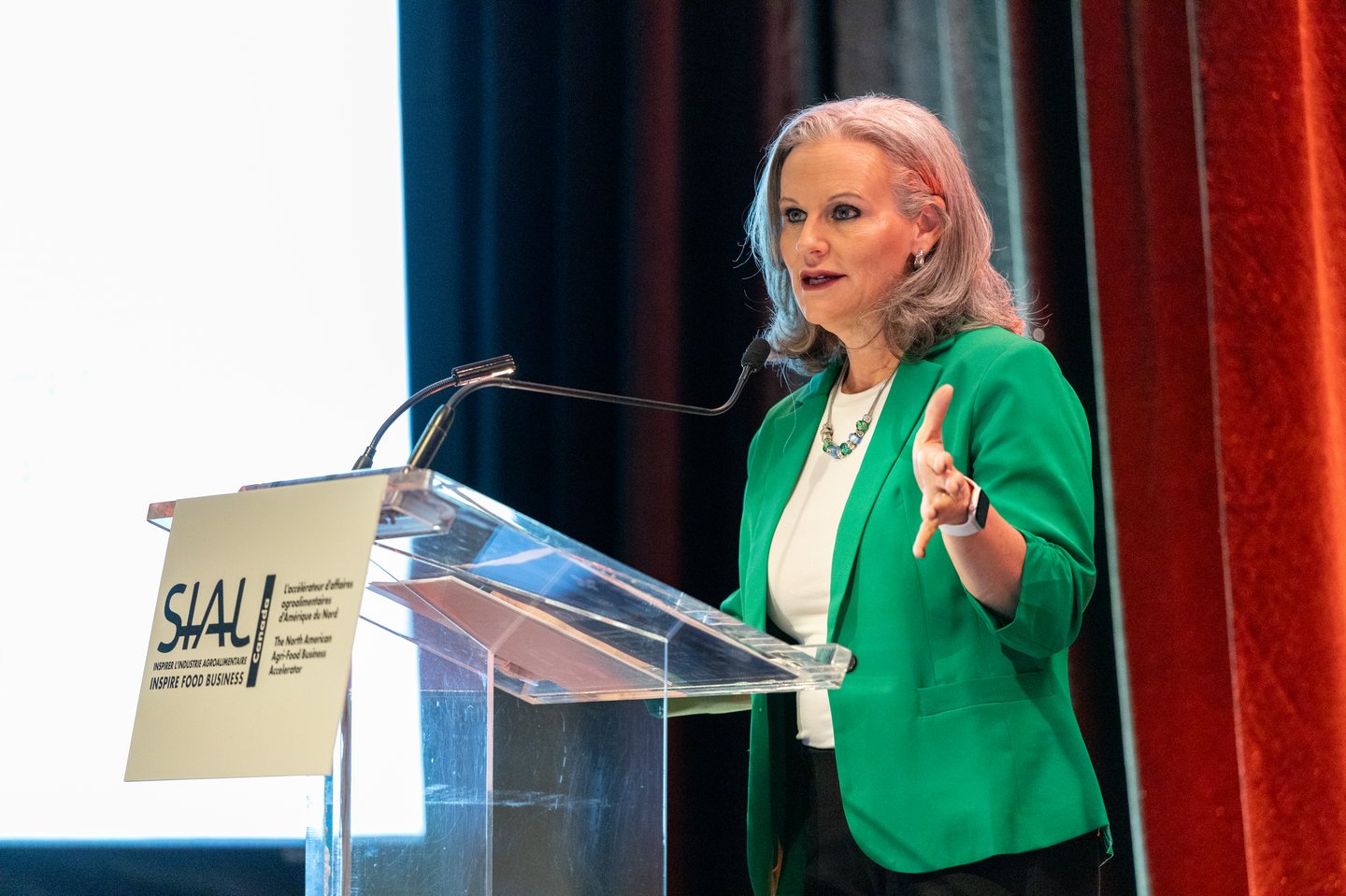
This was the theme of a keynote presented by Jessica Adelman, senior vice president and chief corporate officer for Mars Snacking North America, at SIAL Canada in Montreal last week.
For her session, Adelman shared a “tested” framework for resilience, drawing on 30 years of leadership experience across Cargill, Syngenta, Kroger and Mars.
“In resilience planning, we need to confront reality—calling out and then ultimately solving for the elephant in the room up front, rather than waiting to be blindsided,” she told attendees. “In my experience, the path to resilience has always rested on three pillars: value creation, risk management and reputation management.”
Here’s what Adelman had to say about those pillars—plus some parting questions for companies to kickstart their resiliency planning.
Value creation
“Too often, executive decisions in a crisis fall into survival mode, just trying to maintain the status quo. But true resilience comes from using the moment to force through the bold moves that the little voice in the back of your mind has been nagging you, nagging management, nagging your board of directors about—that little voice that says, ‘If you really want to move the needle, you know you are going to have to do X.’... At its core, this pillar of value creation is about building strategic growth KPIs that push our businesses forward and toward long term success—even, and maybe especially, during lean times.”
Risk mitigation
“When we have continued value creation, you realize it is only possible if you have the bandwidth to innovate, and that bandwidth comes from reducing the threats to your operations. In other words, strong management teams and boards don't wait for field-level risks to be escalated. By then, the damage might already likely be done. Instead, they proactively examine the elephant in the room from multiple angles, identifying threats and building commitments before being forced to.”
READ: KPMG’s Elliott Marer on pressure and possibilities amid a food industry in flux
Reputation management
“I also often describe reputation as a resilience buffer, because when you weave resilience planning into your brand values, you create a reservoir of trust with your audience that helps you to weather future stress and storms… Proactively building trust early on gives you the license to make tough calls. When a crisis hits externally, consumers are more likely to understand your decisions and offer public support. Internally, this existing shared values-based foundation also allows you to secure buy-in and to execute decisions more quickly and more confidently, both things which are important in a potential crisis situation. Now, a common mistake is thinking that brand love is a shield that can protect any organization from crisis. And let's be real, even the brands that we love most can get caught up in today's polarized conversations and any message is always at risk of being misunderstood.” (Adelman pointed to the M&M’s "spokescandies" controversy as an example.)
Parting questions
Adelman challenged leaders in the room to ask themselves three questions to start their journey towards resiliency:
- What is one strategic KPI that we can implement today that brings my team beyond business as usual and works to make my company more profitable?
- What is a potential blind spot—that elephant in the boardroom—that we need to address to make sure our organization is here into the future?
- What is the radical transparency initiative that aligns my operations and values with those things that can make the company more trusted?
“Today, we are reminded that resilience isn't about surviving, it's about thriving,” she said.