How Metro’s Super C is reshaping discount grocery shopping in Quebec
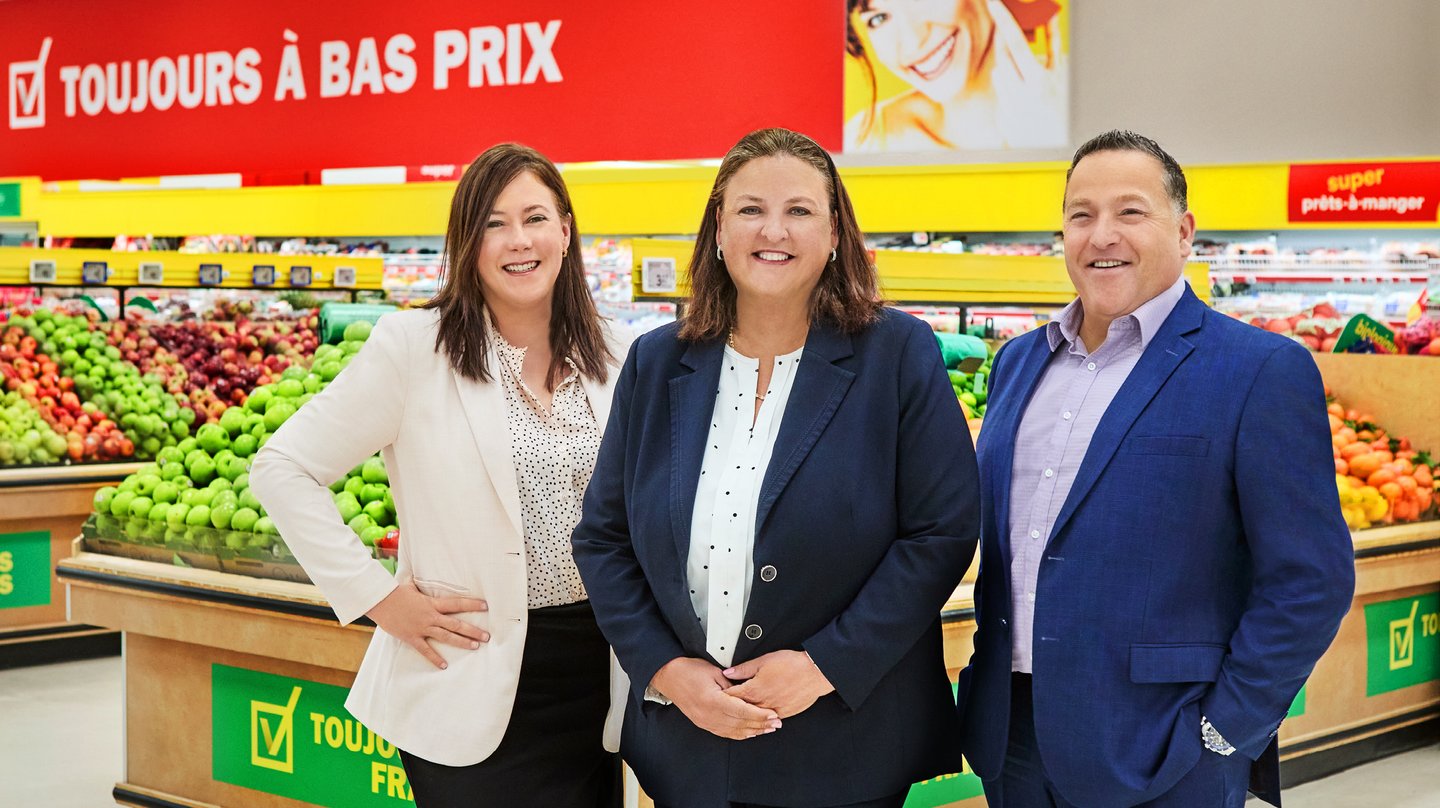
For years, “discount” food shopping meant dealing with a narrow, sometimes sub-standard product assortment and few in-store services. But as more and more consumers expect the right mix of price, quality and convenience without trade-offs, discount grocery stores are evolving. In Quebec, that evolution is being driven, in large part, by Super C, Metro Inc.’s discount banner, which is steadily expanding its customer reach while redefining what value looks like.
“The definition of value has changed enormously over the years,” says Anna Kolakowski, Super C’s senior vice-president. “It used to be about having the lowest price possible, but today’s value is also about being fresh, being convenient and simple to shop.”
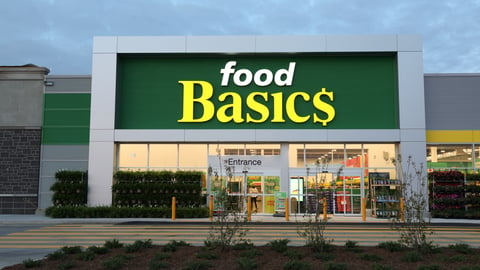
Just as that definition has evolved, so has Super C’s footprint, which has expanded to 120 stores across Quebec and growing. The banner’s roots date back to 1982 when its first store opened in Beauport under the name Super Carnaval. Its 14 stores were acquired by Metro in 1987 and rebranded to Super C in 1991. The banner has evolved into Metro’s primary discount format in Quebec—the counterpart to Food Basics in Ontario—serving a broad cross-section of consumers across the province.
Read more: Super C opens new store in Sherbrooke, Que.
What distinguishes Super C is a model that is clearly defined and executed consistently across stores. At its core, the discounter operates on a simple framework of three promises that guide every decision in the business, from product assortment to store layout. “Always fresh, always in stock and always at low prices,” says Christina Bédard, vice-president of merchandising, who has been with the company for 23 years. “This is guiding our everyday actions to make sure we offer the best value to our customers.”
From an operations standpoint, this means a highly standardized approach across locations, says Éric Leclerc, vice-president operations. “Super C’s day-to-day operations are guided by a simple and disciplined model built around efficiency, consistency and value for customers.”
Layouts throughout Super C stores are intentionally simple, merchandising is streamlined and processes are built for speed, he says. The goal is not to create a highly curated shopping environment, but to remove friction wherever possible. “The focus is on speed and efficiency: streamlined merchandising, easy-to-navigate aisles and fast replenishment to keep shelves full at all times,” Leclerc explains. “Whether in Montreal, Quebec City or in Lac Saint-Jean, operations are standardized across all stores and prices are the same in every location.”
When it comes to staffing, Leclerc says Super C teams are “highly versatile and execution-focused,” which allows the grocer to stay agile while maintaining a lean cost structure. “The same employee may handle stocking, cashier duties and customer service,” he says. In some locations, they also contribute to product preparation and run service counters. “Employees are at the heart of operational efficiency,” he says. They consistently apply standards that help the grocer maintain its low prices, including minimizing waste, ensuring tight inventory management and adhering to simple, efficient processes.
Behind the scenes, Super C continues to invest in tools to fuel efficiency. Inventory management and forecasting systems, along with close supplier collaboration for pricing optimization all play a role in ensuring the right products are presented to customers. “In a market where customers are very value-driven, this allows us to stay competitive, reduce waste and ensure the right products are available at the right price,” says Leclerc.
Technology has been a key enabler, too. Super C was one of the first grocery banners in Quebec to deploy electronic shelf tags across its network. Self-checkouts have improved throughput during peak times, while newer initiatives such as artificial intelligence (AI) solutions and robots are being tested to enable more seamless scanning and faster inventory replenishment.
For Kolakowski, the common thread is clear: efficiency is not an end in itself, but a means to reinvest in value. “Anything that we can be more efficient on, we will then reinvest into pricing and into providing value for our customers,” she says.
The power of ‘fresh’ assortments
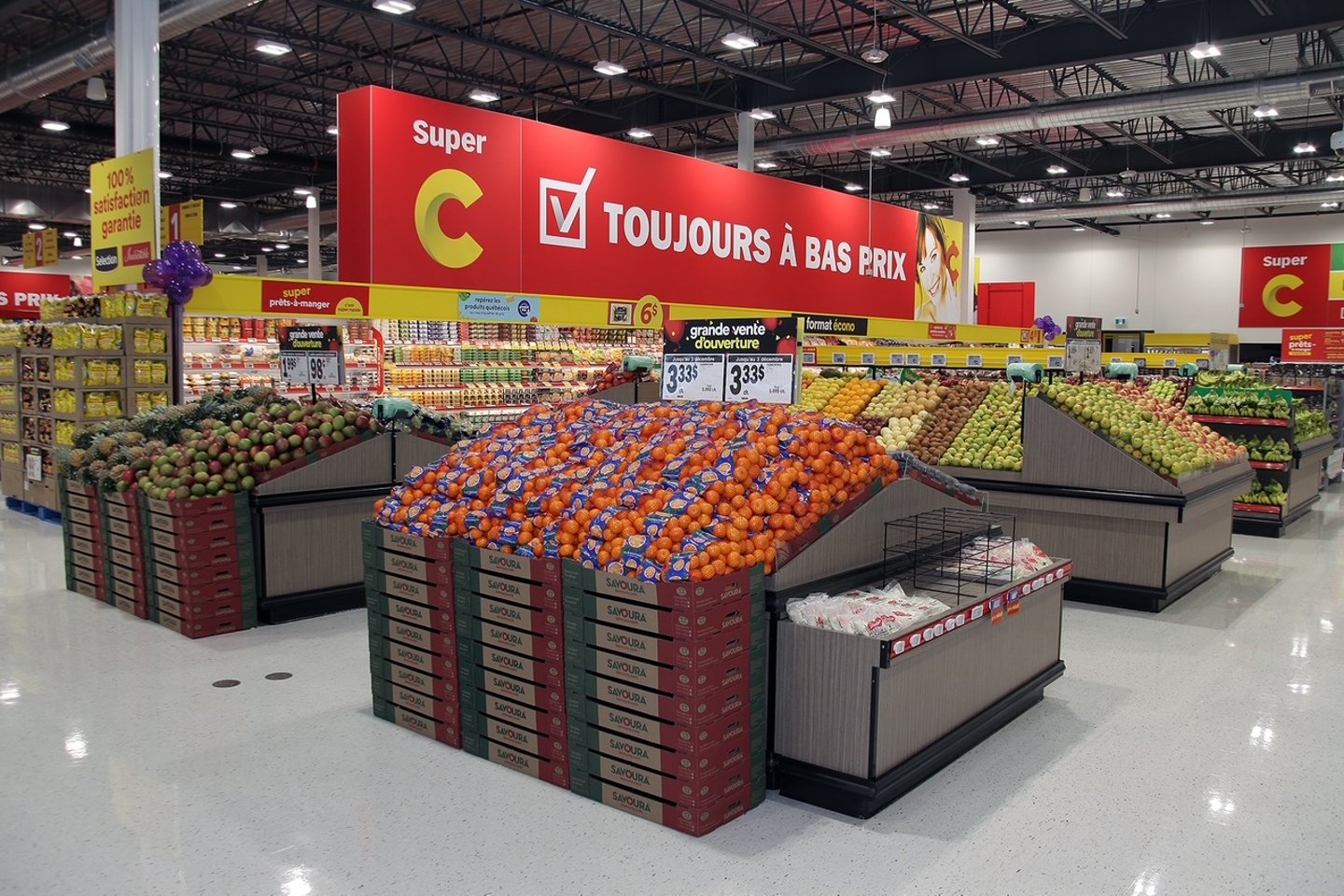
While operational discipline forms the backbone of the Super C model, its focus on “fresh” is what’s really driving customer appeal. While fresh departments have often been a trade-off in discount retail, Super C has moved in the opposite direction, making fresh a central part of its offerings. “We want to make sure we are fresh every day,” says Bédard. “You can feel it as you enter our stores.”
Beyond fresh produce, one of the banner’s most notable differentiators is its in-store butchery program. “We have butchers in [many] stores to cut meat every day,” Bédard says, noting this as a big competitive advantage over other discounters.
READ: How marketing can help keep meat sales moving
Not only does this allow the grocer to offer a broader range of fresh cuts and more premium options, it also supports a growing assortment of value-added products, such as marinated meats and ready-to-cook solutions. This has proved particularly appealing during peak seasonal periods, when demand for grilling products rises. In fact, the banner has expanded its range of marinated meats and ready-to-cook options in recent years, positioning itself as a go-to destination for barbecue at competitive prices.
That same emphasis on fresh and convenience extends across other in-store programs. Many locations offer a made-in-store sandwich program, along with ready-to-eat meals designed to meet a growing demand for quick meal solutions. Fresh sushi has also been introduced in select locations through a partnership with Aki Sushi. Bakery is another area where Super C has invested to strengthen its fresh credentials, with freshly baked French baguettes, kaiser rolls, submarine rolls and country-style bread offered daily.
Across stores, product assortment has expanded in recent years to reflect changing consumer expectations, says Bédard. That includes everything from organic products to larger-format value packs, as well as more diverse offerings. One example is the introduction of more than 30 exotic fruits and vegetables across the network—items such as plantains, dragon fruit and yellow kiwi—that are priced and promoted aggressively rather than treated as niche offerings.
The grocer has also broadened its ethnic assortment to better serve Arabic, Latin American and Caribbean communities, ensuring stores remain relevant to the neighbourhoods they serve while staying true to the banner’s core value proposition.
With such a sharp focus on both price and quality, it’s not surprising that consumer surveys have ranked Super C among the top discount banners in Quebec for low prices and overall value, particularly in meat and fresh categories.
Private label also plays a critical role. Roughly one in four products sold is a store brand, anchored by Metro’s Sélection and Irrésistible lines. At the same time, Super C has leaned into a highly dynamic promotional strategy. Its flyer program— now increasingly digital—is a key driver of traffic, with themed promotions and strong pricing on staple items designed to help customers build their weekly basket.
“Consumers love to consult our flyers,” Kolakowski says. “We try to be very creative … new promotions, new items on promotion and making sure that the products we offer on promotion are available.”
That focus on both everyday pricing and promotional value reflects a shift in consumer behaviour. According to Bédard, this manifests in multiple ways. “I think customers are planning more than before … they are comparing more and they are looking for value across their full basket,” she says.
At the same time, meeting those expectations in Quebec requires a deep understanding of local tastes and shopping habits—something both Kolakowski and Bédard say is central to how the banner builds its assortment. While Super C operates with a standardized model, what goes on the shelves is closely tied to local demand.
That includes products that have become favoured staples for Quebec shoppers such as live lobster, maple-based marinades and butter, fondue meat and specific cuts such as French roasts. In fresh categories especially, the goal is to reflect how customers actually cook and eat, rather than relying on a one-size-fits-all approach.
READ: Discount is the new name of the game. What does that mean for conventional stores?
“We need to be disciplined and use the data that is available to make sure that we offer the products that the customers are looking for,” says Bédard. “We’re looking at sales, but also at customer feedback.”
That insight is reinforced through a range of inputs, from in-store surveys to digital behaviour and direct customer comments. This allows the team to adjust assortment decisions quickly as preferences evolve. It also helps explain why the banner has continued to broaden its assortment in targeted ways, rather than simply adding more SKUs across the board.
For Kolakowski, that balance between consistency and flexibility is key. While the operating model remains tightly controlled, what goes on the shelf must continue to evolve alongside the customer. “We want to make sure that we continue to adapt to consumers’ needs,” she says, noting that expectations around food, convenience and value continue to shift.
In practice, that means offering multiple ways for customers to find value within the same category— from smaller formats with lower price points to larger packs that offer better value per unit—while maintaining quality and availability. It’s a reflection of how today’s shopper is navigating grocery spending, often balancing tight budgets with a desire for freshness and variety.
The next phase of discount retail
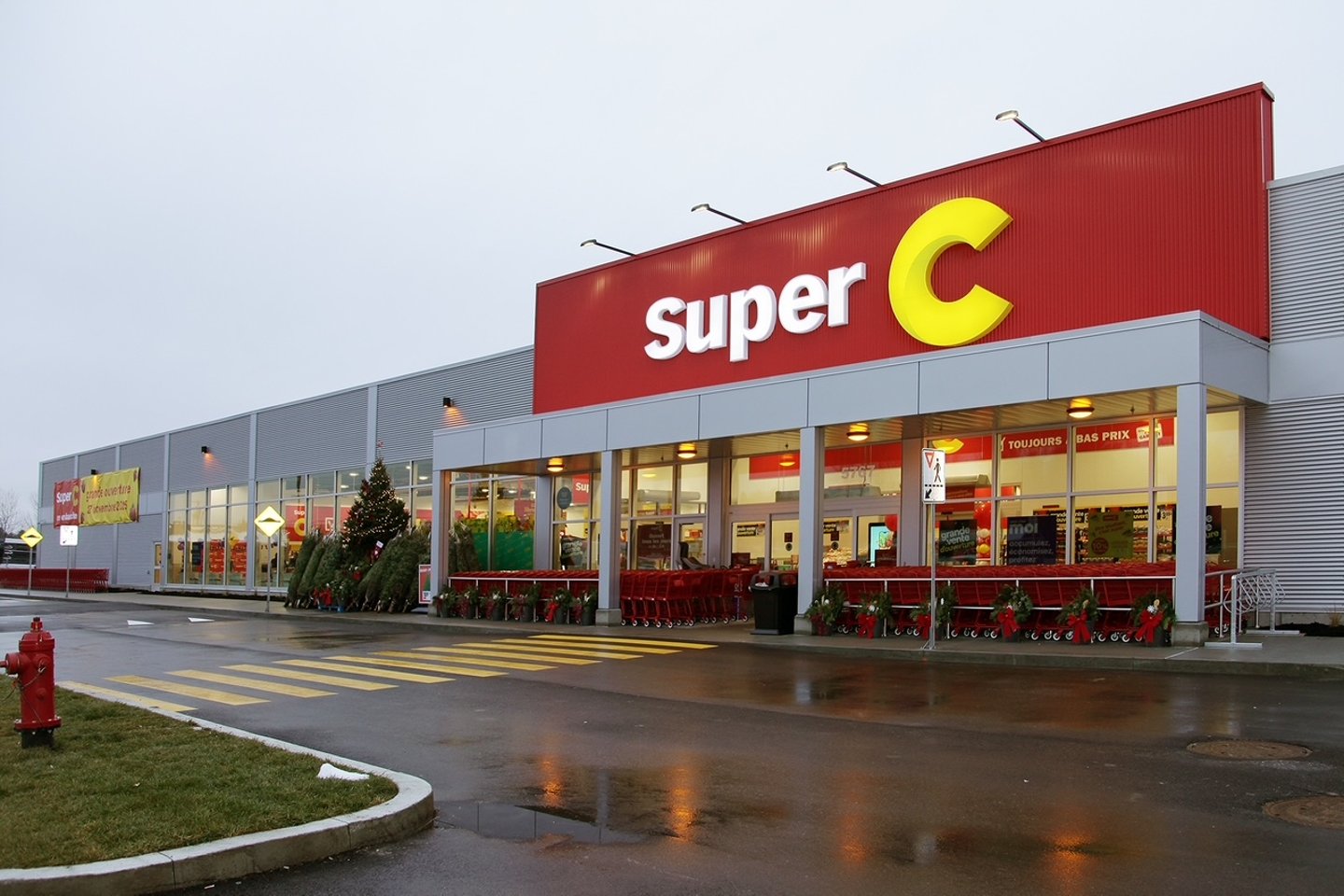
Super C’s continued expansion reflects both its internal execution and broader shifts in the Canadian grocery landscape. Across the country, discount formats have gained share as inflation and cost-of-living pressures push consumers to re-evaluate where and how they spend. But for Kolakowski, the trend is not purely cyclical. “I think that pressure will remain,” she says. “Consumers will continue to look for value … especially in terms of their food expenses.”
In recent years, the banner has opened approximately six stores annually, with a focus on markets where demand is strong and the model can be executed effectively. “We want to make sure that we grow responsibly,” Kolakowski says. “We’re going into markets where there is consistent demand.”
Even as it grows, with some 9,000 employees currently, Super C remains a relatively lean organization with a small leadership team. That structure supports faster decision-making and closer alignment between strategy and execution, says Kolakowski, which is a clear advantage in a fastmoving retail environment.
At the same time, being part of Metro provides scale where it matters most. Shared distribution infrastructure, combined purchasing volumes and an integrated loyalty ecosystem—anchored by the grocery company’s Moi loyalty program—extend the discount banner’s reach without compromising its regional focus.
READ: Retailers are betting on discount. Will the momentum last?
Super C’s operations, merchandising and marketing remain fully Quebec-based, allowing the banner to respond directly to local preferences, demand and market conditions. Looking ahead, the priorities are less about reinventing the model and more about refining it.
For Bédard, that includes continued evolution of product assortment and store layout. Recent changes in centre-store design—tested in select locations—is already showing promising results in both sales and customer feedback, with potential for broader rollout. “We’re seeing really great results,” she says. “Customers … say it’s easier to find what they are looking for.”
For operations, the focus remains on maintaining discipline amid ongoing pressures. Labour constraints, elevated costs and shrink continue to require attention, even as supply chains stabilize. Maintaining consistency in execution—while managing those pressures—has become a central focus.
Yet, across all functions, the underlying strategy at Super C remains consistent. “We want to make sure we continue to provide the value that we’ve always been known for,” Kolakowski says. “And continue to adapt to consumers’ needs.”
Super C’s experience suggests that winning in discount is no longer about offering less— it’s about delivering more, consistently. As shoppers continue to look for value across every part of their basket, the advantage will go to the retailers that can balance price, quality and execution without forcing trade-offs.
For Super C, that means staying disciplined in its model while continuing to evolve with its customers. It’s about continuing to ensure that “discount” is no longer seen as a compromise, but as a reliable and increasingly preferred way to shop.
This article was first published in Canadian Grocer’s May 2026 issue.