The Leaders: Lessons from Costa Tsimiklis and Michael Vafiadis of CTS Foods

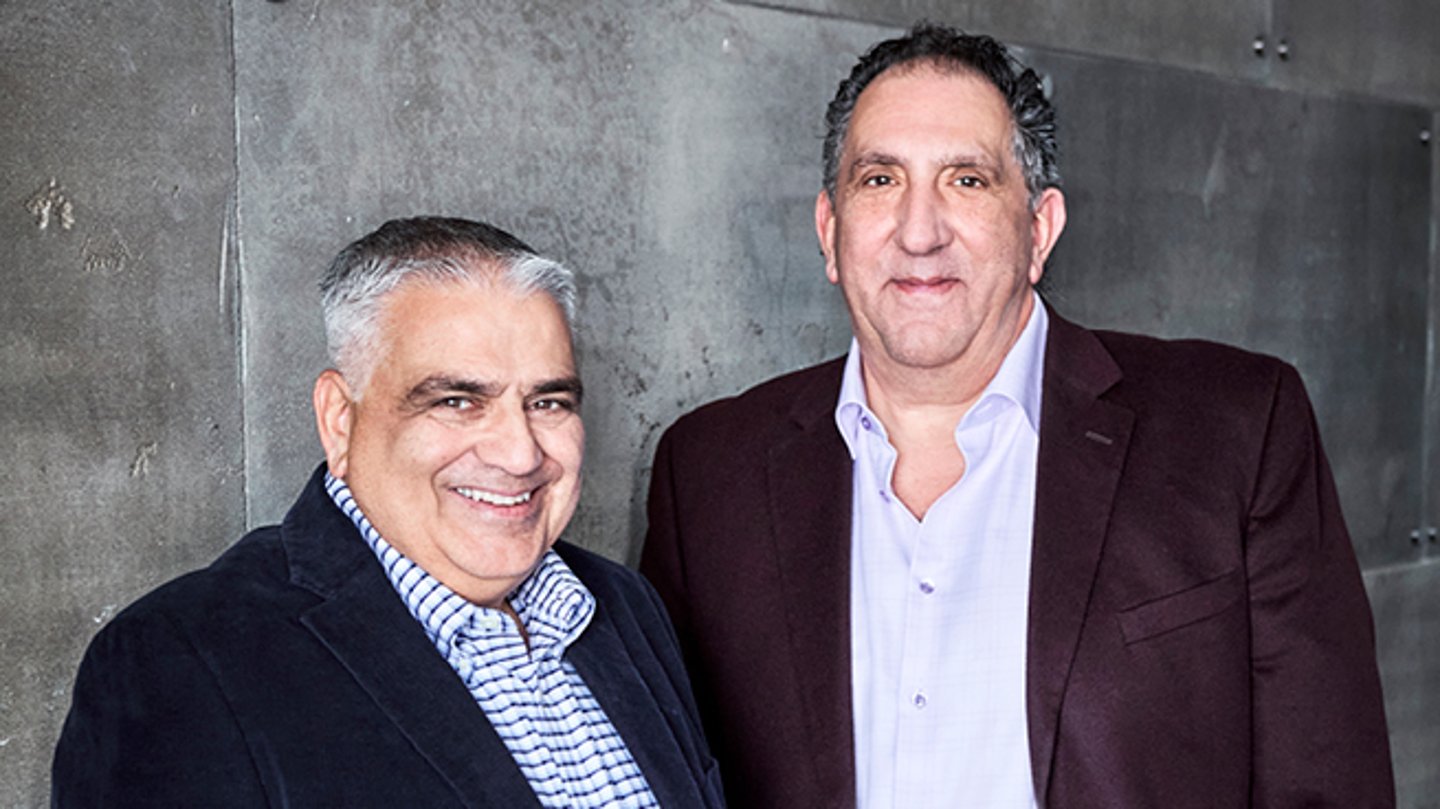
Give us a brief overview of your company.
COSTA: Our head office is in Montreal and we’re a food importer, wholesaler and distributor servicing independent and chain grocers across the country
What is your leadership story?
COSTA: I got my start in the deli business in the late ‘80s through my uncle. Not long after, we opened our first “office”— which was literally my father’s garage. From the beginning, it was hands-on; we did everything ourselves. We built CTS step by step through relationships and reputation—and those early years shaped the leader I became, one with high expectations, lots of respect [for employees] and always staying close to the market.
MICHAEL: I grew up working in my father’s restaurant, so I learned early what real work looks like—long days, late nights and doing whatever needs to be done. I’ve known Costa since the sixth grade, so when he asked me to join him, it was a no-brainer. I started in sales, learned fast, and by my second year I bought into the company. As we grew, my role became making sure what we were building was solid: strong people, steady execution and a business that could handle the next level without losing its identity.
As leaders, how do you balance long-term vision with short-term business pressures?
COSTA: You have to protect the long-term vision, but you can’t ignore reality. Short-term pressures are always there, but the vision keeps everyone moving in the same direction. The key is staying flexible without losing your identity. The market changes constantly but your values and your service standards can’t change.
MICHAEL: Short-term pressure is constant in this industry. The balance comes from discipline; you can’t make panic decisions. You need to keep the long-term vision in front of you, but operate with clarity in the short-term—protecting service, protecting reputation and protecting profitability.
What piece of wisdom have you carried with you throughout your career? And is there advice you’re glad you ignored?
COSTA: Someone once told me, if you’re not changing, you’re dying. That has stayed with me for years. And when I look at CTS over the years, we’ve been constantly taking chances and innovating within our business. You have to stay hungry, stay curious and never assume you’ve ‘made it.’ Advice I’m glad I ignored? People will tell you not to take risks, not to grow too fast, not to invest, but you can’t build something big by thinking small.
MICHAEL: Reputation is everything; protect it! In this business, people remember who delivers and who doesn’t. Advice I’m glad I ignored? Early on we were told to stay small, stay comfortable. We completely ignored that advice and I’m glad we did.
How do you keep teams motivated during periods of uncertainty and change?
COSTA: That one’s easy. We’re a company that’s fully transparent in terms of profits, sales margins, what’s coming next, what’s working, what’s not. People can handle bad news; they can’t handle surprises. If your team feels informed, appreciated and part of the mission, they’ll stay motivated even during tough stretches. Culture is built in the small moments—the everyday appreciation, the ‘we’re in this together’ mindset. And that’s why we have so many [long-standing] people; some have been with us for 30 years.
MICHAEL: By offering clarity. When things are uncertain, people get anxious and anxiety creates mistakes. My job is to keep everyone grounded with clear priorities, clear expectations and calm leadership.
Can you recall a difficult decision that ultimately strengthened the business?
COSTA: One was shifting CTS from a liquidation re-seller, which was what we were in the early ‘90s, to a real distributor. It meant raising pricing, building a broader product line and changing how we operated; that’s scary when you’re worried about losing customers. But we trusted our customers to evolve with us. That decision built the company we are today.
MICHAEL: Investing early, before it felt comfortable. As we started scaling up the company, we needed more people, more inventory, better infrastructure. Those decisions weren’t easy but they created stability and allowed us to grow without breaking the business.
What is a mistake you’ve made that ended up being a valuable learning experience?
COSTA: We were a small player in the distribution business and when we started going after big players like Costco and Steinberg’s [the now-defunct supermarket chain], we weren’t ready. We lost some money and had to regroup. The experience taught us that ambition without structure causes problems. That was a turning point.
MICHAEL: Trying to scale too quickly without enough support. We were trying to do everything ourselves. At a certain point, we took a step back and said, ‘OK, we can’t do this because everything’s going to collapse.’ We went back to our roots—which was servicing independent grocers—built a foundation and then went back to get [the business] of the Costcos, Metros and Sobeys of the world. From that experience, we learned that a business can grow faster than its foundation, and that’s dangerous.
Leaders often tell us that an important part of their job is to help develop future leaders. How do you approach this?
COSTA: By giving people opportunities before they feel fully ready, and then supporting them while they learn. It’s about giving them the freedom to explore and make mistakes, and to learn from those mistakes.
MICHAEL: I believe in ownership and accountability, not micromanagement. People grow when you give them responsibility and show them that you’re behind them. Leadership is not a title, it’s how you show up every day.
READ: The future of work—according to generation Z—is purposeful, digital and flexible
Your most difficult day as a leader?
COSTA: It was Dec. 31, 1998. We received our numbers and learned we had lost money again, for the second year in a row. I remember thinking, if we don’t turn this around next year, I’m going to need to walk away. That was really tough, but it also became fuel.
Best day as a leader?
MICHAEL: When we see the company can operate at a high level, and we’ve put in place a lot of good leaders who can run the company and take it to heart as if it’s their own. That’s a good day for a leader.
This article was first published in Canadian Grocer’s March/April 2026 issue.