The Leaders: Lessons from John Boynton of Arterra Wines Canada

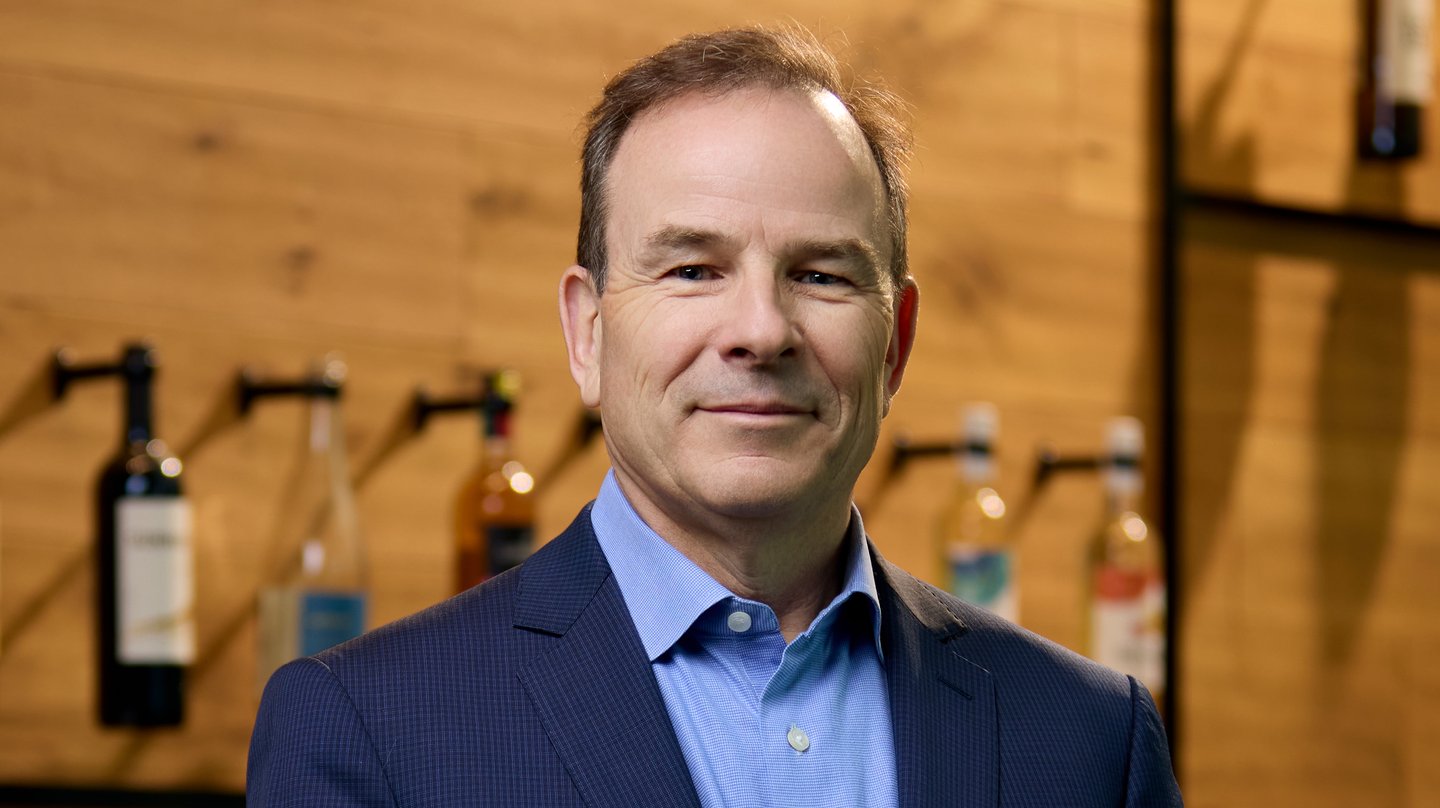
How did you get your start in the business?
I come from a family of entrepreneurs. Both sides of my family had their own businesses; one was a toy business and one was an office products business. So, you can imagine what my kitchen table was like growing up—it was all business, business, business. I didn’t really know there was anything else to do because my whole world was that; I never considered other professions. I went to business school and, while in university, I started my own company that funded my education. Then my first job was in operations for about five years, then I went into marketing at PepsiCo, and those two roles got me interested in a certain career path that has evolved from there. [A path that includes executive stints at Rogers, TorStar and now Arterra Wines Canada.]
What is your leadership story?
I mostly do roll-ups, turnarounds or transformations across multiple industries, and that’s kind of a strange occupation to have. My first job was a roll-up in the office products industry, then PepsiCo on the Pizza Hut brand where we bought Frank Vetere's Pizza, which started with a handful of restaurants then saw aggressive expansion. I got interested in that kind of high-growth activity. And then I went to Scott’s [Scott’s Hospitality]. It doesn’t exist anymore, but it was a huge conglomerate. I was on the KFC brand, Scott’s owned KFC in Canada at the time, and that was a turnaround. KFC was in a slow decline for quite a while, and we got it growing again. The board at that point said, ‘Great. We have this other thing in England. We bought three pizza chains; can you go over and fix them?’ And we transformed that business into something quite different—better economic model, better position in the marketplace and it took off, then we sold it. So, those were my first three gigs. After that, I really wanted more of those transformations and turnarounds.
And now you’re in the wine business. How have all these career experiences shaped you as a leader?
Being adaptable is one of the best skills a CEO can have. Adapting to a culture and to an industry and norms and processes and, more importantly, to people. Secondarily, as you do more of these roll-ups or transformations or turnarounds, you get better and better at doing them because the assignment is roughly the same, but it’s a different industry, different culture. You’ve got to learn early, but you get better and better at it. Not everything works all the time. And so, you fail a little and you apply that learning and your process gets better. You have to be humble enough to use your learnings to get better for the next [role].
Like this story? Subscribe to Canadian Grocer's free daily newsletter!
Tell us about a time when you’ve had to step out of your comfort zone. What did you learn from the experience?
When you’re doing a transformation, you’re generally going into a new industry and a new company and a new culture. And you’re almost always out of your comfort zone. I don’t think I’ve been in a company where I haven’t been completely out of my comfort zone. And so, you have to really be good at learning and absorbing at a very rapid rate. And you have to be humble to start with the point of view that you know nothing and you have everything to learn from people, so [it’s important] to surround yourself with the best people who can teach you. But, I like being out of my comfort zone— that’s my happy place.
How do you continue to grow as a leader?
It’s hard to grow without being open to criticism. You can’t have a thin skin, you have to be open, like really open to feedback. Every year in my performance reviews with my staff, we spend time at the end with them reviewing me as a leader. In the first year, it’s kind of awkward; people are like ‘I’m not doing that,’ but if you keep doing it and you keep asking, it’s great. And every couple of years I’ll ask my team to write down things they want me to keep doing, things they want me to start doing and things they want me to stop doing. It’s anonymous and our HR person reads them out in front of everybody. The more you do it, the more people become comfortable giving feedback and they realize it’s a good process, there’s good intent behind it, there’s zero repercussions—and I’m very grateful for it. But you do have to be ready for it. The people you surround yourself with are the best to coach you.
What qualities do you look for in emerging leaders at your company?
Drive beyond everything. Drive is so undervalued in companies, and I think people either have it or they don’t. And there are people who come in for the paycheque and that’s okay for a lot of roles. But there are people that you’re counting on to drive growth, and those people have to have drive. And you really need to surround yourself with people who have more drive or the same amount of drive as you. Then, you’re all sharing that huge responsibility for driving growth. So, drive would be the big one, then teamwork and collaboration, and integrity and accountability.
What is a piece of wisdom you’ve carried with you through your career?
My grandfather ran his own business and he said to me once, ‘John, you just need to get comfortable with the fact you’re not going to be the smartest guy in the room. You’re never going to be the smartest. Don’t try to be the smartest! What you can do is if you’re smart enough, you can outwork everybody.’ And I’ve always believed that if you continue to outperform, good things will happen.
Another came from watching my dad: being home for dinner was nonnegotiable for him. And what I tell staff is, find your thing—it might be breakfast; it might be walking your kids to school— find the one thing that is non-negotiable. I have always made it home for dinner and I only ever do one corporate business thing per week that takes me out in the evening. It’s a hard rule. I can’t tell you how many chair people, CEOs or board members have tried to get me to move from that, but it’s not a thing I’m willing to compromise on. I’m 62 and I look back and it’s one of the best things I ever did. I had a lot of conversations with my kids that I would’ve missed out on if I hadn’t really dug in hard.
What do you find most rewarding about being a leader?
It’s the people. I’m not going to remember targets from 15, 20 years ago; they all get blurred over time. And my management style is player coach. Sometimes you’re a player and you get right in there, and sometimes you’re coaching. I really like teaching people—I’ve never met a whiteboard I didn’t like! When people are struggling with something, I’ll get on the whiteboard and I’ll draw out a couple of constructs to help them get to the answer—anything I’ve learned in the past to help get them from A to Z—and then I leave them to figure it out. There’s no point in knowing things if you can’t pass it on.
This interview has been edited for length and clarity.
This article was first published in Canadian Grocer’s May 2026 issue.