

Why Starbucks can’t own the “third place” anymore
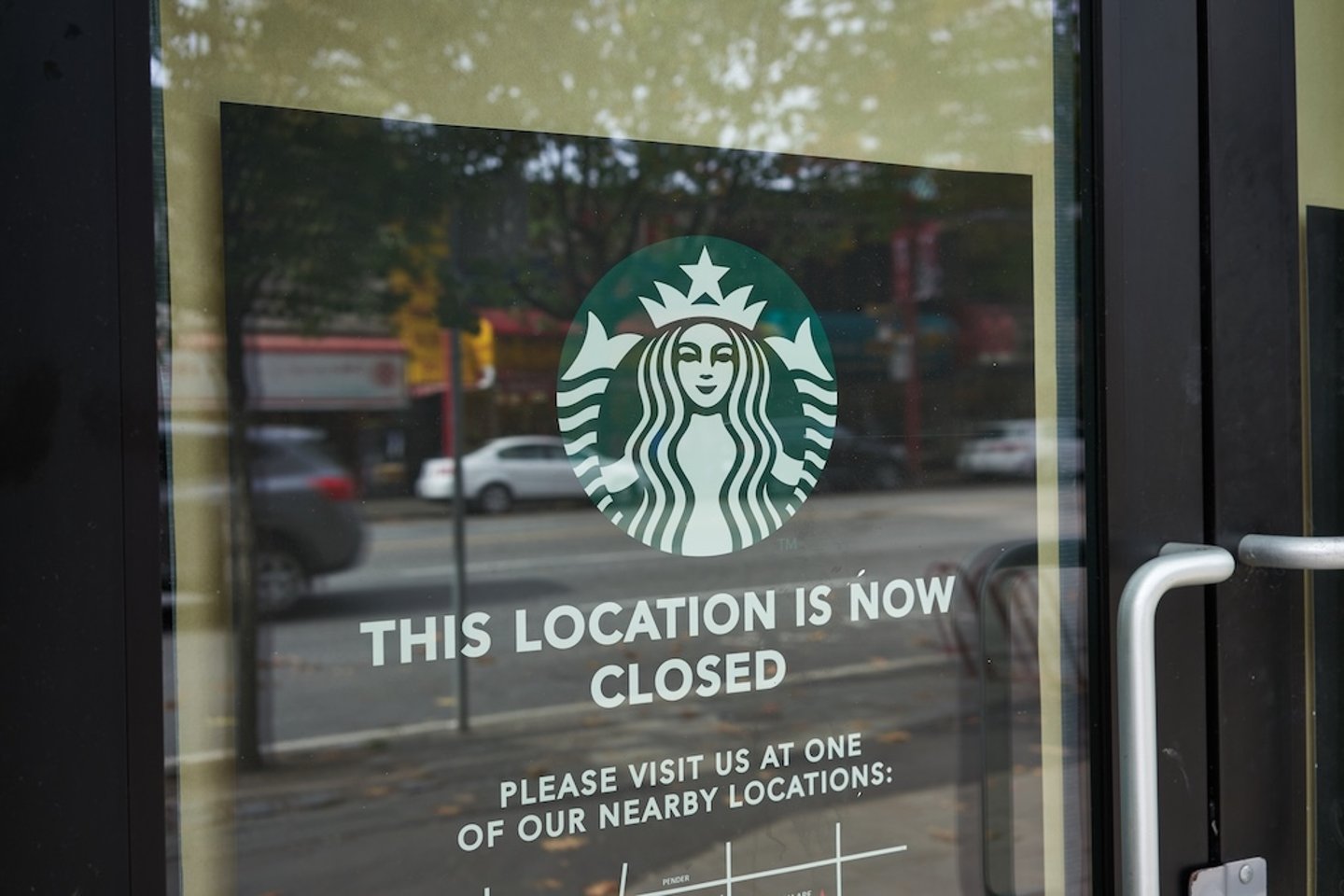
Starbucks’s recent announcement to close about 150 outlets across North America and eliminate 900 jobs may appear to be a straightforward corporate restructuring, but it reveals something deeper: a reconfiguration of the “third place”—the space between home and work.
For years, Starbucks successfully positioned itself as the quintessential third place, where consumers could linger with a latte, access Wi-Fi, and feel welcome in a café culture that transcended the act of buying coffee. That positioning carried real economic value. By monetizing time and space, Starbucks not only sold beverages but also offered a social utility. Today, however, the economic fundamentals of this model are being tested.
In Canada, the closures will be felt most acutely in large urban centres such as Toronto and Vancouver, where multiple high-traffic cafés are slated to disappear. Although the company is quick to note that the closures amount to just one per cent of its North American network, the perception at the local level is very different. For workers, landlords and neighbouring retailers, the absence of a Starbucks outlet reshapes consumer flows and weakens surrounding commercial ecosystems.
What explains this shift? The pandemic disrupted long-standing consumption patterns. Remote work briefly displaced the need for a daily café stop, but as more Canadians return to physical workplaces, demand for coffee and breakfast occasions has grown. Yet, Starbucks is no longer the default choice. Convenience stores, independent roasters, and even fast-food competitors like McDonald’s are aggressively innovating. The economics of the morning coffee have become a battlefield—one increasingly shaped by price competition, digital loyalty ecosystems and menu simplification.
Starbucks itself has struggled with efficiency, tightening its menu and speeding up service to satisfy grab-and-go customers. In the process, however, it has diluted the very essence of the third place: welcoming spaces. Restrictions on restroom access and less emphasis on community have eroded its experiential edge. At the same time, Canadian consumers are rediscovering local roasters. The “buy local” sentiment, often mixed with a mild anti-American undercurrent, further challenges Starbucks’s dominance in Canadian cities.
The café is also caught in broader meal-time disruption. According to Restaurants Canada, dinner revenues are sliding while breakfast and lunch traffic rise. Even McDonald’s has reported declining breakfast revenues, a sign of intensifying competition in this lucrative segment. For consumers, this means more choice; for Starbucks, it means that market share can no longer be defended solely by brand cachet.
The lesson from Starbucks’s retrenchment is not simply that one company is shrinking. It is that the economics of the third place are being rewritten. Consumers are re-evaluating where they spend their time, what experiences they value, and how much they are willing to pay for them. For communities, the implications are just as profound: fewer Starbucks outlets may mean new opportunities for local cafés, convenience chains and alternative formats to redefine the coffee economy.
The battle for the third place is far from over. But its economics will increasingly favour those who can adapt quickly to shifting consumer habits, recalibrate the balance between experience and efficiency, and reconnect with the social role cafés once proudly played.