
Table for one: How solo dining is reshaping Canada’s restaurants
Canada’s restaurant sector is at a turning point. Rising costs are pushing more people away from eating out and back into their kitchens. Three out of four Canadians now say they dine out less often because of the cost of living. At full-service restaurants, per-person spending has fallen from about $1,165 in 2019 to roughly $1,035 today. Quick-service restaurants are holding on slightly better, but spending there has also slipped, from $1,150 to about $1,135. These numbers tell a story of a nation re-evaluating what it means to eat out, and who it is really for.
READ: Grocers ramp up ready-made meals as Canadians balance convenience and costs
Perhaps the most telling shifts are in timing. Lunchtime visits to quick-service outlets have surged by 7.6 per cent, surpassing pre-pandemic levels, largely because office workers are back downtown and looking for affordable, quick meals. Breakfast, once a marginal part of foodservice sales, is also expanding, now accounting for more than 11 per cent of orders, a modest but steady increase. These are the new growth windows: less about the grand dinner outing and more about the efficient, functional meal squeezed into a workday.
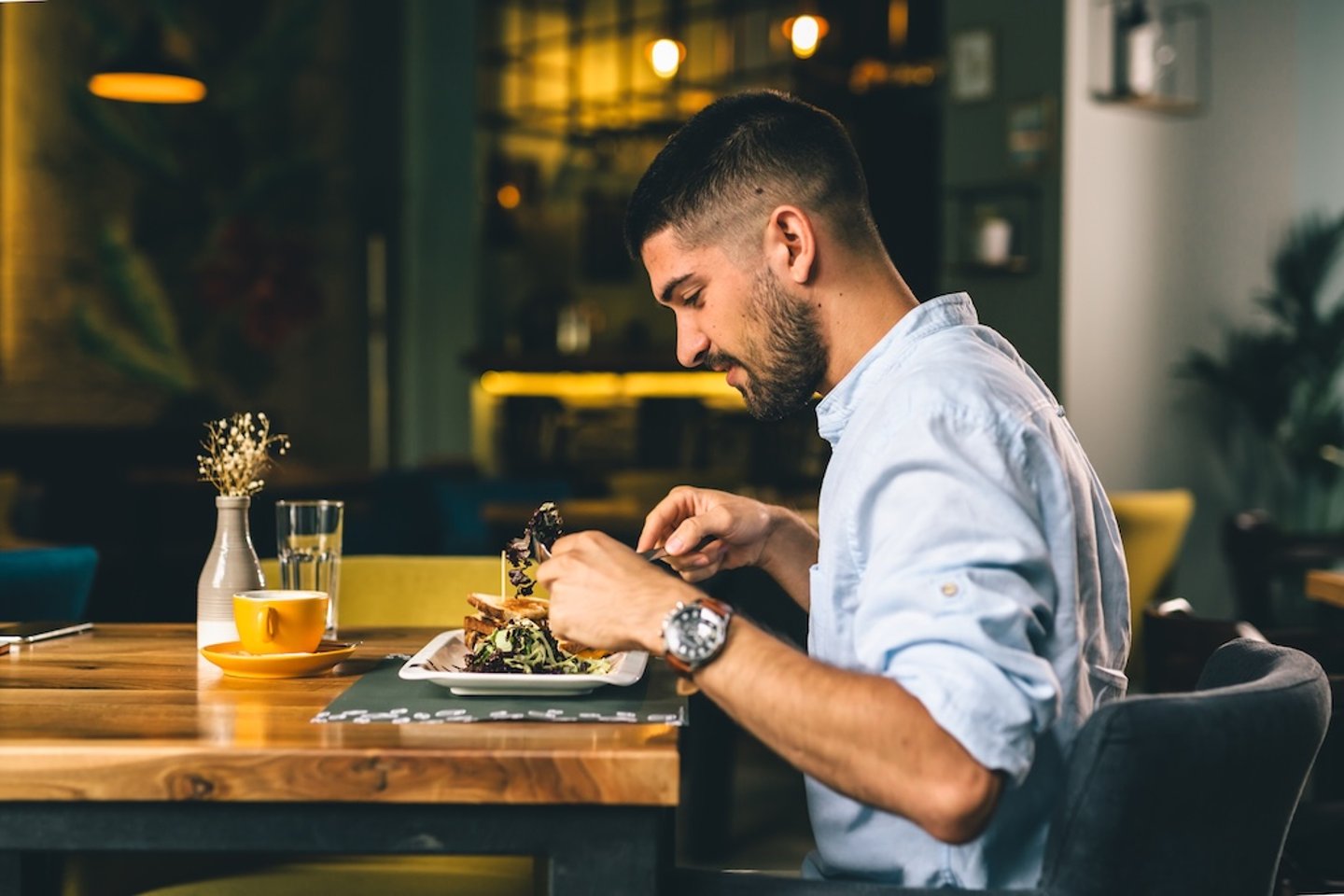
But what may prove most consequential over time is the rise of solo dining. Nearly half of Canadians report having eaten alone in restaurants, and reservations for one are up nearly 30 per cent compared to last year. In Toronto, about half of all diners say they’ve chosen to go out by themselves, and more of them are opting for regular tables rather than bar seats. This marks a cultural shift. For decades, restaurants have been framed as places for families, friends or dates. Dining out was as much about who you were with as about what you ate. That so many Canadians are now comfortable dining alone tells us something profound about where society is going.
Solo dining reflects both independence and changing social patterns. Fewer group outings could mean less reliance on restaurants as community gathering spaces, and even a reduced role for the traditional “dinner date” in courtship. Digital culture has already moved much of our socializing onto screens. Restaurants, once critical venues for human connection, may increasingly serve a functional purpose: a place to eat well, quickly and without the expectation of company. That could mean fewer multi-course meals, less alcohol consumption, and smaller average checks. For operators, this challenges the economics of the business.
Yet solo dining is not a death sentence for restaurants—it is a transformation. A meal for one can still be an experience if restaurants adapt. Smaller portion menus, comfortable single-seating layouts and atmospheres that welcome individuals rather than make them feel out of place can all turn solo diners into loyal customers. In fact, this may be the next great market opportunity: to design spaces that don’t just tolerate a party of one, but celebrate it.
This shift points to where food culture is heading in Canada. The sit-down dinner, once the pinnacle of foodservice, is slowly losing ground to breakfast on the go, quick workday lunches, and the normalization of dining alone. Restaurants will need to rethink how they design menus, use space, and market themselves. Policymakers, too, must recognize that the foodservice sector employs hundreds of thousands of Canadians and plays a vital role in urban economies. Ignoring its transformation would be short-sighted.
The kitchen table may once again be the centre of Canadian food culture, but the restaurant table is not disappearing. It is being redefined—more personal, more functional, less about social ritual, and more about individual choice. The restaurants that survive and thrive will be those that recognize this and embrace a new reality: the future is not just about feeding groups, but about feeding individuals, one table at a time.