Ask the Experts: What to know about U.S. food importer’s lawsuit challenging Trump’s tariffs

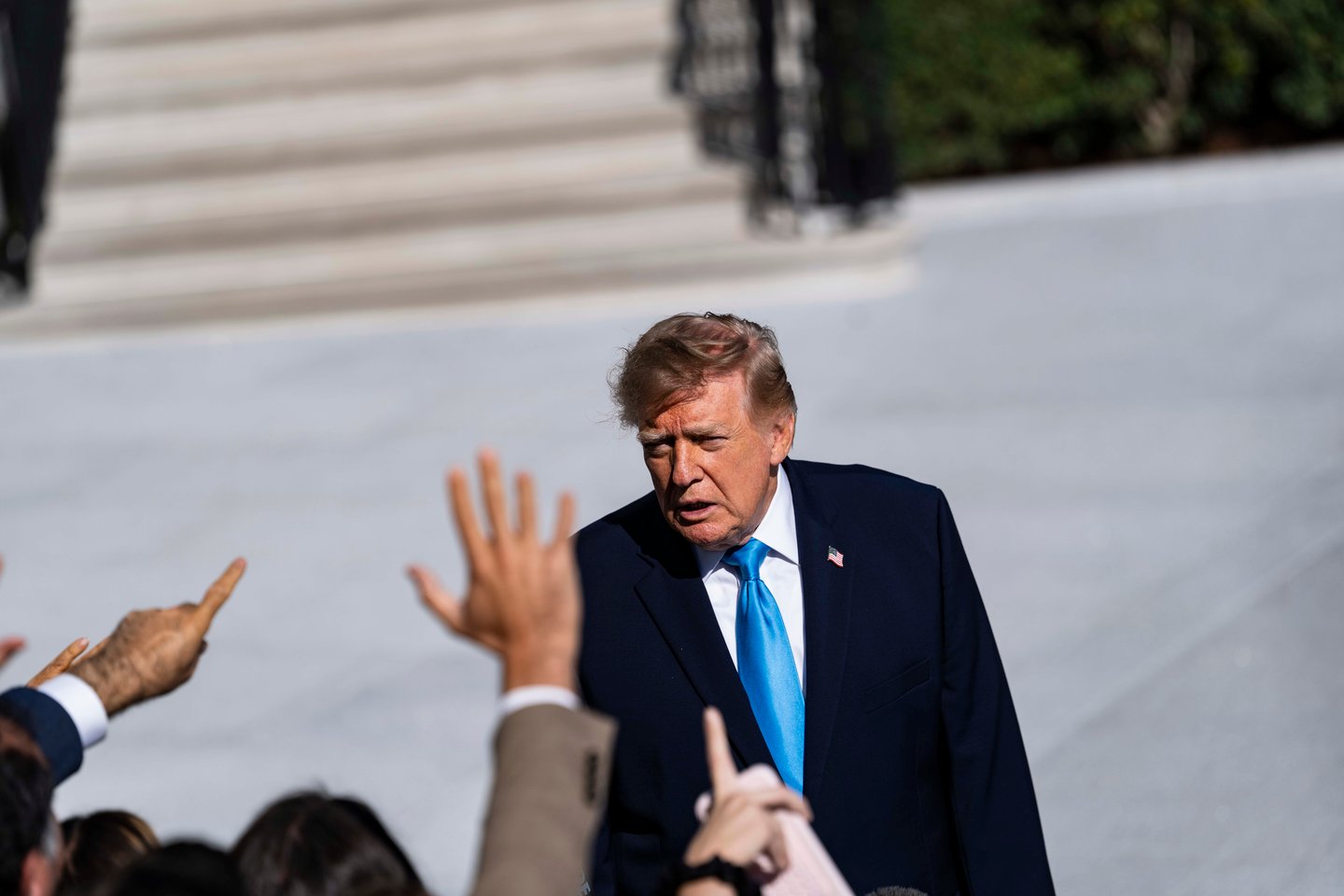
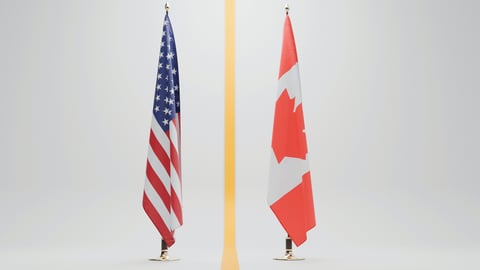
This week, Gellert Global Group, a New Jersey-based family-run food business, filed a lawsuit challenging U.S. President Donald Trump's tariffs on Canadian goods.
In their case, Gellert Global and nonprofit litigation firm Liberty Justice Centre argue that Washington overstepped in its use of a near-century-old statute—Section 338 of the Tariff Act of 1930—to enact 50% duties.
“No president should have the power to pull a dormant statute off the shelf and use it to impose sweeping tariffs or import bans without the limits Congress required,” said Sara Albrecht, chairman and CEO of the Liberty Justice Center, in a press release.
Gellert Global imported roughly $71 million worth of Canadian cheese in 2025. In its complaint, the company said its goat’s milk cheese and brie are sourced from Canada because “Canadian producers offer the quality standards, expertise and production capacity required to meet market demand.”
“Gellert Global Group has spent generations building trusted relationships with suppliers, customers and partners across the food industry. These tariffs disrupt those relationships overnight and create costs and uncertainty that ripple through the entire supply chain,” Thomas Gellert, co-chief executive officer of Gellert Global Group, said in the press release. The company has partnered with Canadian producers—like Ontario’s Mariposa Dairy, as reported by The Toronto Star—for some 25 years.
On 22 shipments of Canadian cheese made between Sept. 16 and Oct. 11, Gellert Global said it paid “at least” $520,538 in Section 338 duties.
The lawsuit seeks relief for Gellert Global and a proposed class of American importers affected by the tariffs. But what does the case mean for Canada’s food industry?
We spoke to Glenford Jameson, lawyer and principal of Toronto-based G.S. Jameson & Co., a law firm dedicated to food law and regulatory affairs, about the lawsuit and what Canada’s food industry should watch for as it unfolds.

Can you break down this lawsuit in layman’s terms?
“We're, as every Canadian is keenly aware, in the midst of a trade war. And there is a question in the United States over who can set tariffs in the United States. Can it be the elected body of Congress, or can it be the president? My understanding is that, over the years, through various statutes, Congress has lended the president some tools to affect tariffs, and those typically have some guidance around them.
“In the U.S., as in Canada, our legislators are, from time to time, not very good about repealing old statutes. You'll remember during the Trudeau government a push was on to clean up ‘zombie laws.’ And what we're seeing with this lawsuit and the presidential powers that are being used is effectively a provision from an act that is nearly 100 years old that has never been used before to affect tariffs, and the tariffs that are being affected relate to specific Canadian goods.”
Do you think the lawsuit has legs?
“It's challenging to see expansive views taken of very old statutes and creative uses of powers that really haven't been contemplated practically by anyone. They tend to have a chilling effect on the ability of parties to trust each other. In the context of this specific lawsuit, there's an incredibly integrated supply chain, and that integrated supply chain can only exist if the businesses that are involved or stakeholders that are involved are able to trust the regulatory frameworks that surround them. Who knows where the various courts and courts of appeal may fall on this. As Canadians, we have a hard time peering into U.S. judicial decision making. But on a very practical basis, we see a company from New Jersey that imports [over US$70 million of Canadian cheese into the U.S.]... and that supply chain has been impacted by a 50% tariff on cheese that used to come in duty-free under CUSMA. This is incredibly punishing to everyone who's involved.”
READ: Grocery leaders talk counter-tariffs, navigating trade tensions
What should Canada’s food industry be paying attention to as this story unfolds?
“From a Canadian grocery retailer perspective, the United States, to a degree, does have a point in this context—not the overarching tariff issue, but a more narrow complaint about access to cheese markets in Canada. Under CETA, Canada’s treaty with the European Union, grocers can hold quota. The thought was that Europeans create non-competing, specialty cheese products that we don't really have domestic production for in Canada. Whereas under CUSMA, our trade agreement with the United States, grocers are expressly forbidden from holding quota. Presumably that's on the basis that American cheese manufacturers typically create something that competes directly with Canadian cheese manufacturers, and we want to protect Canadian industry in that context. And so, from the United States’ perspective, they see our CETA rules as giving European cheese a route onto Canadian grocery shelves that American cheese doesn’t get. This is the third rail of Canadian politics. Supply management is an incredibly delicate situation. I think everyone who is alive to supply management is sensitive to these competing goals of protecting domestic production capacity—which is incredibly important, more so now than in the last 40 or 50 years—as well as trying to ensure that the Canadian consumer has access to choice and to competitive pricing, and ensuring that inflationary aspects of life in 2026 are kept in check. These are all things that directly compete with each other, so it's very sensitive.
“Perhaps the other issue is that the product list that relates to cheese in this specific flight of tariffs is really about pressure and not about a specific trade remedy. Alcohol and some auto parts and dog leashes and hockey sticks are also on this list. So, in part, this is about a feud over liquor and not about Canadian dairy specifically. And we've got these entities that are being caught in the wake of a larger trade discussion that's become, frankly, very aggressive and detrimental to business planning and production and the efficient allocation of capital.”
What would the outcome be if this lawsuit was successful?
“What we saw with the last court case that related to tariffs that ruled against the presidential office was an incredibly complex and frustrating series of refunds. So, presumably this would involve the same process. But the courts have a number of different ways that they could engage with this, depending on how they rule. The last time they happened to engage with refunds, but in this instance it's not obvious that anyone should plan around that case. No court has ruled on tariffs under this statute because none have ever been imposed before. So the near-term thing, I suppose, for Canadian businesses that are impacted by this is to watch for an injunction motion that may proceed. That would pause these tariffs while the courts figure out what's happening.”
READ: Dairy farmers warn against concessions as U.S. tariff deadline looms
Anything else you would like to add?
“Something that's really important to recognize here is that part of what's going on is a direct bottom-line change to business practices on the basis of tariffs. But what's really happening, in some ways for some businesses, is an unstable business environment is being created that natively encourages domestic supply chains to focus on domestic production and domestic products. And for the United States, maybe the point isn't whether these tariffs actually stick or not. Maybe the point is that, for the foreseeable future, U.S. importers like the plaintiff in this case are going to be dealing with tariff whack-a-mole, where every statute that ever lended the president powers to effect tariffs is going to be used, and someone is going to have to foot the bill to take that to court and try and get an injunction and get refunds. And while all that's happening, what a reasonable business will do is seek to stabilize prices and stabilize supply. A business can't reasonably be expected to allocate capital efficiently if it is continually having to fight for the judicial assessment of tariffs, and then sporadically receive an injection of tariff refunds it paid that were never legal in the first place.”