‘The only response:’ Grocery leaders talk counter-tariffs, navigating trade tensions
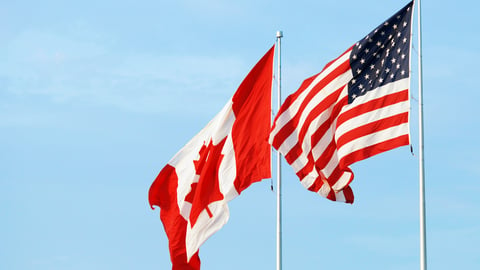
Soon after trade talks with the U.S. collapsed last month, Canada announced counter-tariffs on $27.6 billion in American goods, matching the value of Canadian exports taxed by Washington.
The tariffs kick in on Tuesday (Sept. 8), the day after Labour Day. Many of the counter-tariffs target U.S. swing states that do a substantial amount of trade with Canada and are critical in the upcoming U.S. midterm elections.
“It’s not a simplistic tit for tat retaliation. Almost the entire list of American products being subjected to a counter-tariff have Canadian alternatives,” says Gary Sands, senior vice-president, public policy and advocacy, Canadian Federation of Independent Grocers. “The list is clearly aimed not on punishing the Americans, but on influencing Canadian buying habits.”
Here’s what Sands and other industry leaders had to say about retaliatory tariffs and navigating an ever-shifting trade environment.
Gary Sands, senior vice-president, public policy and advocacy, Canadian Federation of Independent Grocers (CFIG)
“We all know that tariffs and counter-tariffs will cause some pain, including higher prices and job losses. Notwithstanding, I think the answer to the question of whether the counter-tariffs announced by Canada are the right response is that it was the only response Canada could contemplate.
“A handful of political and business leaders have called for a return to negotiations, but that begs the question: To negotiate what, exactly? Many of the proposals that were on the table have been made public: the acceptance of current and impending tariffs that are a violation of both the letter and spirit of CUSMA; a U.S. demand that we align their tariff and trade policies with theirs; signing off on an ‘agreement’ that could be changed at any time; curtailing French language labeling—all measures that would severely curtail our sovereignty.
READ: 'We got attacked': Carney says retaliatory tariffs on U.S. to take effect next month
“I also think we need to understand the strategy behind what products have been subjected to a counter-tariff by Canada… The list is clearly aimed not on punishing Americans, but on influencing Canadian buying habits.
“That tactical approach aligns with the overall objectives recently unveiled in Canada’s new Food Security Strategy. Some key elements of that strategy are to boost our own domestic production, do more to support Canada’s independent grocers and improve their access to supply, cut red tape, provide significant funding for food innovation projects and reduce interprovincial trade barriers. All are designed to strengthen our own east-west supply chain, because as events have made clear, the United States we knew has changed.
“But these developments also play to the strength of Canada’s independent grocers. A key feature of an independent grocer’s business model is to buy local, hire local and support other local businesses. Independents have a symbiotic relationship with the communities they serve. In 96% of rural, remote and Northern communities, there is no chain grocery store. That is why independent grocers are so tightly woven into the diverse national tapestry we call ‘Canada.’
“Independent grocers understand the serious challenges and consequences that have been presented by changes to the trade environment. But independents also recognize the opportunities that stem from those changes.
“A stronger independent grocery sector will be part of the Canada of tomorrow.”
Jamie Nelson, president, Pattison Food Group
“Trade uncertainty is a reminder of why a strong Canadian food system matters. Investing in Canadian growers, producers, manufacturers and supply chains helps keep food moving, supports jobs in communities across the country, and strengthens our long-term food security. At Pattison Food Group, we're committed to supporting Canadian businesses and making it easier for customers to choose Canadian products, without losing sight of the importance of delivering value when affordability remains top of mind. Building a resilient domestic food sector isn't just good for business, it's important for the future of Canada.”
Michael Graydon, CEO, Food Health & Consumer Products of Canada (FHCP)
“Retaliatory tariffs are a necessary part of Canada’s response to aggressive U.S. trade actions, but only when they are carefully targeted to create meaningful leverage without unnecessarily raising costs here at home.
“That distinction is particularly important for food, health and consumer products because our two countries operate within a highly integrated supply chain. Tariffs on essential products or the ingredients, packaging and equipment needed to manufacture them are paid by Canadian businesses and ultimately weaken Canadian competitiveness and add pressure to household budgets, with no guarantee of influencing decision-makers in Washington. Keeping these products and their inputs off the tariff list, with timely remission available when an input cannot be sourced competitively in Canada, reflects the operational realities of Canadian manufacturing and helps preserve the stability and predictability businesses need to compete.
“Our members are preparing for continued volatility by assessing their exposure across supply chains, reviewing sourcing and production scenarios, managing inventory, and evaluating where future investment can be made with confidence. But businesses can only plan around so much uncertainty. Decisions about production mandates, facilities, and capital investment have long-term consequences, and once that investment moves elsewhere, it can be extraordinarily difficult to bring back.
“That is why Canada’s response cannot be exclusively defensive. We must protect our interests and work to restore stability with our largest trading partner, while also building more manufacturing capacity at home, strengthening Canadian supply chains, and diversifying our export markets. Success should be measured not only by how we navigate this dispute, but also by whether Canada emerges from it more productive, competitive, and resilient.”

Per Bank, president and CEO, Loblaw Companies Ltd.
In a statement shared to LinkedIn
“It's Canada's Time to Lead
“As Canada faces another challenging period in its trade relationship with the United States, tariffs will once again affect businesses, supply chains and, most importantly, the prices Canadians see on some products. At Loblaw, our responsibility is clear: help Canadians understand what is changing on the shelf, make it easier to support Canadian products and businesses, and do everything we can to limit the impact on the cost of living.
“That is why we are reinstating our ‘T’ symbol on products sourced directly from the U.S. that are affected by tariffs. We will also continue to make Canadian-made and prepared products easier to find in our stores and on-line, including through the maple symbol.
“At Loblaw, we are in a stronger position than we were the last time tariffs were introduced. Over the past year, our teams have worked hard to shift even more sourcing from the U.S. to Canada and other markets wherever possible. We have welcomed hundreds of new small Canadian suppliers onto our shelves, creating more choice for customers and more opportunity for Canadian businesses. That work will continue, and we will accelerate it wherever we can.
“Initially, customers will see the T symbol on a relatively small number of products. That will grow as tariffs are applied across more categories.
“And one commitment is especially important: Loblaw will not benefit from tariffs. Where tariffs increase our cost, any resulting increase on our shelves will reflect that impact—penny for penny. At the same time, our teams will keep working with suppliers to find alternatives, reduce costs and protect value for customers.
“There will be more change in the days and weeks ahead, and we won’t get everything perfect. When we make a mistake, we’ll correct it quickly.”
Aaron Skelton, president and CEO, Canadian Health Food Association
“The counter-tariffs taking effect on Sept. 8 will add another layer of cost and uncertainty for Canadian businesses at a time when many are already navigating significant pressure on their supply chains and margins. For Canada’s natural, organic and wellness industry, the impact extends beyond the sectors making headlines. Products and inputs such as whey protein, honey and packaging may all be affected, with potential implications for everything from sports nutrition and functional foods to snacks and other everyday wellness products. CHFA is working closely with our members to understand the real-world impact and ensure those experiences are being brought directly to government as the situation continues to evolve.”
READ: A timeline of Donald Trump's trade war with Canada
Pierre St-Laurent, president and CEO, Empire Company Ltd. and Sobeys Inc.
In a statement shared to LinkedIn
“In moments like these, our strength comes from community, partnership and a shared commitment to supporting one another.
“As a proud Canadian company serving our customers for over 115 years, we know Canadian. Not only are we committed to providing Canadian products, we proudly boast one of the largest selection of Canadian products in grocery. We also have a long-standing commitment to partnering with local suppliers across Canada. Our local products are clearly highlighted in our stores so customers can see when they're buying products from their backyard. As well, product labels tell you when you're buying Canadian.
“As one of Canada's largest employers, our 130,000 teammates service Canadians through our stores in communities across the country, and this includes our vast network of franchisees and dealers who are at the core of our business. We continue to grow and strengthen our partnerships with local suppliers, and Canadian suppliers overall, to ensure Canadians have choice and the opportunity to buy Canadian.
“We will always be proud of who we are and stand by who we are as a company, as a country, and as Canadians. A family nurturing families, we are committed to supporting our communities in our stores and through our array of community investment initiatives. Perhaps the most important takeaway is this: now more than ever, it's time to support both national and local Canadian companies and family businesses across this country.”
Dairy Farmers of Canada
“Dairy Farmers of Canada remains concerned about the unpredictability and instability the ongoing trade situation presents for Canadians and all sectors of the economy. We recognize the government’s efforts to defend and protect Canadian businesses and workers in the wake of the imposition of unjustified additional U.S. tariffs. At a time when Canadian businesses are facing significant pressure, we are grateful for the continued support of Canadians who are choosing Canadian dairy.”
Metro Inc.
In a statement shared to LinkedIn
“Since 1947, Metro, a proud Canadian company, supports local products.
“We remain committed to local products and continue our efforts to make them easier to identify to enhance in-store product identification across our food and pharmacy banners, making it easier for customers to recognize products that are grown, made or produced in Canada.
“By showcasing Canadian expertise and fostering strong partnerships with local producers, growers, manufacturers and suppliers, we help support businesses across the country and contribute to a stronger, more resilient economy.”
Ron Lemaire, president, Canadian Produce Marketing Association (CPMA)
“CPMA and our members are monitoring the Canada-U.S. trade situation closely. While we are pleased that fresh produce items are not included among the most recent set of U.S. tariffs or the announced Canadian retaliatory tariffs, we have heard concerns about potential impacts to packaging costs and have emphasized to the Canadian government that tariff relief should be provided for food packaging.
"We recognize each country’s need to ensure food security for its citizens and the right to respond to illegitimate trade practices. At the same time, the uncertainty of the current situation is hindering long-term planning and investment across the sector.
"The North American fresh produce industry is deeply interconnected and provides economic, health and food security benefits for all three countries. CPMA continues to advocate for a robust free trade agreement that safeguards the significant gains made for our industry under NAFTA and CUSMA and maintains rules-based, tariff-free trade for all fresh produce commodities.”