Buy Canadian sentiment still strong amid trade war, but grocery prices test consumer loyalty
The Buy Canadian movement remains as strong now as it was when the trade war began 19 months ago, surveys have found.
Commitment to buying Canadian strengthened in August when a round of tariff talks with the U.S. collapsed, according to the Numerator Tariff Sentiment Tracker, which tracks about 1,800 Canadian consumers monthly on tariff attitudes and shopping intent.
Almost one in four (24%) Canadian consumers strongly agreed with the statement: “I intend to buy only products made in Canada,” up 5 percentage points from July.
Meanwhile, an Abacus poll conducted in September found 77% of Canadians say they will avoid U.S. products entirely or buy as few as possible, almost identical to the 78% who said so at the beginning of the trade war in early 2025.
READ: Consumers could see ‘higher prices and fewer choices’ as trade war drags on: CHFA CEO
But grocers seeking to increase their Canadian supply must base their decisions on economic realities, experts say.
Retail analyst Bruce Winder says grocers would like to stock as much Canadian supply as possible, “but they also have to have the right flavours and brands that Canadians want and they also have to have the right costing and retail prices. It’s been really tough for retailers and suppliers trying to check all of those boxes.”
Patriotism often collides with pocketbooks, Winder notes. While some consumers are adamant about buying Canadian even if it costs a little more, at the other end of the spectrum are who have to buy what’s affordable.
Indeed, affordability remains top of mind for many. According to a national survey conducted in August 2026 by Execulytics Consulting on behalf of Food Health and Consumer Products of Canada (FHCP), only 9% of Canadians say they are willing to pay more than a 10% premium for a Canadian alternative.
“That low price ceiling shows that patriotism is quickly capped by economics,” says Errol Cerit, executive vice-president, industry, public affairs and membership development at FHCP.
The FHCP survey also found that 74% of Canadians have changed their grocery shopping habits because of tariffs. “Canadians are paying closer attention to where the products they buy come from,” Cerit says.
READ: Here's the full list of U.S. goods to be hit by Canada's counter-tariffs
Cerit cautions that while consumers often focus on company ownership when choosing Canadian options, ownership alone doesn't tell the full story. It’s also critical to consider local investments made by foreign-owned companies, which generate economic ripple effects and support jobs across numerous sectors, including manufacturing and marketing.
Jo-Ann McArthur, president of Nourish Food Marketing, says as much as consumers would like to buy Canadian, such finds will not occur in every category. Not only does it take a lot of time for major grocers to adjust supply chains, but there also aren’t Canadian replacements for everything.
That’s especially true for discount banners, which are increasingly popular with consumers, but have limited assortments, she says.
“If I’m a grocer I want to support Buy Canadian,” McArthur says, “but I want to support cautiously and I also need to remain pragmatic knowing the inflationary pressures that my shoppers are under. They’re just trying to fill that basket as inexpensively as possible and if I don’t provide that through my discount banner, that’s going to be an issue.”
Grocer Robert Galati, CEO of Galati Market Fresh in North York, says his customers are looking for Canadian, especially in the produce department. However, that’s easier said than done with the local growing season coming to its end, he says.
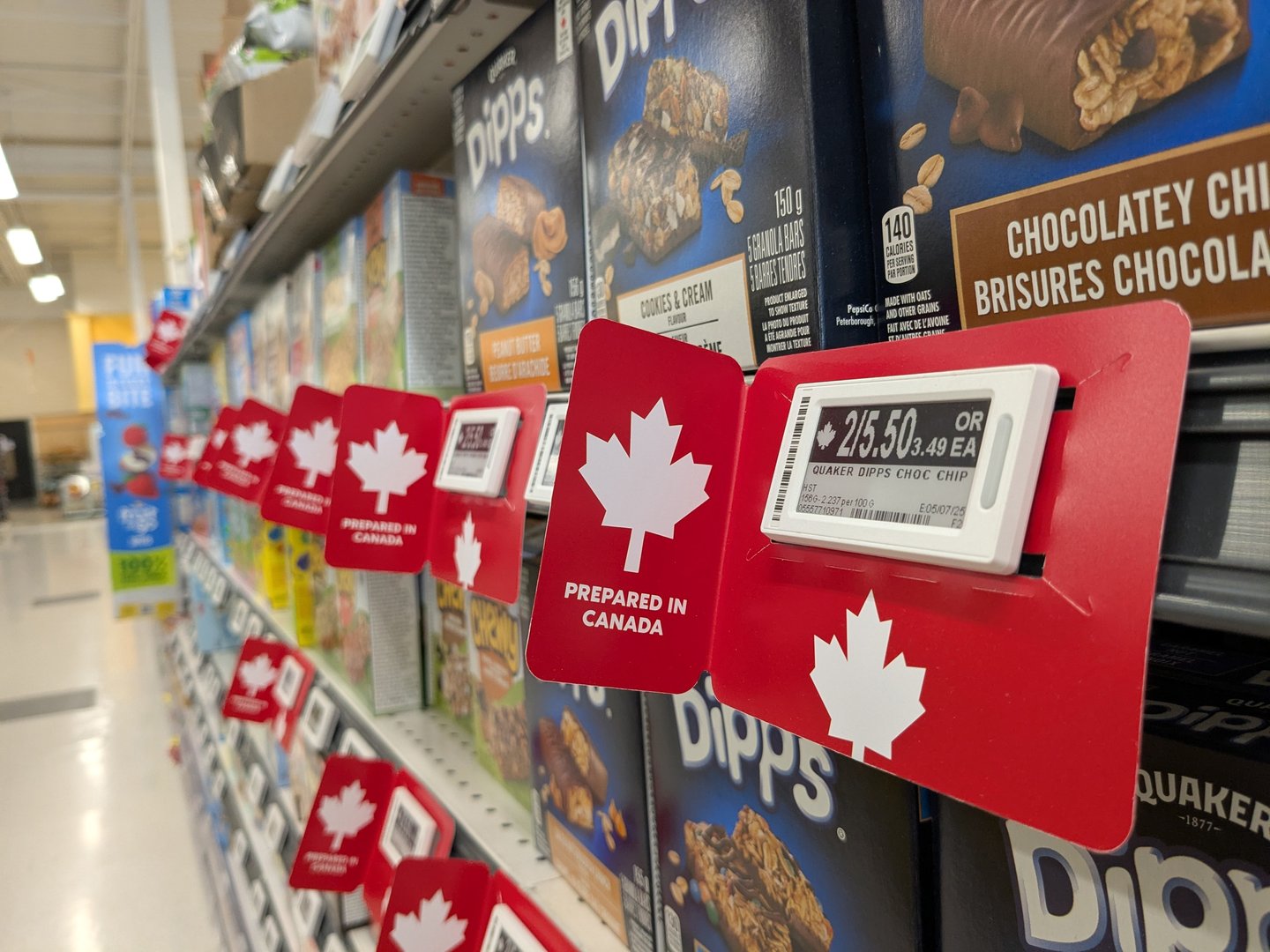
Meanwhile, Loblaw is actively expanding its domestic supply chain to build local capacity and reduce reliance on imports, having onboarded 267 new Canadian suppliers in 2025 and an additional 200 this year, alongside more than 1,200 participants in its Small Supplier Program. Loblaw helps shoppers identify Canadian-made goods through maple leaf shelf tags on more than 35,000 products.