
Canadians may be experiencing ‘strategy fatigue’ after years of rising food prices
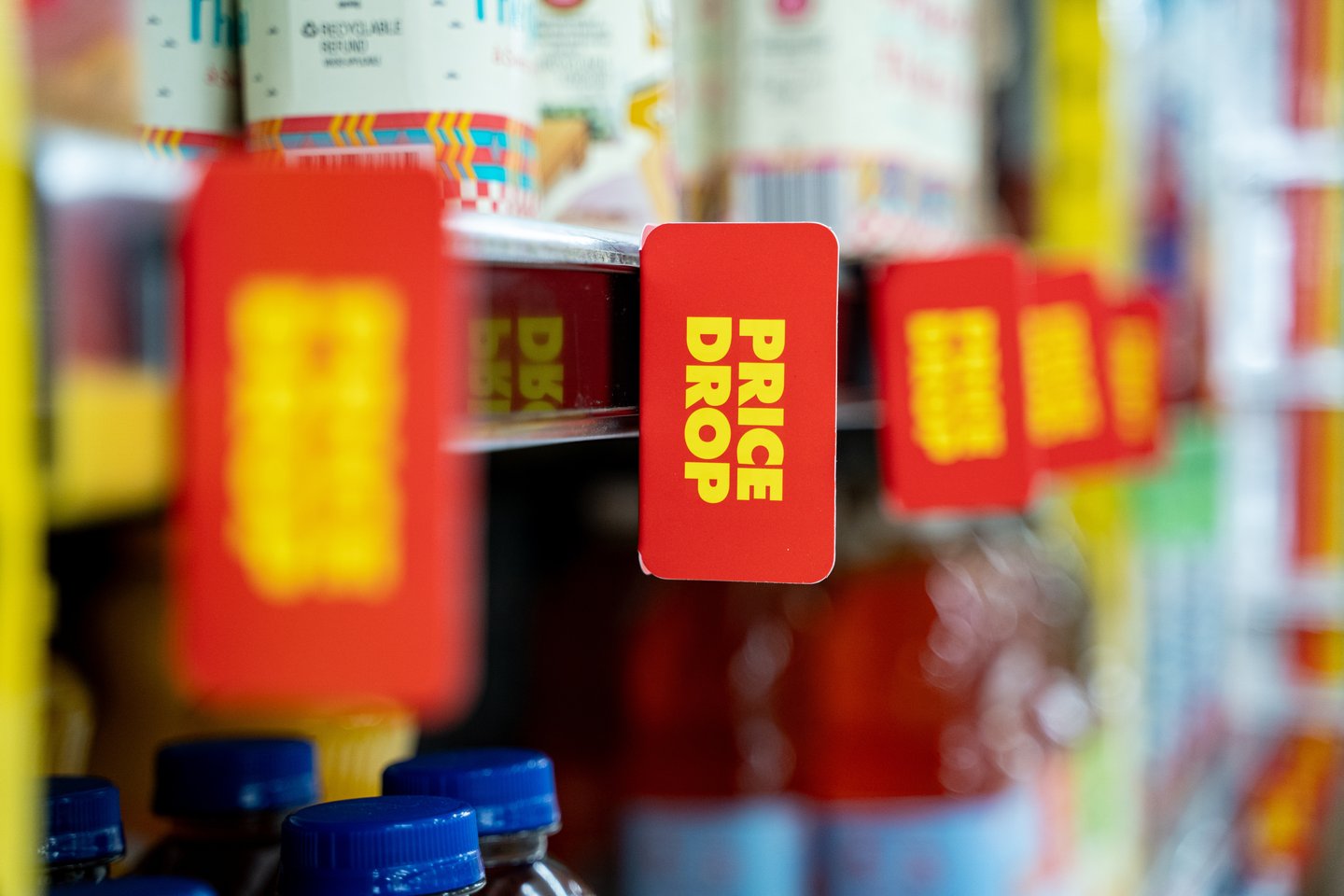
Canadians are still finding ways to stretch their budgets at the grocery store, but “strategy fatigue” is prompting some to dial back their cost-cutting behaviours.
That’s according to the fall 2026 edition of the Canadian Food Sentiment Index, produced by Dalhousie University’s Agri-Food Analytics Lab and supported by Caddle Insights.
Seeking out sales and discounts remains the most common response to high food prices (45.5%), researchers found. That’s up slightly from spring 2026 (44.4%) but below the 48.6% recorded last fall.
Just over 22% of respondents said they spent more time searching for better prices online, down from 25.2% in 2024. Coupon use is also on the decline, falling from 30.5% in fall 2024 to 20.3% in fall 2026.
Canadians are also slightly less inclined to switch stores and brands to save money. Those who said they shop at cheaper stores declined from nearly 25% in fall 2024 to 21% in fall 2026, while switching to generic brands fell from 16.7% to 14.3%. Roughly 19% of consumers bought fewer non-essential foods such as ice cream, down from 22% two years ago.
These figures suggest Canadians may be reaching a degree of adaptation or experiencing “strategy fatigue” after several years of elevated food prices, according to the report.
READ: Grocery inflation drops to 1.7%, lowest level since May 2024
“People have adopted an aggressive stance, but they haven’t become more aggressive,” says Sylvain Charlebois, senior director of the Agri-Food Analytics Lab.
“Pain at the pumps” puts added strain on household budgets
Transportation is surging as a financial concern for Canadians, with 41.2% saying it’s the expense category that has increased the most over the past 12 months—more than doubling in six months.
In the latest Canadian Food Sentiment Index, transportation jumped to second place from fifth place in spring 2026, when 20.2% of Canadians said prices in the category had increased the most over the previous 12 months.
“People are feeling pain at the pumps and that’s impacting other aspects of their lives, including grocery shopping,” says Charlebois. “If they’re leaving more money at the gas station, they’re showing up at the grocery store with less money in their pockets.”
READ: Monthly food bank visits soar to record 2.35 million in Canada, report finds
While transportation is a rising financial strain, food remains the expense category most frequently identified by Canadians as having increased the most. Seventy six per cent of Canadians said prices in the category have increased the most in the past 12 months. However, this is the lowest reading recorded across the five surveys, down from 80.6% in fall 2025 and 84.1% in fall 2024.
“When you look at the data, things aren’t great, but they’re not as bad as they used to be,” says Charlebois. “But you can still see that people are overwhelmingly concerned overall.”
What’s shaping food choices
The survey also asked Canadians about their most important considerations when buying food. Affordability remains at the top by far, at 46.5%. That’s the highest level across the five survey waves. Nutrition declined to 23.9% after peaking at 28.8% in fall 2025, while taste remained relatively stable at around 16%. Availability, social responsibility and environmental impact continue to rank well behind the top three values.
Canadians’ preference for local foods remains strong. Those who say they “always” or “often” buy local foods rose from 33.5% in fall 2024 to 44.4% in fall 2026, although it remains below the 51.9% peak last fall.
Front-of-pack labels—which became mandatory in January 2026 and call out products with high levels of fat, sugar or sodium—are having a significant influence on food choices, the findings suggest. In fall 2026, 63.4% of Canadians said they’re less likely to purchase a product displaying the symbol—unchanged from spring 2026. Meanwhile, the share saying the symbol does not affect their purchasing decisions increased from 22.8% to 25.2%.
“There is a lot of interest in understanding how these labels are impacting consumers,” says Charlebois. “To be honest, I was shocked by the result that we got. People are not only noticing, they’re influenced. Basically, half of consumers are absolutely influenced by these labels. So, if there is a label on a product they want, they may actually consider another alternative.”
In speaking with food manufacturers, Charlebois says some are reconsidering product launches that would require the label. “The policy itself is really impacting the food industry, and over the next five to 10 years, I’m expecting fewer and few products to carry that label.”
Now in its fifth edition, the bi-annual index measures Canadians’ perceptions and attitudes across a broad range of food-related issues. More than 3,000 respondents are surveyed every six months, allowing researchers to track changes in consumer sentiment over time.