Nutrition labels influencing Canadians’ grocery purchases: report


New front-of-package nutrition labels are changing what Canadians buy at the grocery store.
Research from the Agri-Food Analytics Lab at Dalhousie University found that 51.3% of Canadians have decided not to purchase a product because of an FOP warning.
Fifty per cent have switched to another product in the same category.
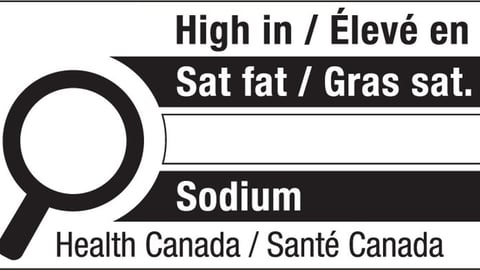
Since the start of the year, most prepackaged foods meeting or exceeding established thresholds for sodium, sugars or saturated fat have been required to display Health Canada’s standardized “high in” nutrition symbol.
Based on the lab’s national survey of 1,000 Canadian adults responsible for grocery shopping, conducted through the Angus Reid Forum, 94.2% of Canadian grocery shoppers are aware of FOP nutrition symbols, and 86.9% say they understand them well.
Sixty four per cent of respondents expect the labels to influence their future food purchases, though affordability remains a constraint with 58% unwilling to pay more for a comparable product without an FOP warning.
Forty five per cent said they were likely or very likely to try a product reformulated to eliminate an FOP warning, while 46.8% say reformulation would increase their trust in the brand.
The snack food category is most affected, with 51% reporting an impact on purchasing decisions, followed by frozen meals (41.3%), soups and broths (39.0%), breakfast cereals (38.2%) and processed meats (37.1%).
“Front-of-package labelling represents one of the most significant changes to Canada’s packaged-food environment in years,” said Sylvain Charlebois, senior director of the Agri-Food Analytics Lab at Dalhousie University, in a release. “One in two consumers tell us these labels are already affecting purchasing decisions. The next question is how manufacturers respond through reformulation and innovation, particularly when consumers remain highly sensitive to taste and price.”