
How Federated Co-op is rebuilding its grocery business
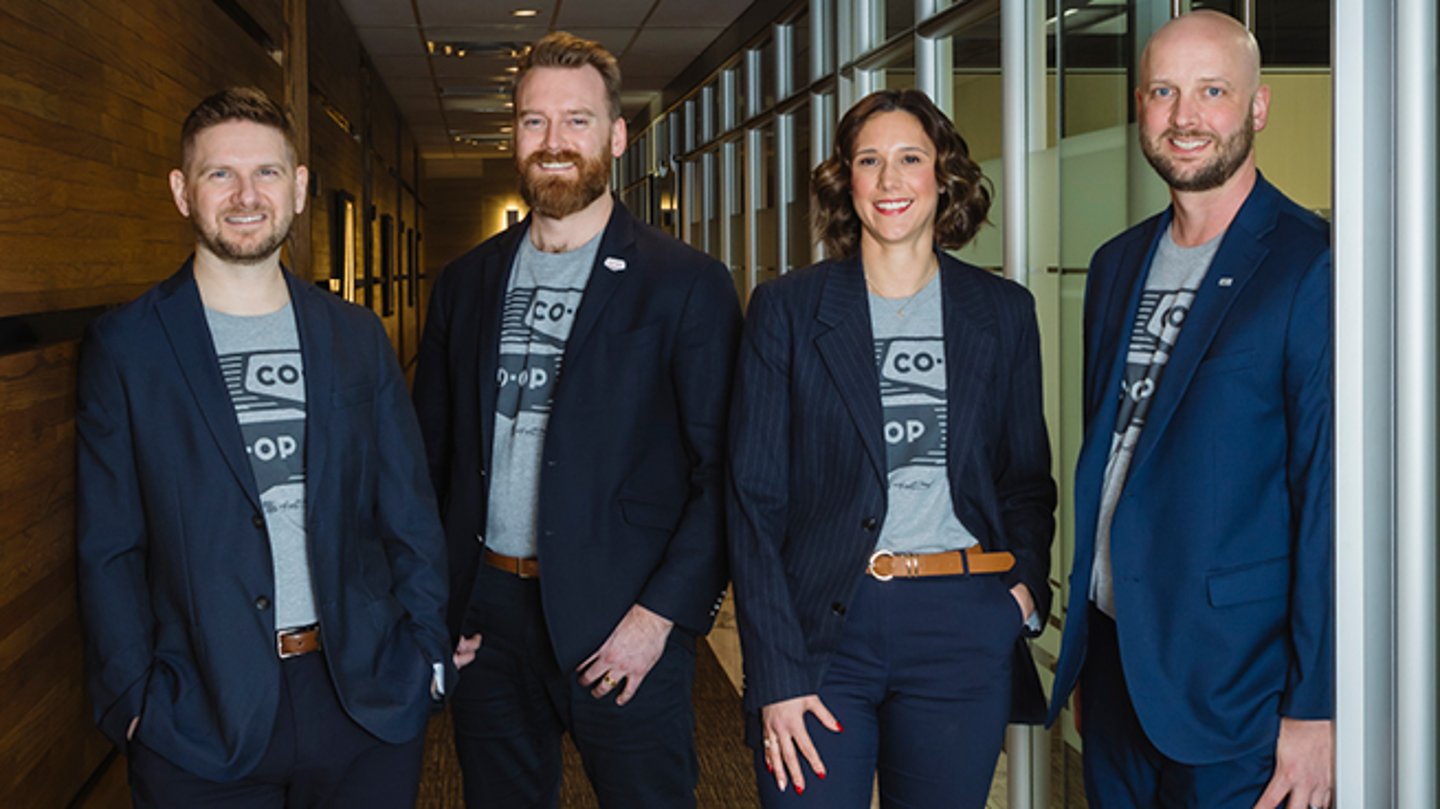
In the grocery sector, scale can unlock buying power, infrastructure and reach, but it doesn’t guarantee customer loyalty.
For Saskatoon's Federated Co-operatives Limited (FCL), the challenge has been to help its members stay competitive without losing what makes them unique in their communities. At the centre of that balancing act is the structure of the business itself.
FCL is part of the Co-operative Retailing System, a complex retail network spanning food, fuel, home-building, convenience and liquor. The system serves communities that range from major urban centres to remote northern towns, all connected by a co-operative model rooted in local ownership.
Through this system, FCL supports roughly 150 independent retail Co-ops in Western Canada, serving nearly two million members through some 1,500 locations in more than 650 communities; it provides wholesale distribution, marketing, manufacturing, logistics, technology, category management and operational support.
For FCL’s food group, in particular, staying relevant in today’s highly competitive grocery sector has required a significant reorganization aimed at one clear goal: consistent store-level execution. Over the past year and a half, FCL has reorganized its food business into three core functions—category management, operations and shared services—reshaping how decisions are made and, more crucially, how they reach the sales floor.
"It's about taking strategy and driving it down effectively, and simply executing on that in a good fashion," Braedon Worobetz, director of category management at FCL, says. "That's when you actually start to see performance improve."
Consistent execution
Creating clearer lines between strategy and execution has helped ensure initiatives don’t stall between head office and retail. You can have great strategies, Bryce Kuemper, director of consumer products, shared services, says, but if they’re not implemented, you don’t see the results.
Leading this segment as director, operations is Erik Jansen, whose career mirrors the system he now helps oversee. Raised on a farm near Leroy, Sask., Jansen grew up with Co-op as the only grocery store, gas bar and agriculture centre in town. “Unknowingly, I’ve been a part of the fabric of the Co-op community my entire life,” he says.
After joining FCL, Jansen spent years in field-based roles supporting local Co-ops across Alberta and British Columbia—from Medicine Hat to Vancouver Island to Haida Gwaii—helping stores with day-to-day execution, new builds and renovations. That experience shaped his view of the system’s biggest challenge and opportunity.
"We have roughly 149 independent local Co-op associations, and they're all a little bit different," he says. "It's not a one-size-fits-all model. It's not corporate. You can't just drive things down."
Like this story? Subscribe to Canadian Grocer's free daily newsletter!
Execution is what local Co-ops do well, says Jansen. But they don't always have the time or resources to build new programs from scratch while also running their stores. One of his first priorities, therefore, was fixing what he calls "half- baked" rollouts—initiatives that made sense strategically but arrived in stores without clear, step-by-step guidance.
Under the new structure, Jansen's team is split into two parts. A commodity operations group focuses on building fully developed programs (complete with standard operating procedures, merchandising guidance and training materials) before they ever reach stores. A second group, organized into regional "pods," works directly with local Co-ops to implement those programs on the ground.
What makes execution particularly complex inside the Co-op system is not just the size of the network, but the degree of variation within it. Local Co-ops operate in vastly different competitive environments—urban neighbourhoods with multiple discount banners, mid-sized regional centres and remote communities where the Co-op may be the only full- service food retailer.
Jansen describes that variability as both the system's greatest strength and its most persistent operational challenge. "Some Co-ops have all the operational expertise they need in-house," he says. "Others need very tactical help—everything from how to set up a new program to how to cut a piece of meat."
That reality shaped how FCL built its operations function. Rather than pushing a uniform template across all locations, the goal is to meet Co-ops "where they're at" and tailor support accordingly, says Jansen.
This approach also reflects a broader understanding inside FCL that execution, not strategy, is often the limiting factor in retail performance. "We can talk about strategy forever," Jansen says. "But if it can't actually live on the shelves or live in the store, then we're not really hitting the mark."
FCL's reorganization has also changed how new initiatives are rolled out across the system. Previously, new programs could arrive at store level without enough operational detail, leaving local teams to fill in the gaps. Today, initiatives are expected to be fully built before launch, with clear documentation, training materials and merchandising guidance developed centrally
That discipline is particularly important in a system where stores are independently owned, notes the FCL team.
“This is not a one-size-fits-all model,” Jansen says. “It takes more time. It takes more conversation. But more often than not, we get better solutions because local Co-ops bring such strong market knowledge to the table.”
Nena Pidskalny, associate vice-president of food at FCL, agrees, noting that change management has become a central leadership focus as the organization evolves. Creating space for feedback—and ensuring people feel safe questioning how things have always been done—is essential to keeping the organization moving forward, she says.
To support that, FCL has invested heavily in communication and alignment. This includes quarterly meetings with local Co-op CEOs and general managers, quarterly employee town halls, monthly leadership meetings and regular internal updates. Just as importantly, the organization has worked to simplify how strategy is communicated.
Within consumer products, Pidskalny says every team is aligned around the same three priorities: efficiency, relationships and market relevance. “If you came to any one of our town halls, you’d hear me say those over and over,” she says.
The emphasis on relationships extends beyond internal teams as well. Suppliers are increasingly viewed as partners in understanding customer behaviour, market trends and emerging pressures, particularly in an environment shaped by inflation, trade tensions and shifting consumer expectations.
For Kuemper, that external collaboration is part of what allows the Co-op system to stay nimble despite its scale. “We’re big enough to scale what works, but flexible enough to bring in unique or regionally relevant products that larger competitors just can’t support,” he says.
That balance of scale without rigidity is also what underpins FCL’s confidence heading into the next phase of its food strategy.
Unapologetically co-operative
This emphasis on execution has also influenced how FCL defines its competitive position. Rather than chasing every emerging trend, Pidskalny says the organization has become more deliberate about leaning into what already differentiates the Co-op system.
Internally, she describes it as being “unapologetically co-operative.”
“We’re not a discounter,” she says. “That’s not our model, that’s not our strength.” Instead, the Co-op offers a food experience rooted in service and craftsmanship, including meat cut in-store, bread baked fresh daily and deli items prepared on site.
Jansen is direct about the trade-offs. “We’ll never be the lowest price,” he says. But he points to strong competitiveness on promotional items.
“Value shows up in service,” he says. “It shows up in fresh departments. It shows up in the experience.”
READ: Six forces redefining Canadian grocery
Private label has also emerged as one of the Co-op system’s quiet success stories. Over the past several years, FCL has steadily invested in building its own brands—not just as lower-priced alternatives but as products that reflect regional tastes, craftsmanship and customer expectations. That approach has earned industry recognition, while also strengthening loyalty at store level.
A recent example is the launch of a Co-op-branded produce line, introduced last fall, with a focus on sourcing from Western Canadian growers. For Pidskalny, the significance is not just the product itself, but the story it tells on the shelf. “When you buy this Co-op product, you’re supporting Western Canadian farmers,” she explains, adding that this is a message that resonates with customers navigating both economic pressure and trade uncertainty.
The FCL team says staying relevant also requires constant listening. Sales data and customer analytics play a role, but so does input from supplier partners, market research and, most importantly, from local Co-ops themselves.
Even social media has become part of the mix. Pidskalny says she regularly sends colleagues TikTok videos highlighting emerging food and shopping trends, which is another signal of how quickly consumer expectations are shifting.
Looking ahead, there are new store formats on the horizon, although Pidskalny describes them as an evolution of the Co-op model rather than a reinvention, with early elements likely to be tested in existing stores before new builds appear. She says teams are already developing and piloting changes to store layouts, wayfinding and overall shopability—to make stores easier to navigate and less overwhelming for customers—before those concepts are rolled into future builds.
“Federated cannot be successful without successful local Co-ops,” Jansen says. “That’s why operations needed a stronger voice—so local Co-ops have a voice at the table.”
That FCL’s reorganization has created clearer feedback loops between stores and head office helps ensure that insights from the sales floor inform future decisions rather than arriving after the fact. That two-way flow has become central to how FCL measures progress: not by plans made, but by results delivered.
A longer version of this feature first appeared in Canadian Grocer's March/April 2026 issue.