The Leaders: Lessons from Cara Keating, CEO, PepsiCo Canada

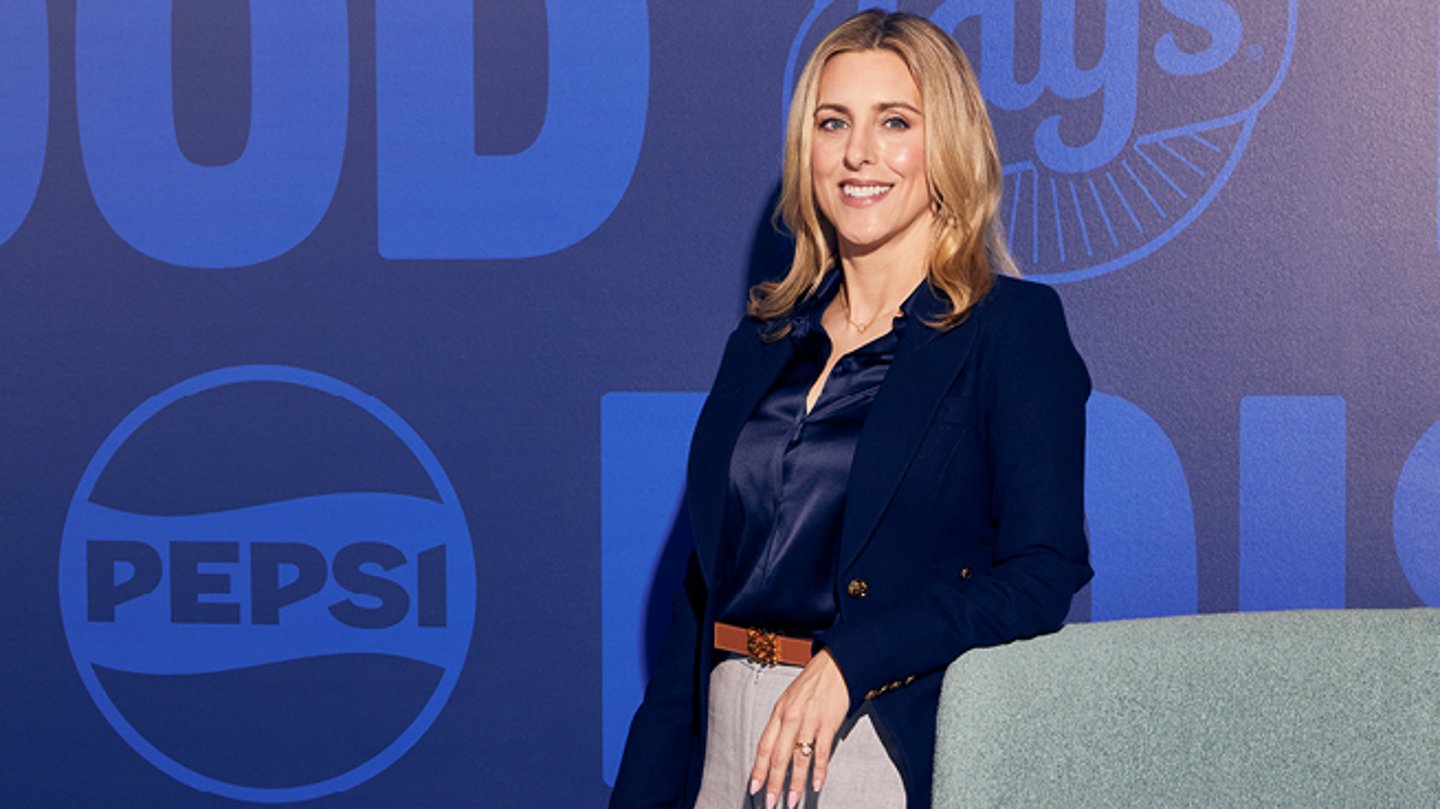
How did you get your start in the business?
I started right out of the University of Saskatchewan; I was a summer intern at Procter & Gamble in Calgary. Then, in 2004, I joined Frito-Lay as a national account manager, beginning a 20-plus-year career across North America at PepsiCo.
What is your leadership story?
My leadership story has been shaped by being open to new opportunities, continuously learning and persevering through new challenges. I’ve held several roles across PepsiCo—in customer development, field selling, operations, strategy and planning, and then general management. Each experience stretched me in different ways and helped me grow.
I describe my career in four stages. First, as an individual contributor, I learned the importance of owning my own performance and then building credibility through collaboration and influence across functions. Later, as I moved into people leadership, I learned that strong teams needed both empowerment and clarity—fostering growth while aligning ever yone around key priorities. Then, I started leading leaders and that became less about directing the work and more about setting strategy, listening well, removing barriers and supporting the ambitions of others. Finally, [I moved into] leading organizations. I’ve led many organizations now, and that’s been more about creating a clear vision, shaping culture, driving performance at scale and really aligning people around where we’re going, why it matters and how each person contributes to the broader success of the organization.
READ: PepsiCo Canada CEO Cara Keating to receive Grand Prix Lifetime Achievement Award
As you stepped into your current role, was there an assumption about being a CEO that turned out to be untrue?
You hear people say it’s lonely at the top, and the role does come with a lot of pressures and responsibilities, but I haven’t felt lonely. Having a strong team and a network of trusted people I can count on and go to for support, has really made a difference.
What habits or routines have had the biggest impact on your success?
Something that has had a big impact on me is learning to focus on what matters most. Earlier in my career, I confused being busy with being productive. Over time, I’ve learned that real value comes from being super clear on priorities, setting boundaries and being intentional about where I spend my time and energy. And as I’ve evolved as a leader, it has really become more about how I can help others do that as well.
What’s your advice to new leaders?
My advice is to lead with curiosity and humility. Ask questions, listen carefully and take time to understand before acting. Building credibility comes from learning first and leading with respect— not having all the answers on day one. I often talk to new leaders about how it’s more important to be respected versus being liked.
How do you lead differently today than you did, say, a decade ago?
I was a bit like the new leaders I was just talking about. I felt that pressure to have all the answers. Today, I spend more time asking better questions, bringing the right voices into the conversation and trusting the team’s expertise. Today, I try to lead with greater authenticity, transparency and empathy.
You’ve worked in Canada and the United States. What have you gained from working in different markets?
It has broadened my perspective. There are always learnings when you go to a new market. Most importantly, the U.S. gave me exposure to the scale of what’s possible. It’s such a large market and it was more advanced in certain areas like digital commerce, the access to data and analytics and the insights that come from that. I learned and saw different ways of working and different capabilities. So, when I came back to Canada, it helped me see things in a different light and think more about what’s possible.
READ: Four lessons in leadership from Cara Keating, PepsiCo Canada CEO
What have failures or setbacks taught you in your career?
I’ve said that working in the U.S. gave me a greater perspective, but failures also give you great perspective. There are going to be ups and downs in your career—there just are. I’ve learned that you can’t define yourself by your failures and you can’t define yourself by your successes either. Your failures are where you learn and grow. As our chief people officer, Dave Moncur, always says, “A little trauma is good for you.”
It hasn’t been smooth sailing for CPG companies in recent years. What’s the biggest lesson you’ve learned about leading through periods of uncertainty?
Yeah, it’s never dull! I would say the thing about leading through uncertainty is that you really need to understand what you can control and influence and then let go of putting your energy against what you can’t control. Once you do that, leading through uncertainty is about creating clarity, aligning people around a common goal and staying anchored to the outcomes that matter most for our people, our customers, our consumers and the world around us. I would add that being able to adapt to what comes at you and expecting the unexpected are becoming increasingly important capabilities.
How have you learned to balance data-driven decision making with instinct and experience?
You need to have a certain level of data to make sure you’re not just relying on your bias or your experience. And you also need to be open to the idea that you may not have the right answer and to be okay with that. One of the ways I really try to balance this is determining if a decision is reversible or non-reversible. If it’s reversible and we can make different decisions later and adjust as needed, then we can move quickly, make a decision and go forward. If the decision is not reversible and the stakes are higher and it’s harder to unwind, then we need to spend more time making sure we’re making the right decision with the right amount of data and input. It is a balance, but I would encourage my team to make quicker decisions when there’s more room to go back and tweak those decisions.
What has been your best day as a leader? Why?
I get my energy being with people, so my best days are when I’m with my team working against our biggest priorities, when I’m out in the field touring stores, when I’m meeting with customers, visiting our manufacturing sites, working with our partners, being on farms or talking with consumers. When I can see the business in action, it keeps me connected to reality—to what we do every day, to the people that make it happen every day. Those are my best days.
This article was first published in Canadian Grocer’s November 2026 issue.