No Name still generates buzz nearly 50 years after its launch

High inflation, sticker shock and a tough job market see shoppers save their dollars with Loblaw’s discount brand, No Name.
The year? 1978.
Under Loblaw president Dave Nichol, No Name launched that year as a low-priced private-label brand in response to economic downturn and soaring food inflation.
The line debuted with 16 products in yellow-and-black packaging with basic product descriptions. Michael Bregman, then a business manager at Loblaw, told CBC at the time that the company had cut costs by buying better and saving on packaging and marketing—and passed those savings on to consumers.
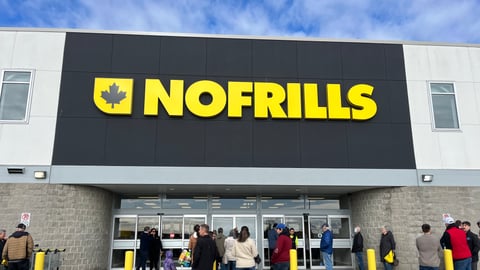
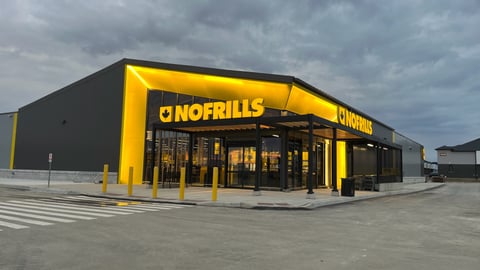
A few months after No Name hit shelves, Nichol turned the concept into a discount retail format, opening the first No Frills store in Scarborough, Ont. “We felt that if customers were able to do without the frills associated with brand-name products to save money, then perhaps they would do the same with a no-frills food store,” Nichol told Canadian Grocer after the store opening in 1978.
By the mid-1980s, No Name had become one of the best-selling brands in Canada, despite being sold exclusively in Loblaw-owned stores.
Nearly 50 years later, No Name remains true to its no-frills roots while expanding its product lineup and reaching shoppers in new ways. It now spans roughly 2,900 products across virtually every grocery category, from produce and dairy to frozen and pantry staples. And while the economy may resemble the late ’70s all over again, No Name is no longer just about offering the lowest price.
Lindsay Cook, vice president of control brand at Loblaw Companies Ltd., says the brand’s evolution is tied to consumer behaviour.
“In 1978, it was mostly about price. Today, customers expect more—quality, transparency and products that reflect how they actually live and eat,” she says.
“What hasn’t changed is our commitment to simplicity. No Name has always been clear about what it is and what it isn’t. We focus on dependable products at a price that makes sense, without overcomplicating things. Expectations have gone up. Our job is to meet them, without losing what made the brand work.”
Take No Name’s Naturally Imperfect produce. Launched in 2015, the budget-friendly line of fruits and vegetables are smaller in size or slightly misshapen and cost up to 30 per cent less than traditional produce. In 2017, Naturally Imperfectly expanded into the frozen category with items like frozen blueberries, strawberries and mangoes.
“Customers are more comfortable with products that don’t have to look perfect to taste good,” says Cook. “By embracing ‘imperfect’ produce, we’re helping make healthier eating choices more accessible”
That ethos extends to No Name’s Simple Check symbol, introduced in 2019. The symbol helps customers identify products made without 10 specific ingredients many people are trying to avoid, such as artificial flavours, synthetic colours and hydrogenated oils.
Individual product launches also stay true to the brand’s simplicity mandate. For example, the new “Hot Sauce for everything,” which hit shelves earlier this year, “does exactly what it says it does—and does it well,” says Cook. “No extras or overthinking it. Just products that earn their place with Canadians.”
That same thinking (or strategic under-thinking) extends to No Name’s marketing efforts. For the past few years, the cheeky brand has taken a straight-shooting, deadpan approach to marketing, joining Twitter in 2019 with the post, “i am a brand. follow me;” launching TV spots that see labels slapped on just about everything; and a “viral cat video” featuring Simple Check products and an unwitting cat.
And just last month, No Name launched the Grocery Goss campaign, which takes a page from 2000s-era gossip rags. The brand set up retro yellow news boxes in Toronto, Vancouver and Montreal, stacked with limited-edition “grocery goss” tabloid and free product samples. Cook says the activation “gave people a tangible way to engage with the brand.”
The campaign continued with a digital hub, influencer partnerships and social media content.
“We’ve been leaning into unintentional humour for several years now, but always in a way that stays true to the brand: simple, honest and grounded in delivering real value to Canadians,” says Cook. “What’s new is how we’re bringing that to life. No Name Grocery Goss takes that established tone and pushes it further into culture—using a more expressive, participatory format to tell the same product truths in a different way. The message is still the same: quality products at a great price. We’re just delivering it in a way that’s more visible, more engaging and more unexpected.”
The approach also aims to speak to the next generation of grocery shoppers—a group that Cook says is very intentional in how they shop.
“They’re not willing to compromise on quality, but they’re also very value-conscious. They want both—and expect both,” she says. “They also engage with brands differently. They’re used to content that’s fast, engaging and a bit self-aware. “The No Name Grocery Goss campaign meets them there. It doesn’t over-explain. It just presents the product truth in a format that feels familiar and easy to engage with.”
As for what’s next for No Name, Cook says the opportunity lies in building both trust and relevance. “More broadly, private label is no longer just an alternative,” she says. “It’s a deliberate choice. That raises the bar on both quality and how brands connect. For us, the opportunity is staying consistent on what matters, while being more unexpected in how we show up.”