Opinion: How key input costs are rising faster than grocery prices
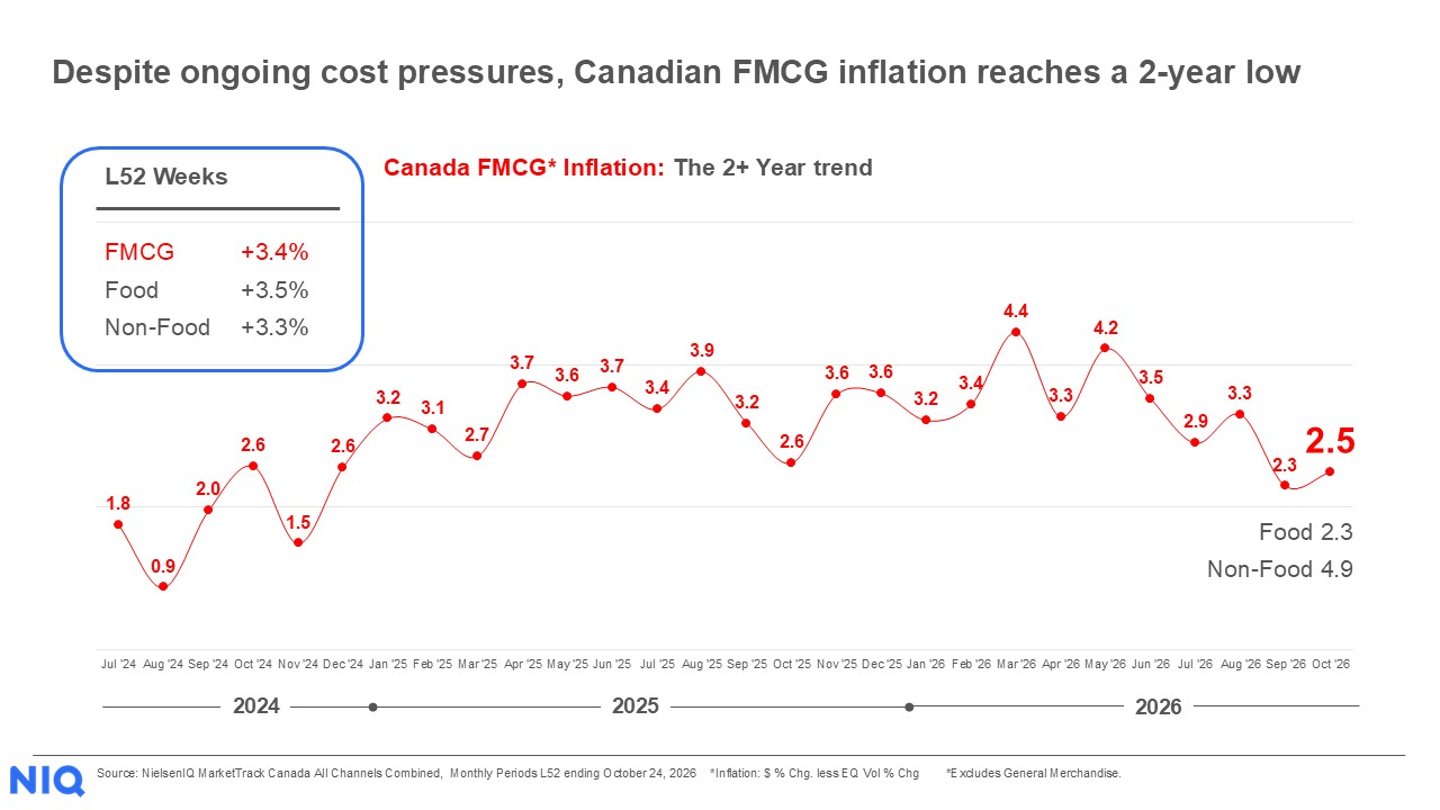
FMCG (fast-moving consumer goods) inflation remains a global challenge. Food manufacturers and retailers worldwide continue to navigate rising commodity, energy, logistics and operating costs while managing pressures across the value chain. However, the Canadian market has experienced comparatively measured inflation. While cumulative grocery prices remain above pre-pandemic levels, Canada's rate of FMCG inflation currently sits near a two-year low and continues to lag several major international markets, including the United States.
NIQ analysis shows a widening divergence between commodity cost increases and retail price inflation across several grocery categories. While agricultural, packaging, transportation, energy, labour and operating costs continue to rise, those increases are not always reflected proportionally at shelf. The gap highlights the complex relationship between input costs and consumer prices and suggests manufacturers and retailers are absorbing a portion of those pressures rather than passing them fully through to shoppers.
READ: Grocery inflation accelerates in October
The trend is evident across a number of key categories. Over the latest 52 weeks, coffee commodity costs increased 14.8% compared with retail inflation of 11.7%, cattle prices rose 13.5% versus 10.5% for beef, aluminum increased 26.9% while canned soft drinks rose 9.2% and wheat increased 10.0% compared with 4.0% inflation in bread. Cocoa experienced one of the most dramatic commodity shocks in recent years, rising 57.2%, yet retail chocolate prices increased a more modest 10.1%.
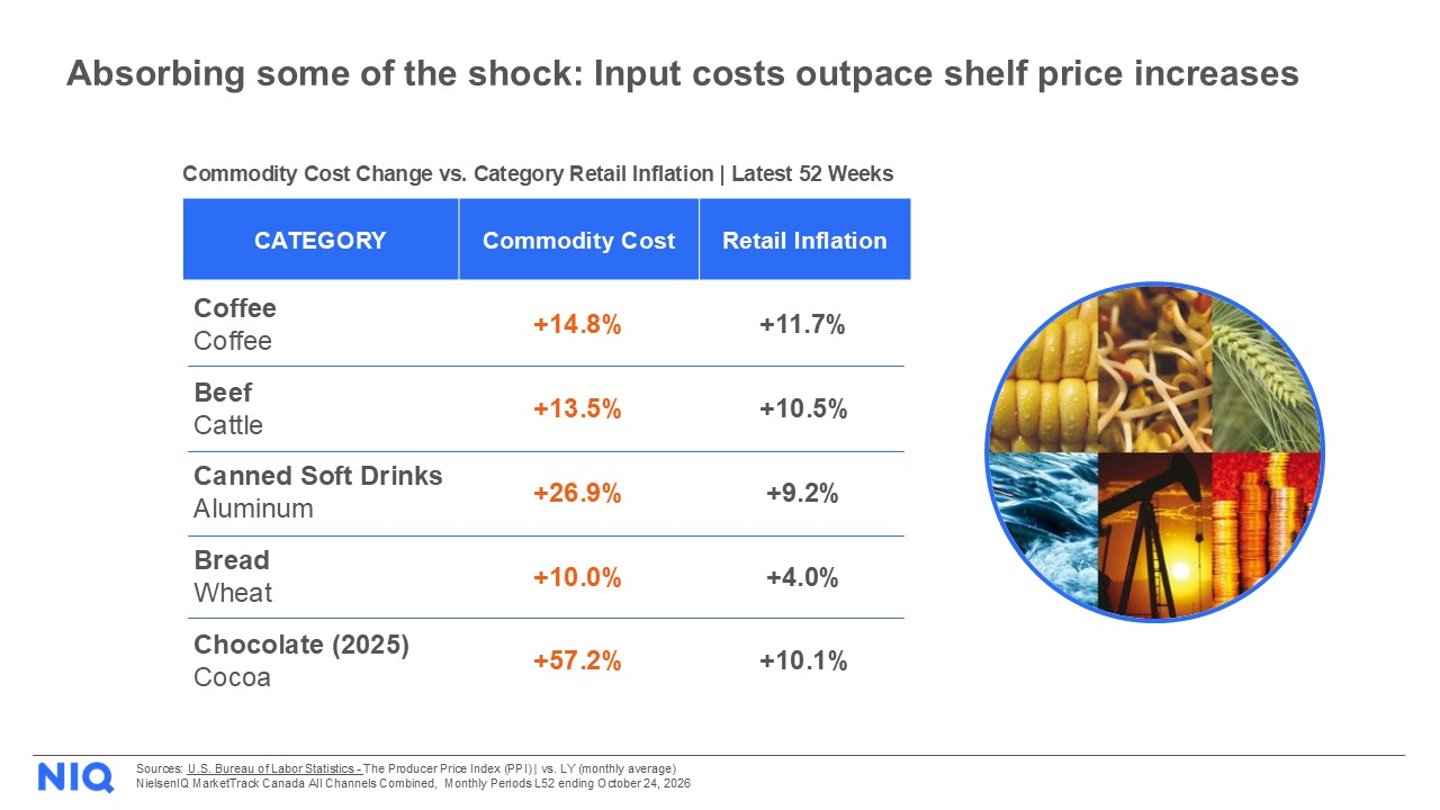
These examples demonstrate that key input costs rose faster than retail prices across several major grocery categories.
Commodity markets tell only part of the story. On top of commodities, the sector is managing higher packaging, energy, labour and operating costs across the value chain. Transportation alone is estimated to contribute approximately 5% to 10%* of retail inflation depending on the category, creating additional pressure on manufacturers and retailers.
To manage these rising costs, businesses are often relying on several levers, including productivity improvements, portfolio management, promotional optimization, sourcing strategies and margin investment. These efforts help explain why many underlying cost increases have not been fully reflected in consumer prices.
More broadly, the data highlights the importance of looking beyond shelf prices when evaluating inflation, as many of the cost pressures shaping the FMCG sector originate elsewhere in the value chain.
The key takeaway is that inflationary pressures remain a global reality, yet Canadian grocery inflation continues to trail many underlying cost increases. Since 2019, compounded FMCG inflation has turned a $100 grocery basket into approximately $131 in Canada, compared with $146 in the United States. The gap suggests Canadian manufacturers and retailers have continued to absorb a portion of rising commodity, transportation and operating costs, helping limit the extent to which those increases are passed on to consumers.
Sources: U.S. Bureau of Labor Statistics - The Producer Price Index (PPI) | vs. LY (monthly average)
NielsenIQ MarketTrack Canada All Channels Combined, L52 ending October 24, 2026
*Based on industry estimates
Mike Ljubicic is the managing director for NielsenIQ Canada