

Food safety needs an AI upgrade

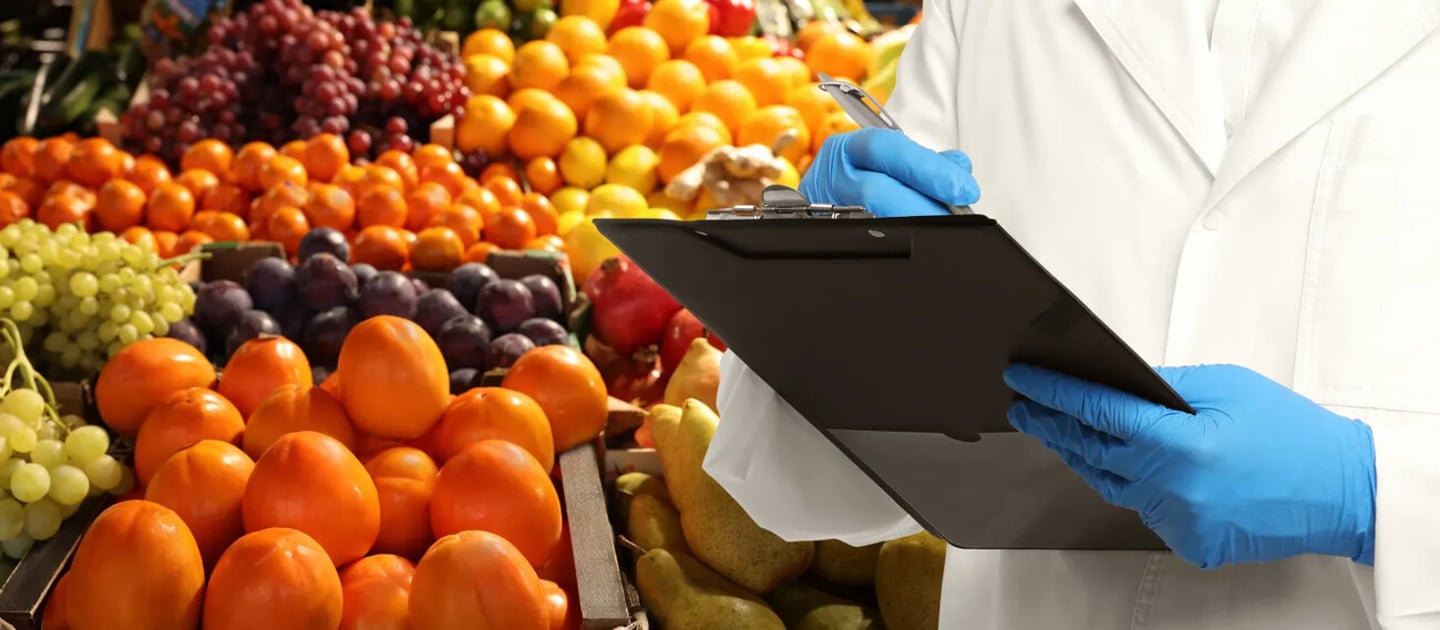
Every summer, Canadians are reminded that fresh produce, while essential to a healthy diet, can also pose food safety risks. This year's Cyclospora outbreak in the United States has already sickened more than 1,600 people, making it one of the largest in recent memory. Yet despite its scale, investigators have not identified the specific fruit, vegetable, farm or supplier responsible. Canada's food regulators have appropriately resisted calls to suspend produce imports because there is simply no scientific evidence pointing to a particular commodity or country of origin. From a regulatory standpoint, that is the right decision. From a communications standpoint, however, we have an opportunity to do much better.
Food safety agencies have become remarkably sophisticated at tracing pathogens through increasingly complex supply chains, but when it comes to communicating uncertainty, many are still relying on a model designed for another era. Press releases and media interviews remain the primary tools for informing the public, even though most Canadians now consume information through search engines, social media and increasingly through artificial intelligence. The way people seek answers has changed dramatically, but the way governments communicate risk has barely evolved.
READ: Diarrhea-causing parasite infecting more than 1,200 in Michigan has not spread to Canada
Cyclospora presents a particularly difficult communication challenge because consumers have very little control over their own exposure. Unlike bacterial outbreaks involving foods that can be cooked, this parasite is commonly associated with fresh produce that is eaten raw. Washing leafy greens or herbs offers only limited protection, and by the time illnesses are reported, the contaminated products have usually disappeared from store shelves. Add an incubation period that often exceeds a week, and consumers are left trying to remember meals they barely recall eating. Public health officials therefore face a difficult balancing act. Warn too aggressively and consumers may avoid fresh produce altogether, unnecessarily harming growers, distributors and retailers. Say too little, and the public may conclude that authorities are withholding information.
One of the biggest shortcomings of current risk communication is its lack of precision. When headlines mention "leafy greens," most consumers do not distinguish between romaine lettuce, spinach, kale, arugula or mixed salads. They simply avoid the entire category. Behavioural economists have long recognized this as a spillover effect: one product's problem becomes everyone else's problem. The result is collateral economic damage extending far beyond the actual source of contamination, often affecting producers who had absolutely nothing to do with the outbreak. This is precisely why communication matters as much as epidemiology.
Artificial intelligence offers an opportunity to fundamentally rethink how food safety information reaches consumers. Imagine asking your AI assistant whether spinach is implicated in the current outbreak and receiving a clear, evidence-based response explaining that no such link exists, while also describing what investigators do know and what remains uncertain. If a specific imported herb were eventually identified, consumers could receive targeted guidance immediately instead of vague warnings that leave them guessing. Rather than relying on generalized announcements that inevitably fuel confusion, regulators could provide personalized, real-time answers based on verified data, reducing unnecessary panic while improving public confidence.
READ: Food-safety tips fresh from the produce department
The Canadian Food Inspection Agency has earned an international reputation for scientific excellence. Its inspectors, laboratories and traceability systems are among the best in the world. The next frontier is not simply improving detection; it is modernizing communication. Instead of issuing static recalls and occasional updates, regulators should develop dynamic, AI-ready information platforms capable of distinguishing between products that are confirmed sources of illness, products that remain under investigation and products for which there is no evidence of concern. Just as importantly, agencies should become more comfortable communicating uncertainty. Telling Canadians, "We don't yet know, but here's what we're doing," is far more credible than offering broad reassurances that can quickly unravel as new evidence emerges.
Food safety has always depended on science. Increasingly, it will also depend on trust. In an era where artificial intelligence is rapidly becoming the public's first source of information, regulators must ensure that trustworthy, evidence-based guidance reaches consumers before speculation and misinformation do. The future of food safety will not be defined solely by faster laboratory testing or more sophisticated traceback investigations. It will also be defined by our ability to communicate risk with the same precision as the science itself.