
Canada picked a trade fight it cannot afford

The Canada–U.S. trade dispute has crossed another threshold. What began with tariffs moved to counter-tariffs and has now reached outright import bans on both sides of the border. The economic pain is no longer theoretical.
Prime Minister Mark Carney has warned Canadians that reducing our dependence on the United States will come at a cost. At least he was honest. But Canadians deserve to know how much pain, who will bear it and what economic outcome their sacrifice is expected to purchase.
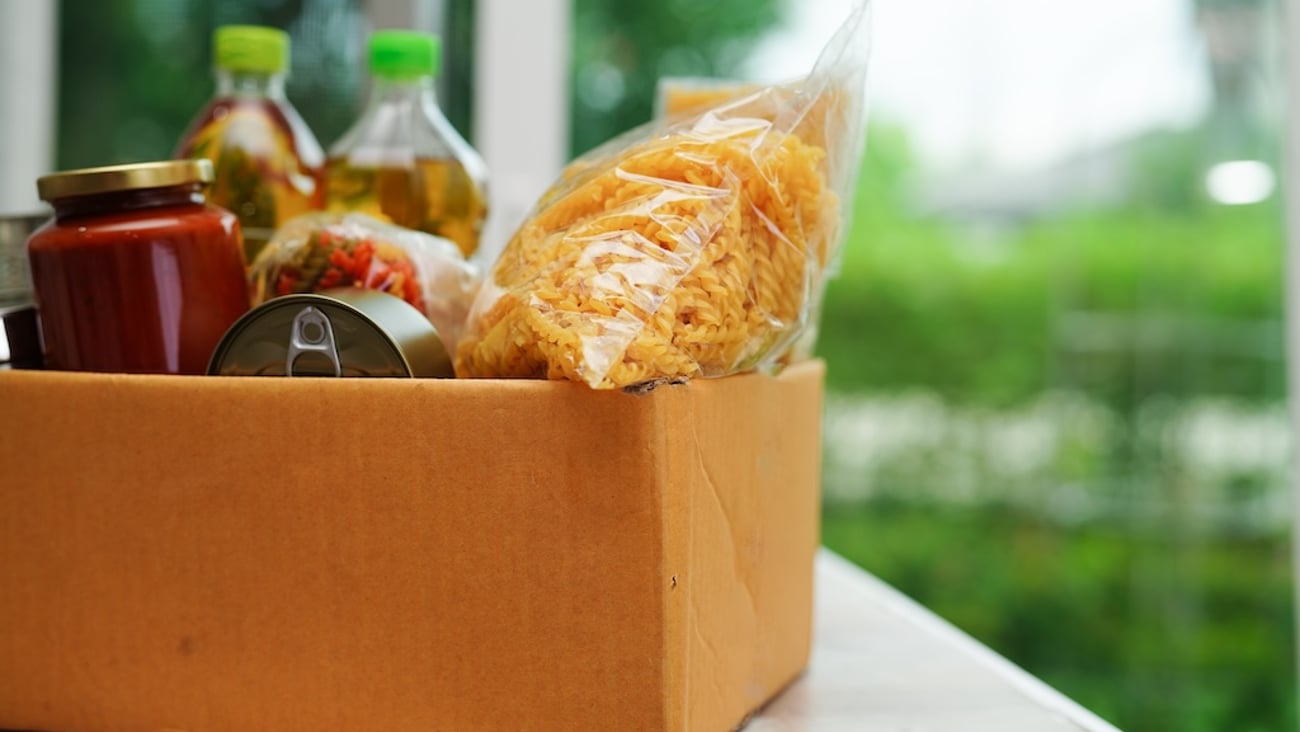
Washington’s agri-food response is sweeping. Beginning September 29, the United States will ban most Canadian alcohol, including beer, wine, cider and spirits. The measures also cover whey products, molasses and non-alcoholic beer, while additional Canadian cheeses will face a 50% tariff.
Based on recent trade flows, annual Canadian exposure is estimated at $2.3 billion to $2.8 billion. Alcohol represents roughly $1.8 billion to $2.1 billion; whey, $75 million to $105 million; non-alcoholic beer, $35 million to $70 million; cheese, $125 million; and other dairy, $275 million to $360 million.
READ: Here's the full list of U.S. goods to be hit by Canada's counter-tariffs
It is surprising that an alcohol ban took this long. Several provinces made American liquor an early, visible target. Pulling U.S. bourbon from provincial shelves was easy to explain and photograph. Governments should have expected Washington to answer in kind.
Trade retaliation has a seductive simplicity: they hit us, so we hit them. But trade economics is about exposure, substitution and leverage—not moral symmetry. The American economy is roughly 13 times the size of Canada’s. The same barrier can produce radically different consequences on either side.
American producers can spread lost Canadian sales across a larger domestic market. Canadian exporters often cannot. A whisky, cheese or whey product that loses its principal customer does not instantly find an equivalent buyer overseas. Diversification requires distribution networks, approvals, contracts and consumer development. These adjustments take years, not press conferences.
Canada’s counter-tariffs create another problem. U.S. tariffs are paid first by American importers; Canadian counter-tariffs by Canadian importers. Canadian food companies can be squeezed twice: through reduced export access and higher costs for imported ingredients, packaging and equipment.
Processors may absorb some of those costs temporarily, but food-manufacturing margins are generally too thin to absorb permanent increases. Companies will renegotiate, reformulate, change suppliers, reduce investment or raise prices. None of those adjustments is free.
Our current estimate is that, if the counter-tariffs remain, they could add roughly 0.3 percentage points to food inflation by spring 2027. The November-to-February period is already difficult because Canadian production is more limited and import dependence rises. Tariff costs entering the system during that window could amplify grocery-price pressure late next winter.
Public opinion deserves an equally honest reading. A recent Build Canada survey found that 75% of Canadians favour holding firm against the United States even if economic costs persist. Yet 68% consider a higher household risk of job loss unacceptable. Between 56% and 60% reject annual household tax increases of $500 to $2,500, while 58% to 68% reject retirement or investment losses of 5% to 20%.
That is not resolve. It is support conditioned on someone else paying the bill.
READ: Grocery leaders talk counter-tariffs, navigating trade tensions
Standing up to President Trump remains popular while the sacrifice is abstract. When the cost appears in a grocery bill, pension statement, cancelled shift or delayed investment, support may prove less durable. Retaliation is not free.
Sapporo’s decision is an early warning. The company plans to move production of non-alcoholic beer destined for the U.S. market from Canada to the United States. The scope is limited, but the signal matters. When tariffs make cross-border production unpredictable, companies reorganize around the barrier. Production moves closer to customers. Capital follows market access, and jobs eventually follow capital.
If this dispute persists, Sapporo will not be the last company to make that calculation. The most damaging consequence may not be the tariff collected at the border. It may be the expansion that quietly goes to Ohio instead of Ontario, or the production line placed in Michigan instead of Manitoba.
Businesses can adapt to higher costs. What they struggle to manage is uncertainty. An open-ended confrontation makes Canada less attractive as a North American production base.
The government owes Canadians more than patriotic messaging and produced videos. If Ottawa rejected an agreement with Washington, it should disclose as much as confidentiality permits, identify the unacceptable provisions and explain the trade-offs. Parliament should debate the strategy, and the prime minister should face sustained media questioning.
There may be legitimate reasons to reject Washington’s demands. Sovereignty has value. But economic nationalism without economic arithmetic is simply theatre, and increasingly expensive theatre at that.
Canadians were told there would be pain. Now they deserve a transparent accounting of what that pain is ultimately meant to achieve.