Canada’s booming snack market moves toward functional health and bold flavours
For Canadians, snacking is as popular as ever. But it’s not what it used to be. Over the past several years, the between-meal eating occasion has evolved beyond sugary or salty indulgences consumed for pleasure or to quiet growling stomachs. Snacking in 2026 is a world of tasty chaos and countless choices, driven by unpredictable consumer behaviour and diverse product development. And business is booming. According to analysis by market research firm IBISWorld, Canadian snack manufacturing is valued at $5.4 billion in 2026. Data from the 2026 edition of Innova’s Snacking Survey suggests a corresponding demand from consumers, with 92% of respondents saying they snack at least once a day and 57% doing so two times or more.
The Innova survey also points to young Canadians as the primary drivers of snacking’s ascendance, as 68% of generation Z and 66% of millennials snack at least twice a day. Both groups are also snacking more than they used to, with 43% of generation Z and 34% of millennials reporting a year-over-year increase.
These youthful generations are also snacking differently. Where older consumers are more likely to grab a bite in the afternoon or evening, their younger counterparts will nosh at any time of day or night. They’re also open to new snacking experiences.
“Younger consumers are willing to try new brands and innovative products, especially those with functional ingredients and strong sustainability stories,” says Joe D’Addario, non-executive chairman of Ontario grocer Nature’s Emporium.
Within D’Addario’s observation about what makes younger shoppers different is a clue about how Canadians of all generations are approaching snacks in 2026. Functional health benefits are an increasingly important factor in consumer choices, as are bold, globally inspired flavours, simple ingredients and value.
“Snacking has become much more intentional,” says Susan Niczowski, president of Summer Fresh Salads. “Canadians are moving beyond traditional snack foods and are looking for options that can help fuel their day.”
Dave Dubreuil, director of category management - grocery, dairy, frozen & floral at Farm Boy, agrees that today’s consumers “are looking for products that do more than simply satisfy hunger between meals.”
Whether it’s health, taste, value or a combination, Canadians are no longer looking at snacks as a stopgap. As D’Addario puts it, “Our customers want snacks with a purpose.”
Here are a few trends that are driving purposeful snacking:
Snacking for health
Snacking once signified a cheeky break from the shackles of well-balanced meals. But Canadians snack more responsibly now, looking for food that provides a host of health benefits.
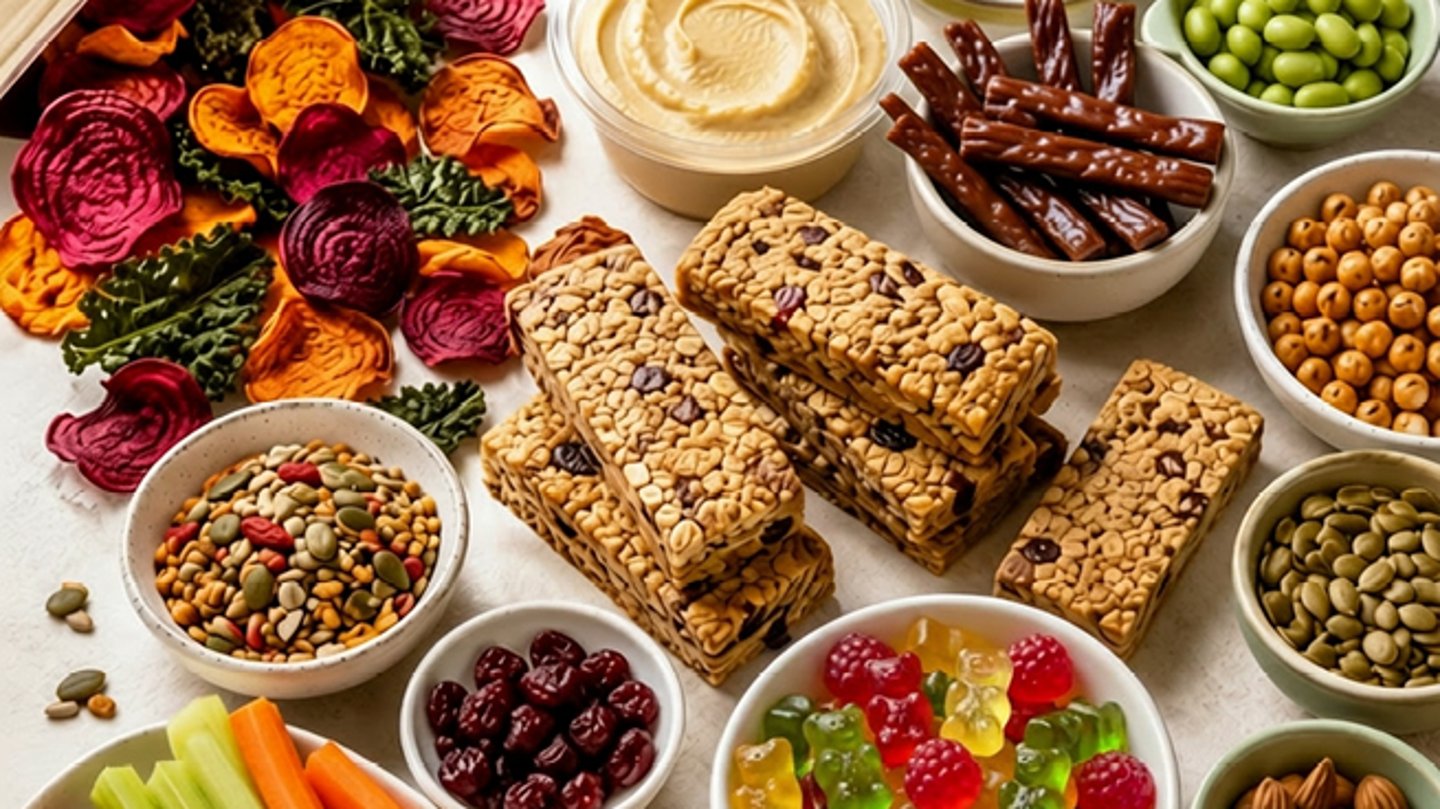
Protein remains the coin of the realm, dominating consumer demand and product health claims. According to Innova’s survey, 62% of respondents actively seek out protein in their snacks.
“Protein continues to be the biggest driver, particularly as more consumers focus on healthy aging, weight management and active lifestyles,” says D’Addario.
Dubreuil has seen the same trend play out at Farm Boy. “Protein consistently ranks as a top priority,” he says. “Protein-rich snacks help consumers meet their daily nutritional goals while also providing lasting satiety.”
READ: How new health priorities are shaping food purchases
No wonder, then, that products as disparate as waffles, candy and tofu jerky are touting high levels of protein.
But protein isn’t everything when it comes to healthy snacking. Innova’s research reports that 54% of Canadian snackers want fibre and 41% seek vitamins. “Fibre is gaining momentum, driven by interest in gut health, satiety and weight management,” says Barbara Grant, vice-president, marketing – snacks North America for Lassonde.
Grant’s company has responded to the demand for fibre with products such as SunRype Good Bites Superseed Oat Bars, and even in beverage formats with its Oasis Health Break line of fruit juices that offer antioxidants.
Grant adds that consumers are seeking good-for-you products in smaller packages thanks, in part, to the proliferation of weight management aids. “The rise of GLP-1s has reinforced demand for smaller, more intentional portions that offer strong nutritional value,” she says.
Niczowski of Summer Fresh concurs. “Consumers increasingly value snacks that are satisfying, nutrient-dense and available in portions that fit different eating occasions,” she says, highlighting her company’s line of Snack’n Go Hummus & Crackers.
Keep it simple, snackers
What a snack doesn’t contain is at least as important as what it does. As consumers hunt for protein and fibre fixes in smaller portions, they are also looking carefully at the ingredient list to see just what is responsible for certain health benefits.
“Protein from real ingredients is becoming important, because many products simply add protein powder to existing recipes,” says Aaron Johnstone, CEO and co-founder of Peacasa Snacks, a manufacturer of chickpea-based chips. “People are looking for cleaner and more familiar ingredients.”
READ: From socca to success—the story behind Peacasa
Johnstone says his company has taken steps to make it easier for consumers to find what they’re looking for. “We’ve revised our packaging hierarchy to better communicate that Peacasa chips are made in Canada, are high in protein and use oils like olive oil that are high in healthy monounsaturated fats.”
At Summer Fresh, simple ingredients are the crux of the value proposition. “We’ve always focused on creating fresh, refrigerated foods made with real ingredients and no preservatives,” says Niczowski. “That commitment continues to lead and guide our innovation.”
Echoing Johnstone, Dubreuil of Farm Boy says it’s important for manufacturers to shout their health bona fides from the proverbial rooftop. “As consumers become more health-conscious, many are paying closer attention to front-of-package labelling, using it as a tool to make informed choices that align with their lifestyle and wellness priorities,” he says.
Bold flavours
When Innova asked Canadian consumers what would interest them in a new snack product, 56% said they reached for familiar flavours. Still, more than one third (36%) took the opposite view, opting for tastes that were new to them. Globally, Innova’s research reveals that 43% of consumers want “creative and unusual flavour experiences.”
This suggests that, while there will always be room for classic favourites, there is an appetite for novelty.
“Over the past few years, we’ve seen consumers become increasingly adventurous in their snacking habits, with a greater willingness to try new flavours, ingredients and emerging brands,” says Dubreuil, who notes that Farm Boy’s in-store sampling initiatives have helped pique customers’ curiosity. “We are also seeing increased interest in internationally inspired snacks, as customers look to explore new flavours and discover products from different cultures.”
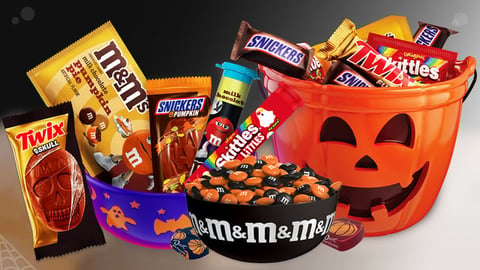
The snack assortment at grocery stores is a veritable smorgasbord of global food options, from Peacasa’s chips “inspired by an ancient French recipe” to Skittles Sweet Heat gummies, which channel the sugar-and-spice trend into candy form.
Lassonde’s Grant credits a buzzy food culture for this blend of exploration and innovation. “Social media and the rise of online ‘foodie’ influencers have also encouraged more creativity, discovery and experimentation,” she says.
Familiarity and novelty. Health and indulgence. Snack manufacturers and retailers must balance these varied—and sometimes competing—consumer demands to succeed in the snack aisles. The experts also agree it’s not enough to stick to just one lane.
“The companies that will succeed are those that deliver products that are both genuinely healthy and enjoyable to eat,” says D’Addario. “Because consumers no longer believe they should have to choose between the two.”
This article was first published in Canadian Grocer’s August 2026 issue.